A black-tie evening at home succeeds or fails on three decisions, and none of them is the catering. They are the dress code, the lighting, and how people move through the house.
Get those right and a private residence will outperform most hotel ballrooms. Here is how to plan each of them, and what the host should be wearing while it happens.
What Makes a Gala at Home Feel Like a Gala?
Contrast with ordinary life in the same rooms. Guests who have been to your house for dinner need a visible signal that tonight is different, and that signal is usually light and dress rather than scale.
Decide the formality first and work backwards. Everything else, from the glassware to where the music sits, follows from whether this is black tie or black tie optional.
What Should the Host Wear?
Something at or slightly above the stated code, and something you can stand in for five hours. A host who is overdressed makes guests comfortable; a host who is underdressed makes the dress code look optional.
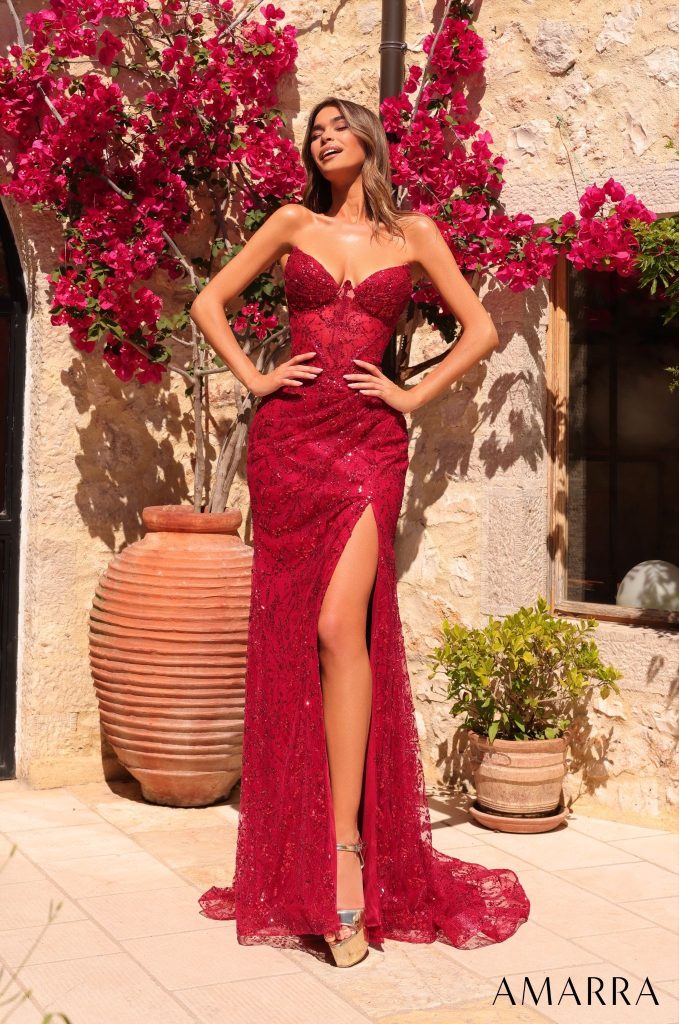
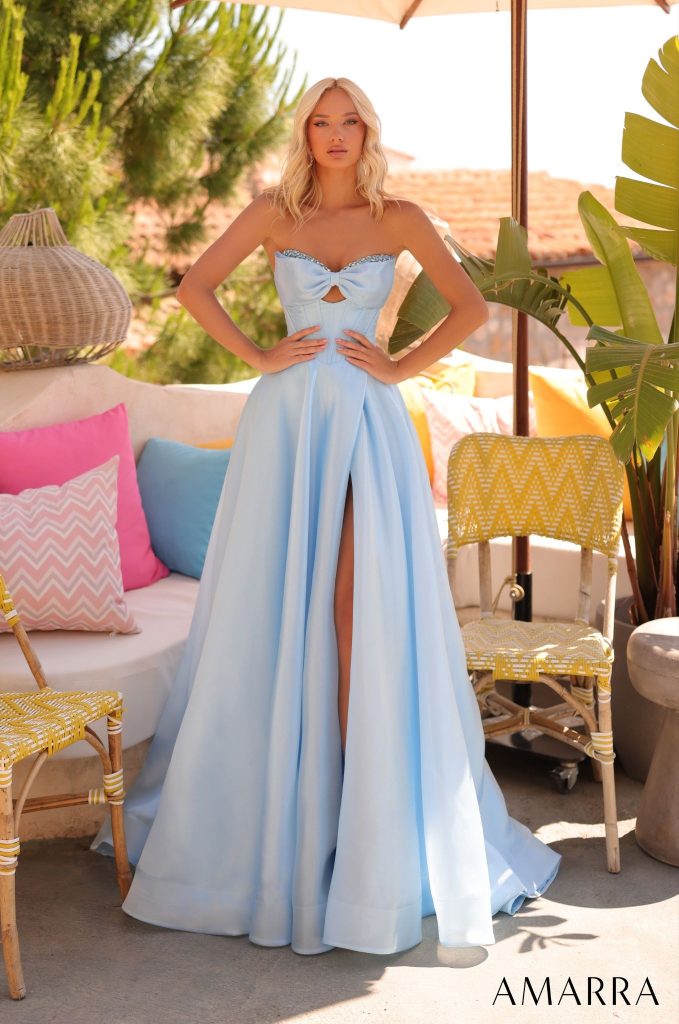
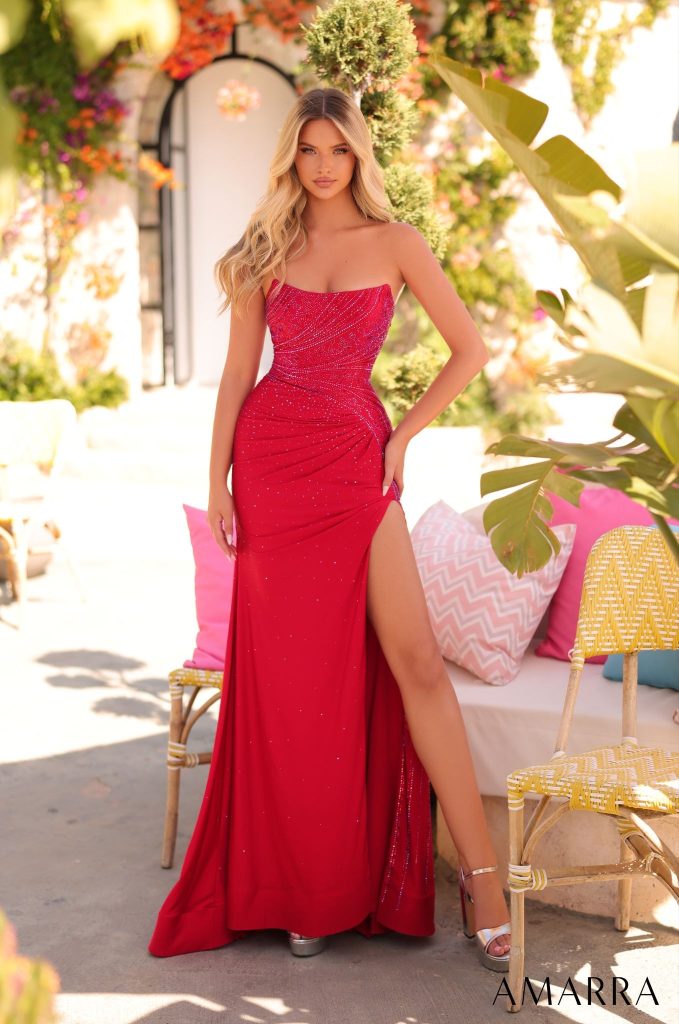
Floor length is the safe answer for a woman hosting black tie. Labels such as Amarra — formal and prom dresses — carry designer evening gowns in sizes 000 to 24, so the same silhouette can be found in more than one shape, and these five are the ones worth comparing below.
| Brand | Price range | Sizes | Signature | Best for a host |
| Sherri Hill | About 450–1,298 | 000–26 | Dense beadwork, corset bodices | Standing out deliberately |
| Amarra | About 278–1,298 | 000–24 | Sequins, slits, trains, corset backs | One look across several silhouettes |
| Jovani | About 667–1,199 | 00–24 | Beaded mesh, fitted evening gowns | Classic, uncontroversial formality |
| Rachel Allan | About 398–2,098 | Varies by style | Ballgowns, appliqué, embroidery | A grand entrance in a grand room |
| Ashley Lauren | About 298–1,498 | 0–24 | Color, feathers, detachable overskirts | Losing a layer later in the night |
Prices and sizes were checked on each brand’s or retailer’s website at the time of writing and may change. Figures are full retail at designer retailer Couture Candy.
Sherri Hill — Deliberate Impact
Dense beadwork and corseted bodices, built to catch light. Practical caveat for a host: these are heavy, and you will be on your feet longer than any guest.
Price range: about 450–1,298. Sizes: 000–26.
Amarra — Formal, Prom, and Homecoming Dresses
Amarra — formal, prom, and homecoming dresses. Sizes 000–24. Price range 278–1,298.
It runs prom, homecoming, pageant, evening and couture lines at once, with 19 evening styles and 49 couture styles alongside the main range. For a host, the useful part is finding one beading story in both a fitted and an A-line shape and choosing the one you can move in.
Jovani — Conventional and Safe
Beaded mesh over fitted bodices, floor-length, unmistakably formal. The right answer when the evening should be the event and not your dress.
Price range: about 667–1,199. Sizes: 00–24.
Rachel Allan — Volume for a Large Room
Ballgowns, appliqué and heavy embroidery. A full skirt reads well across a double-height hall and badly in a narrow corridor, so match it to the house.
Price range: about 398–2,098. Sizes: vary by style.
Ashley Lauren — A Second Silhouette
Saturated color, feathers and detachable overskirts. The removable layer is genuinely useful for a host: formal for arrivals, lighter once the evening settles.
Price range: about 298–1,498. Sizes: 0–24.
How Should You State the Dress Code?
In two words on the invitation, with no explanation. The Emily Post Institute defines black tie for women as a formal floor-length evening gown, a dressy cocktail dress or a dressiest little black dress.
Black tie optional widens it. The same guide allows men a tuxedo or a dark suit with a white dress shirt and conservative tie, which is the kinder choice if your guest list travels.
How Should You Light the Room?
In layers, warm, and on dimmers. Designers interviewed by Homes & Gardens recommend roughly a two-to-one ratio of ambient to accent light, with pendants hung around 90cm, or 35 inches, above a table.
Warmth matters more than brightness. Pooky Lighting’s Jo Plant advises never using a bulb above 2700K and putting everything on a central dimmer, while designer Michelle Murphy of DEMI RYAN calls dimmers non-negotiable.
How Much Candlelight Is Right?
More than feels sensible, at varied heights. Designer Kate Aslangul of Oakley Moore recommends plenty of candles at different heights across the table, which is what stops a formal setting looking flat.
Keep flames below eye level so conversation is not interrupted, and keep them away from anything sheer. A guest in chiffon and a tall taper is the one genuine hazard of the evening.
What Should the Table Look Like?
Low, layered and uncluttered. Centerpieces belong below sightlines so people can talk across the table, and anything taller should be narrow enough to see past.
Place cards do more work than people expect at a formal evening. They remove the awkward pause at the door and let you seat the room rather than letting it seat itself.
How Do You Handle the Flowers?
Choose scent-free varieties for the dining table and save the fragrant ones for the hall. Lilies and heavy stocks compete directly with the food.
Repeat one or two varieties throughout rather than mixing many. A house reads as designed when the arrangements in three rooms are clearly related.
What About Music and Sound?
Quiet enough to talk over, and coming from more than one place. A single loud source makes one end of a room unusable; several low sources make the whole floor comfortable.
Live music works best in short sets rather than all night. If you are hiring a pianist or a small ensemble, agree the break times in advance and plan what plays during them.
What Should the Arrival Look Like?
Lit, warm and deliberate from the car door onward. The approach is the only part of the evening every guest experiences in the same order, so it sets the tone before anyone says hello.
Light the path and the facade rather than the doorway alone, and keep that lighting as warm as the interior. A cool white floodlight outside and candlelight inside reads as two different events.
How Do You Make a Contemporary House Feel Formal?
Lean into the architecture instead of dressing against it. A minimal interior does not need gilt and swags; it needs fewer, larger gestures and much lower light.
One long table beats several round ones in an open-plan space, and a single repeated floral variety suits clean lines better than mixed arrangements. Let the hard surfaces reflect candlelight and do the work.
How Do You Zone a House for a Gala?
Three zones: arrival, main, and somewhere quieter. People need a route and a reason to move, or the whole party collects in the kitchen.
Close the rooms you do not want used, and make that obvious rather than apologetic. A closed door reads as a decision; an open door with a chair across it reads as an accident.
What Gets Forgotten Until It Is Too Late?
Coats, parking and the hour after midnight. A home has no cloakroom and no doorman, so both need a designated person and a designated room.
Decide the end time before the invitations go out and signal it with the music and the lighting rather than an announcement. Raising the lights one notch does more than anything you could say.
Final Thoughts
A black-tie gala at home is mostly lighting, routing and a clearly stated dress code. Those three decisions do more for the evening than any amount spent on catering.
Dress at or slightly above your own code, keep the bulbs warm and the candles low, and give people somewhere to go when the main room gets loud. The rest tends to look after itself.