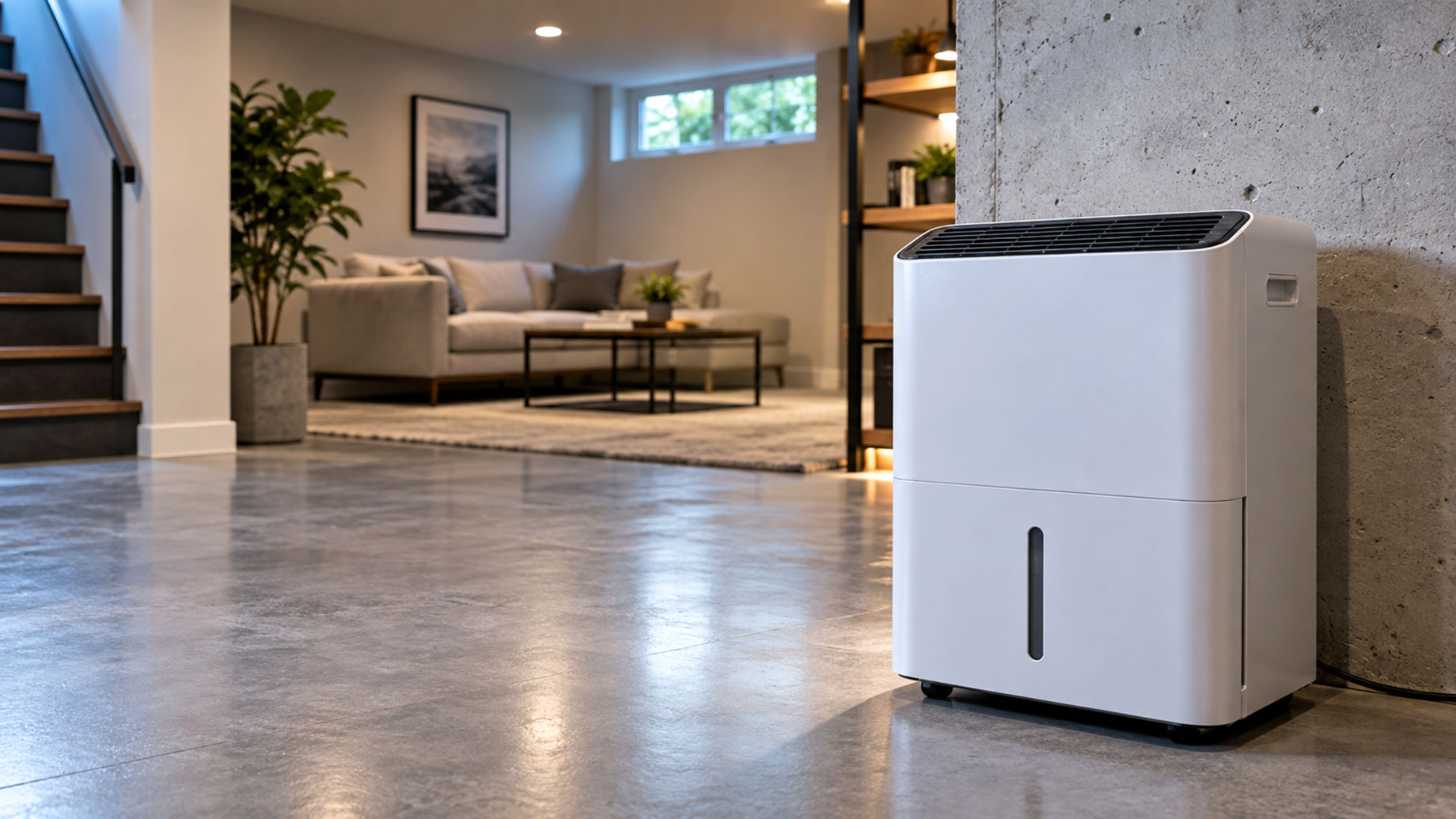
A finished basement should feel like part of the home, not a room that needs airing out before anyone uses it. Whether the space serves as a guest suite, lounge, or home office, moisture control deserves the same attention as lighting and finishes.
A basement dehumidifier removes excess moisture from the air. However, lasting protection requires more than an appliance: identify water sources, measure humidity, and choose equipment suited to the space.
Understand Where Basement Moisture Begins
Basement dampness can come from rainwater, groundwater, indoor activities, or humid outdoor air meeting cool surfaces. Opening windows during muggy weather can therefore increase condensation rather than solve it.
Before installing equipment, inspect gutters, downspouts, exterior grading, and plumbing. Water entering after rainfall needs investigation, not simply a lower humidity setting. Address active leaks and drainage problems before concealing affected areas behind new flooring or wall finishes.
What Humidity Level Should a Basement Have?
The U.S. Environmental Protection Agency recommends keeping indoor relative humidity below 60%, ideally between 30% and 50%. Use a hygrometer to measure conditions instead of judging by smell alone.
For a finished basement, start with a dehumidifier setting around 45–50%, then check actual readings and watch for condensation. Persistent stains, damp surfaces, or musty odors still warrant investigation, even when the display shows an acceptable humidity level.
Choose Capacity, Not Just Advertised Coverage
When choosing a dehumidifier for basement use, consider both floor area and how damp the space becomes. Capacity is usually expressed in pints removed per day, not the size of the collection bucket.
Check operating temperature as well. ENERGY STAR advises considering equipment rated for lower temperatures when the space regularly falls below 65°F. An unsuitable unit can develop frost on its coils and lose moisture-removal performance.
Also compare energy performance. A higher integrated energy factor generally means the unit removes more water per kilowatt-hour consumed. This provides a useful efficiency measure when comparing suitable models, alongside capacity, drainage options, and operating temperature.
For divided basements, consider airflow between rooms. One appliance tucked into a utility closet may not adequately serve a separate lounge. A professional assessment can help determine whether portable equipment or a ducted solution better suits the layout.
Make Drainage and Maintenance Part of the Plan
A full collection bucket typically stops a portable dehumidifier until someone empties it. Where the equipment supports it, continuous drainage to a suitable drain reduces this interruption. Confirm the drainage arrangement before deciding where the unit will stand.
Leave the manufacturer’s required clearance around air inlets and outlets. Choose a location that remains accessible for cleaning, rather than hiding the appliance behind furniture. Clean filters and inspect drain hoses according to the maintenance instructions.
Reduce Everyday Moisture Sources
Laundry and bathrooms can add moisture to a basement even after exterior drainage problems are resolved. Vent clothes dryers outdoors and use bathroom exhaust fans to remove moisture where it originates. Insulating cold water pipes can also help prevent condensation.
These measures complement dehumidification rather than replace it. Check humidity through seasonal changes, and investigate recurring moisture instead of repeatedly lowering the appliance’s setting.
Protect the Basement Before Upgrading It
A dehumidifier belongs within a broader moisture-control plan, alongside sound drainage, leak repairs, and ongoing monitoring. It does not replace cleanup when mold is already present.
For homeowners planning better living space below ground, the priority is straightforward: establish dry, dependable conditions before investing in the finishes that make the room inviting.
