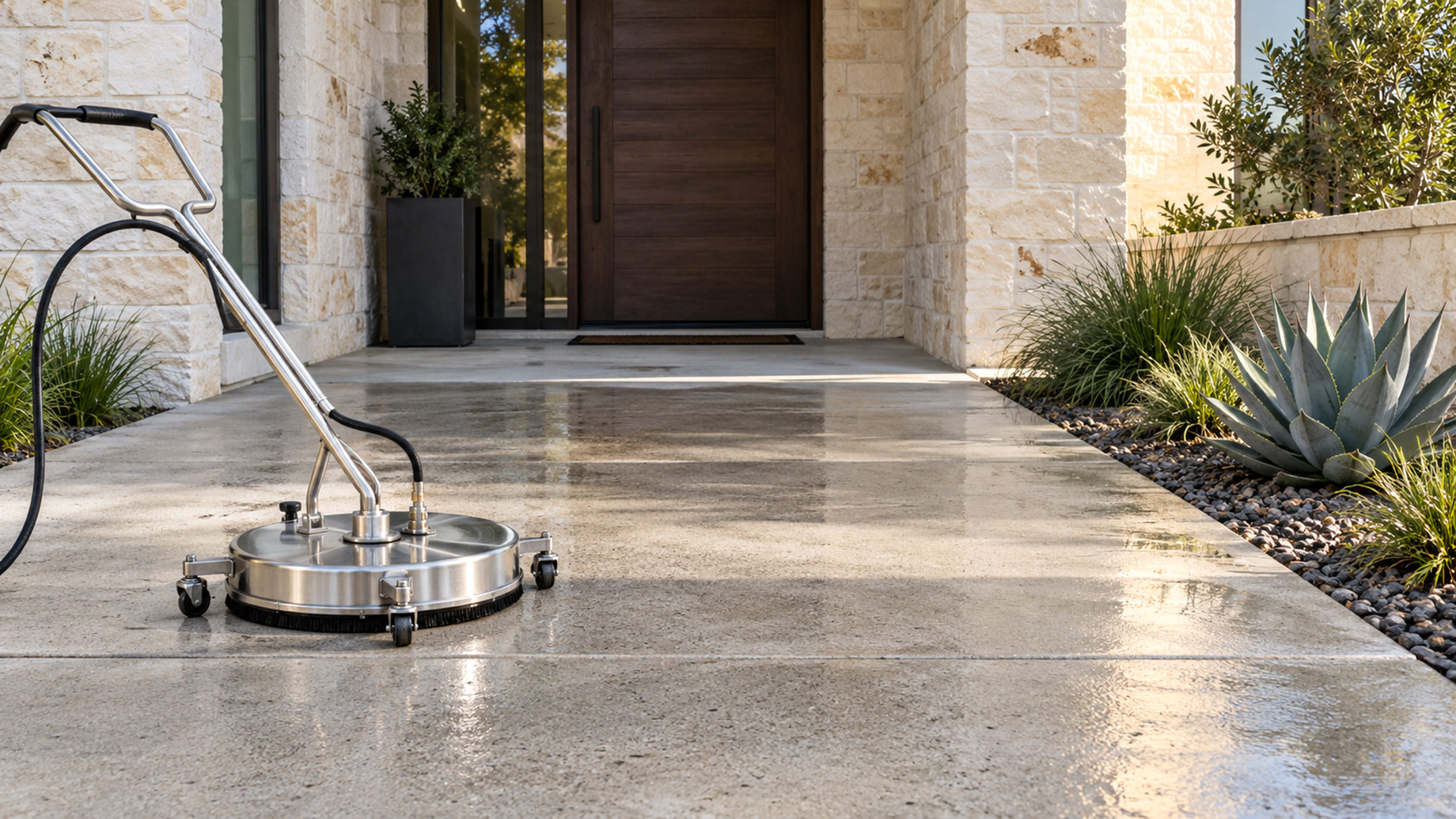
Pressure washing can refresh a home’s exterior by removing accumulated dirt and surface buildup. The right approach depends on the material, its condition, and the stain being treated. Durable paving and delicate architectural finishes should never be approached as though they are the same surface.
For homeowners in San Antonio, TX, exterior cleaning also involves practical decisions about water use, drainage, and protecting landscaping. A successful project leaves the property looking cared for while preserving the finishes that give it character.
When comparing pressure washing professionals, ask how they will assess each area before recommending a cleaning method. That conversation is valuable for homes combining stone, painted trim, expansive terraces, and several exterior materials.
Inspect the Exterior Before Choosing a Cleaning Method
Begin with a walkthrough. Identify what needs cleaning, what may need repair, and where water could enter the building.
Look closely at cracked finishes, loose mortar, peeling paint, deteriorated joints, and gaps around windows and doors. Photograph existing damage and discuss whether repairs should happen before washing. Cleaning should not become an unintended test of a weakened surface.
It also helps to identify the discoloration. Loose dirt, oily residue, mineral deposits, and biological growth can require different treatments. A stain that remains after an initial clean does not automatically justify increasing pressure.
Where a finish or material cannot be identified confidently, pause that portion of the job until the installer, supplier, or an appropriate specialist can advise.
Ask for a small test area in an inconspicuous location. Inspect it after drying, looking for changes in texture, color, or sheen before approving the wider treatment.
Understand Pressure Washing and Soft Washing
Pressure washing relies on a pressurized water stream to dislodge material. Soft washing generally uses lower pressure alongside a cleaning solution selected for the surface and contamination. Neither label, by itself, tells a homeowner whether the proposed treatment is appropriate.
The contractor should explain the equipment, cleaner, application method, and rinsing process. Manufacturer guidance takes priority over a general promise that a method works on every home.
For example, James Hardie’s cleaning guidance recommends a low-pressure garden hose and a soft, nonmetal brush for its siding, and advises against high-pressure washing. That is a useful reminder that even durable exterior products have specific care requirements.
A complete exterior cleaning project may therefore involve several methods. The driveway, walls, windows, and roof do not all belong in one cleaning category.
Give Natural Stone and Roofing Individual Attention
Natural stone deserves particular care because its composition affects which cleaners are suitable. Limestone and marble, for example, can be etched by acidic products.
The Natural Stone Institute recommends neutral cleaners or mild alternatives appropriate for stone and warns against acidic cleaners on calcareous materials. A product used successfully on one paved surface should not automatically be applied to a stone entrance or terrace.
Identify the stone and any existing coating before treatment. The aim is to remove unwanted deposits while retaining the intended finish.
Roofing also needs a separate assessment. The Asphalt Roofing Manufacturers Association advises against power washing asphalt roofing. If roof cleaning is included in a quote, request a method consistent with the roofing manufacturer’s instructions.
Prioritize Entrances, Paths, and Outdoor Living Areas
For a coordinated result, plan cleaning around how the property is seen and used. Follow the route from the driveway to the front door, then consider terraces, courtyard seating, and outdoor dining areas.
This approach connects cleaning with broader exterior improvements that support curb appeal. Clean paving should sit comfortably alongside maintained planting, finished trim, and tidy entrances.
Keep expectations realistic. Washing will not repair cracks, restore missing mortar, or reverse every permanent stain. Agree on likely outcomes beforehand, particularly where older surfaces have uneven weathering or previous repairs.
Account for San Antonio’s Water Requirements
Before scheduling work, check the rules that apply to the property and the planned cleaning date.
San Antonio Water System’s power washing guidance states that people using power washers commercially or for compensation must register and obtain certification. It also states that washing impervious surfaces is prohibited during drought restrictions, with exceptions for health and safety.
Ask the contractor to explain any applicable variance requirements before driveway or sidewalk cleaning begins. A booking alone does not establish that the work is permitted.
Wastewater planning matters too. SAWS’ Pressure Washing and Surface Cleaning Guide addresses collection and disposal, including preventing wash water from entering storm drainage. Discuss how runoff will be controlled before equipment is set up.
Ask for a Clear Scope of Work
A useful estimate explains how the property will be treated. Ask for these details in writing:
- Included surfaces: Confirm the boundaries of the work and any excluded areas.
- Cleaning methods: Identify which treatments apply to each material and where testing will occur.
- Property protection: Discuss plants, outdoor furniture, lighting, outlets, and nearby finishes.
- Expected results: Clarify difficult stains, existing defects, and whether additional treatments require approval.
Also ask for evidence of relevant insurance and experience with comparable materials. Before-and-after examples are most useful when they show surfaces similar to yours.
Before the appointment, move portable planters, cushions, rugs, and decorations out of the work area. Confirm who will move heavier furniture and how access will be maintained. Close windows and arrange to keep people and pets away during cleaning.
Arrange a final walkthrough and review the completed work when surfaces have dried enough to assess the finish accurately.
Set a Maintenance Schedule Around Actual Conditions
Use periodic inspections to decide when cleaning is needed. Different areas can accumulate dirt at different rates, so a sheltered wall and an exposed driveway may not need attention together.
Between professional visits, sweep away debris, remove fallen leaves, and address sources of recurring moisture or staining. Repeated buildup in one location is a reason to investigate drainage or irrigation.
Coordinate washing with other planned work. If painting or sealing will follow, ask the relevant installer to specify cleaning requirements and drying conditions. Do not assume that a surface is ready for its next finish simply because it looks dry.
Keep a record of cleaning dates, products, and any follow-up repairs. This gives future contractors useful context and helps maintain consistent care. Thoughtful exterior cleaning preserves the home’s materials while allowing its architecture, landscape, and outdoor spaces to remain the focus.
