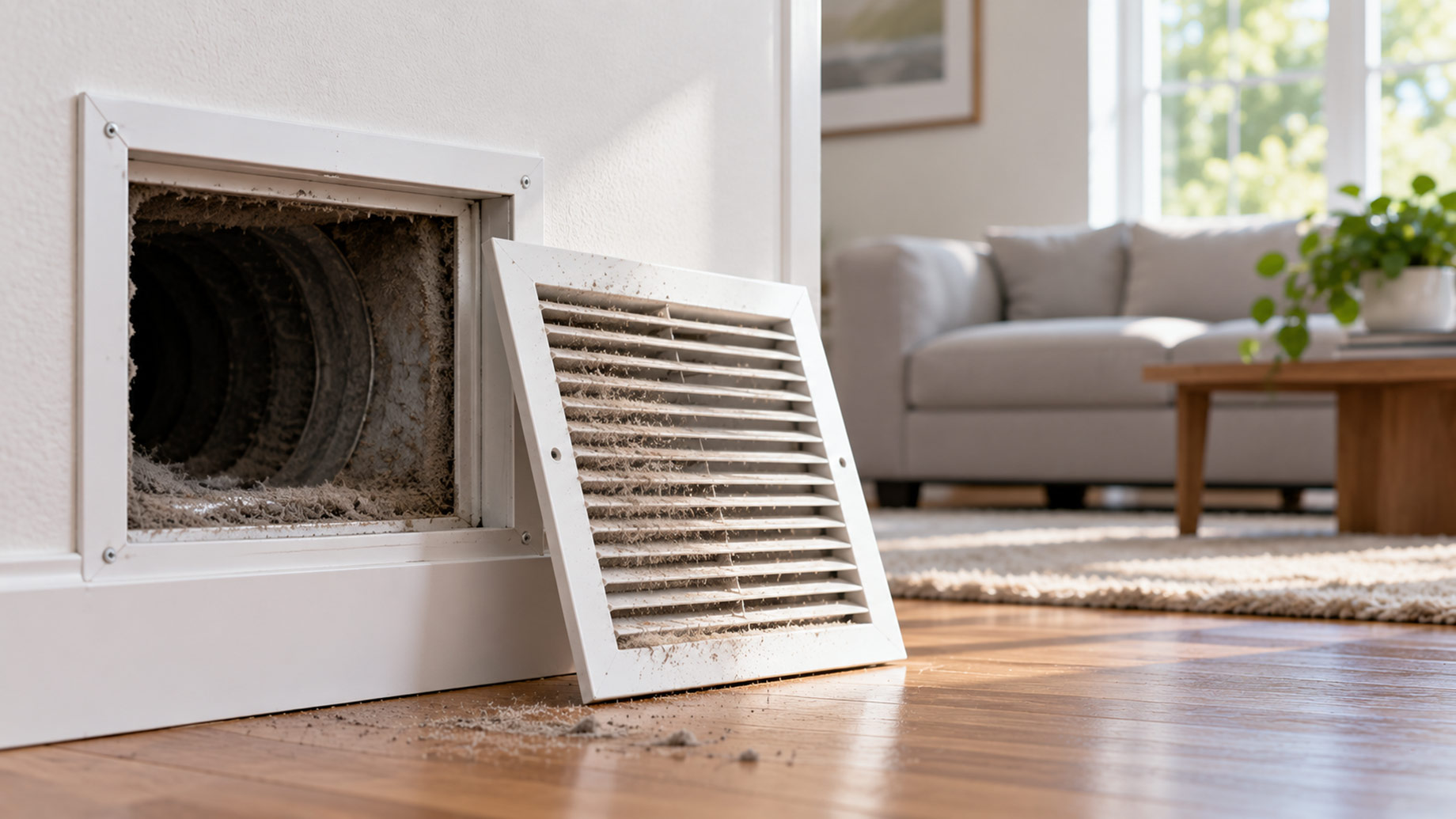
Raleigh’s humid subtropical climate is rough on home air systems. Between the pollen-heavy springs, long muggy summers, and dusty fall allergen season, your ductwork takes on a lot – and over time, that buildup doesn’t stay hidden.
Most homeowners don’t think about their ducts until something feels off. Here are five clear signs that your air ducts need attention.
Visible Dust Buildup Around Vents and Registers
Dust on a vent cover seems easy enough to deal with: wipe it off and move on. But when a fresh layer builds back up within a day or two of cleaning, your ductwork is trying to tell you something. Debris that’s packed deep inside a duct system gets pushed outward by airflow, landing on registers, nearby walls, and furniture positioned close to the vents. It’s a common pattern homeowners notice even before an inspection begins: vents get cleaned over and over, yet the dust returns faster than it should. That cycle points to heavy interior buildup, not just the normal settling of household dust. Raleigh’s constant construction activity and months-long elevated pollen counts mean ducts here collect debris faster than they would in drier or less-developed areas. This is something homeowners looking into Raleigh air duct cleaning services often bring up. Dark gray or brownish dust rings forming around floor or ceiling registers aren’t cosmetic and are worth taking seriously.
Musty or Stale Odors When the System Runs
Your HVAC system moves air into every room in the house, so any odor trapped inside contaminated ductwork rides right along with it. A musty smell that surfaces the moment the heat or air conditioning kicks on – then fades once the system shuts off – points straight at the duct system as the origin. It doesn’t linger by coincidence.
Raleigh’s climate makes mold and mildew growth inside ducts far more common than in cooler, drier states. Humid summer months pull moisture into the system, and when the ducts aren’t clean, that moisture gives organic debris exactly what it needs to develop. You might also pick up a dusty or stale smell with no obvious source anywhere else in the house. Don’t write it off as a dirty filter; swapping the filter won’t clear an odor that’s originating further back in the system.
Uneven Airflow Between Rooms
One room feels comfortable while another stays stuffy no matter how you adjust the thermostat. Bedrooms farthest from the air handler run warmer in summer and colder in winter than the rest of the house. Several issues can cause this, but clogged or heavily restricted ducts are a common culprit that homeowners tend to overlook.
When debris narrows the interior of a duct line, the airflow reaching the end registers drops off noticeably. Rooms closest to the air handler claim most of the conditioned air; rooms at the far end of the duct runs get whatever’s left. In older Raleigh homes – particularly those built before the 1990s – duct systems weren’t engineered to handle the volume of particulate they’ve since accumulated. But newer construction isn’t immune either, since high-pollen environments can produce blockages faster than most homeowners expect. If adjusting dampers and swapping filters hasn’t fixed the imbalance, the interior of the ductwork is the logical next place to look.
A Spike in Your Energy Bills Without Explanation
Energy usage shifts naturally with the seasons, but a sudden spike that doesn’t match the weather or your habits is worth investigating. Dirty ductwork makes your HVAC system work harder than it needs to. Airflow restricted by buildup forces the system into longer cycles just to hit the target temperature, and that extra run time shows up directly on your utility bill.
According to the U.S. Department of Energy, duct leaks and blockages can reduce how well your system works by up to 20 percent in some homes. Even without a leak, heavy interior contamination creates enough restriction to strain the system over time. And it’s not just about money; longer run cycles put more wear on the blower motor, heat exchanger, and other components. If your electric bill climbed noticeably without a change in habits or a rate increase from the utility company, your duct system is worth inspecting before you assume the HVAC unit itself is failing.
Worsening Allergy or Asthma Symptoms Indoors
Outdoor allergens in Raleigh are well-documented; the area regularly ranks among the higher-pollen cities in the Southeast. But if your symptoms are worse inside than outside, or flare up at home rather than elsewhere, your duct system may be recirculating allergens, dust mites, pet dander, or mold spores throughout the house.
The EPA notes that indoor air can be two to five times more polluted than outdoor air in some homes, with contaminated duct systems playing a significant role. Your HVAC acts as a central distribution network, and whatever’s settled inside the ducts gets recirculated every time the system runs. Children and adults with respiratory conditions feel this most acutely. If you’ve treated allergy symptoms without relief, had air quality testing done, and still can’t pinpoint the source, getting your ductwork inspected and cleaned is a practical next step, and one many families don’t consider until well into the process.
Conclusion
The signs of dirty air ducts – persistent dust near vents, unexplained odors, uneven airflow, climbing energy costs, and worsening indoor allergy symptoms – tend to develop gradually, which makes them easy to brush off early on. Raleigh’s climate puts a heavier load on duct systems than most other regions. Catching these patterns early works in your favor; you get ahead of the problem before it shortens your HVAC system’s lifespan or erodes the air quality inside your home.
