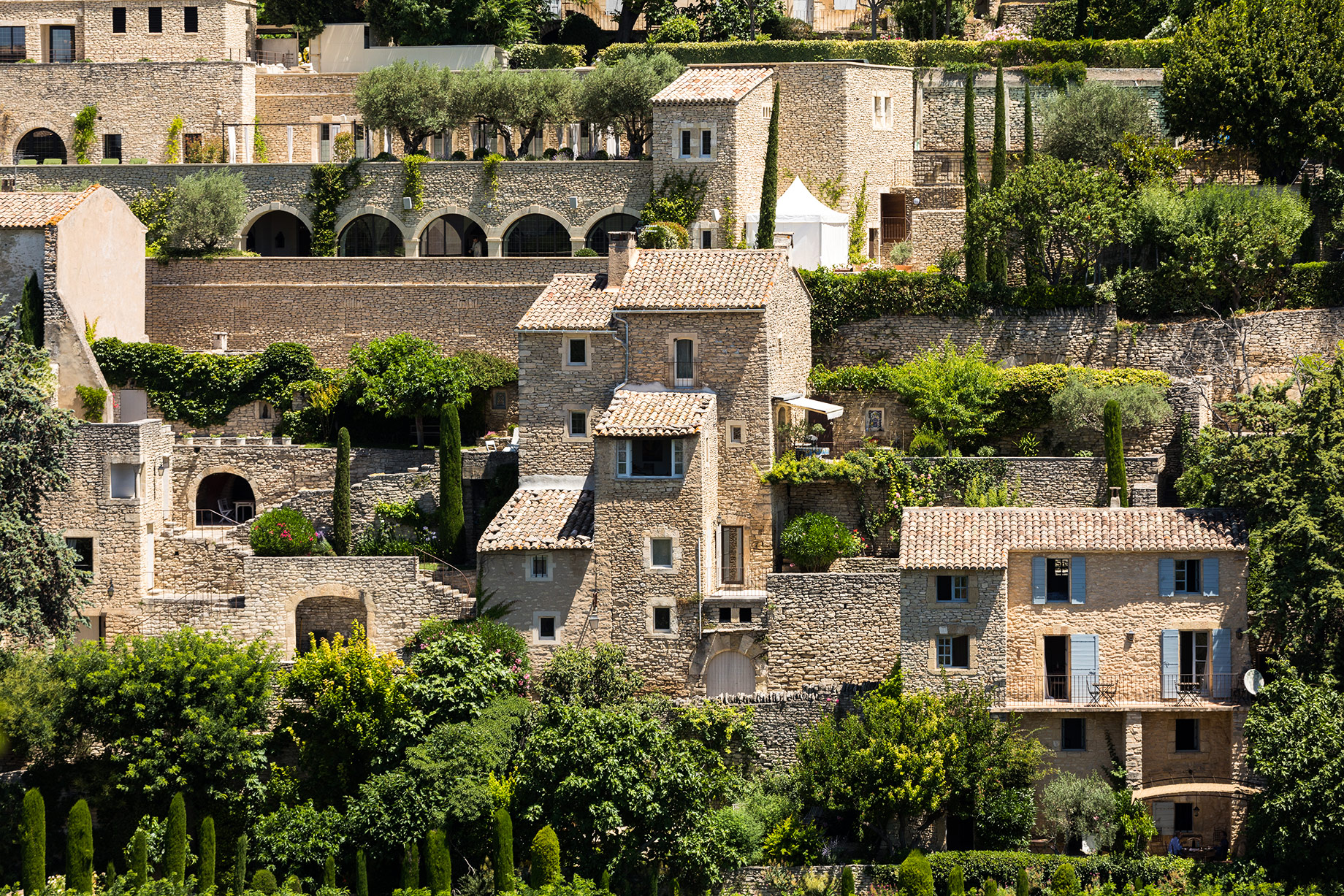
For generations, Americans have imagined Provence through stone farmhouses, plane-tree shade, village markets, lavender fields, and long lunches in the southern light. That affinity now has a measurable property-market presence.
In a study of 2022 transactions, Notaires de France reported that Americans accounted for 7% of existing-home purchases made by foreign non-resident buyers in Provence-Alpes-Côte d’Azur, compared with 1% in 2012. The figures show a rising share over that decade—not a current buyer count—but they place Provence within the broader interest in international real estate among Americans.
American citizens can buy residential property in France. The important distinction is that owning a home does not provide the right to live in France indefinitely. Buyers must also account for French contracts, acquisition costs, euro exposure, property-specific due diligence, and the realities of managing a home from abroad.
Why the Luberon Stands Out Within Provence
The region’s beauty may start the search, but its livability sustains it. Marseille Provence Airport and Avignon’s TGV station connect the area to wider European networks, while village markets, restaurants, cultural calendars, and daily services make longer and more frequent stays practical.
Within a relatively compact region, buyers can choose a lock-and-leave village house, a restored mas among olive trees, a bastide with guest accommodations, or a contemporary home designed around its views. Current listings from Provence Home illustrate how sharply property type, land, setting, and price can change from one village to the next.
The Luberon concentrates many of Provence’s defining qualities into one landscape: limestone hills, vineyards, orchards, protected countryside, and historic villages above the valleys. It is not one interchangeable market. Each village has a different rhythm, terrain, housing stock, and degree of visibility.
- Gordes offers the region’s most recognizable silhouette, prestigious addresses, and panoramic settings. Buyers should also consider summer visitor traffic and the premium attached to the best views.
- Ménerbes and Bonnieux pair elevated village life with stone architecture and expansive outlooks. Parking, steep access, and the distance to everyday services can matter as much as the view.
- Roussillon has a singular ochre-colored identity and a striking natural setting. Its popularity makes it worth experiencing in both high season and winter.
- Oppède appeals to buyers seeking a more discreet base, with village and countryside properties and access to the western Luberon.
Visit shortlisted villages in high season and winter. Test parking, services, travel times, road noise, sun, wind exposure, and connectivity; those details often determine how much a second home is actually used.
Can Americans Buy Property in France?
Yes. Official guidance for non-resident purchasers confirms that an American may buy ordinary residential property in France, although French law governs the transaction, ownership, taxation, and eventual resale.
Property ownership and immigration status are separate. France-Visas states that U.S. passport holders may visit the Schengen Area without a visa for up to 90 days in any rolling 180-day period, with time in other Schengen countries counting toward the total. A stay in France exceeding 90 days requires the appropriate long-stay visa; buying a home does not create or extend that right.
Before making an offer, buyers should obtain cross-border advice on ownership, succession planning, and French and U.S. tax reporting. The right approach depends on who is buying, their tax residence, and how the home will be used.
How the French Purchase Process Differs From a U.S. Closing
The French process is formal and highly documented. A local agent can interpret micro-markets and coordinate the search, while the notaire, a French public officer, handles the legal transfer and authenticates the deed. One does not replace the other. Based in Oppède, the Provence Home team specializes in character properties in Provence, with a strong Luberon focus.
A typical purchase follows these stages:
- Define the use and full budget. Decide whether the property will be a second home, future residence, rental, or family asset. Include acquisition costs, currency movement, initial work, and annual expenses.
- Arrange financing and document funds. Buyers using finance should obtain an early lender assessment and prepare evidence of income, liabilities, tax residence, and source of funds. If a mortgage will finance the purchase, the preliminary agreement must identify it and make the sale subject to obtaining the specified loan.
- Review before signing. An offer and the preliminary contract—usually a compromis de vente or promesse de vente—can create real obligations. Essential conditions belong in the documents before signature. A non-professional residential buyer ordinarily has a 10-day withdrawal period after formal delivery of the preliminary contract.
- Complete legal and technical checks. The notaire investigates the legal transfer and title documents. The seller’s statutory diagnostic file is not a full structural survey, so the building, land, and previous alterations may warrant independent technical advice.
- Complete the sale. Once the conditions and checks are satisfied, the parties sign the authentic deed, settle the funds, and generally transfer the keys. The notaire completes the land-registration formalities.
Acquisition costs, often imprecisely called “notaire’s fees,” are currently estimated at roughly 7% to 8% of the price for an existing home and 2% to 3% for qualifying new property. Most of the total consists of taxes and disbursements rather than the notaire’s remuneration; the exact figure varies.
What Deserves Extra Due Diligence in Provence?
The romance of an old mas can distract from the questions that decide whether it will be a pleasure or a project. Buyers should investigate:
- Structure and comfort: roof condition, drainage, damp, cracking, insulation, windows, heating, and cooling.
- Permissions, land, and access: the authorization of extensions, pools, terraces, and converted outbuildings; cadastral boundaries; easements; retaining walls; and private roads.
- Water, wastewater, and utilities: water reliability, irrigation and well documentation, any private septic system, internet quality, security, and access for maintenance teams.
- Risk and ownership load: wildfire, flood, drought, and ground-movement exposure; insurability; and the recurring care required by gardens, olive groves, woodland, and pools.
Exterior work in or near protected settings may face additional controls. Buyers planning substantial changes should verify feasibility and likely cost before letting a renovation vision justify the purchase price.
Why Local Knowledge Matters More in a Village-by-Village Market
Listings reveal room counts, land, and asking prices. They rarely explain why similar homes trade differently, how a road changes in August, where winter sun disappears, or whether a renovation is realistic in that setting.
The services described by Provence Home’s local specialists include detailed property information, virtual tours, negotiation support, and coordination with the notaire from the preliminary agreement through the final deed and key handover. That continuity can help when a buyer is several time zones away.
Agency support should sit alongside independent legal, tax, immigration, financing, and technical advice. A strong team identifies the right questions before a commitment becomes expensive.
How Should Buyers Think About Investment Value?
A Provence home can be a rewarding long-term asset, but the outcome depends on the property, purchase price, holding costs, and use. Neither appreciation nor rental income is automatic. A lifestyle purchase may be successful even when its greatest return is time spent there, but its financial model should remain conservative.
The ownership plan should include applicable property and second-home taxes, insurance, utilities, security, garden and pool care, management, repairs, financing, and currency movements. Before relying on short-term rental income, verify current national and commune rules, insurance, management costs, and French and U.S. tax treatment.
Favor durable fundamentals: a sound building, a setting that is difficult to replicate, sensible access, manageable upkeep, and a location that works beyond peak season. In the Luberon, authenticity has value, but usability helps preserve it.
The Right Purchase Begins With Its Intended Use
Start with the life the home must support, then choose the village, and only then the property. The Luberon offers American buyers beauty, cultural depth, and distinct local markets within reach of major transport links. Buying well requires clear priorities, verified facts, patient due diligence, and advisers who understand both the place and the cross-border transaction.
Frequently Asked Questions
Can a U.S. Citizen Own a Home in France?
Yes. American citizens may buy ordinary residential property in France as non-residents. French law governs the purchase and ownership, so advice should reflect the buyer’s tax residence, family circumstances, and intended use.
Does Buying Property in France Provide Residency?
No. Ownership does not grant residence rights. U.S. passport holders may generally visit the Schengen Area visa-free for up to 90 days in any rolling 180-day period. A stay in France exceeding 90 days requires the appropriate long-stay visa independently of the purchase.
How Much Should a Buyer Allow for French Acquisition Costs?
As a current general guide, allow about 7% to 8% of the price for an existing property and 2% to 3% for qualifying new property. Also budget for financing, technical advice, currency conversion, repairs, and ongoing ownership.
Does the Notaire Inspect the Physical Condition of the Home?
No. The notaire secures and authenticates the legal transaction, not the building’s physical condition. Commission appropriate independent technical inspections when the property’s age, condition, land, or renovation history warrants them.
This article provides general information, not legal, tax, immigration, financial, or investment advice. Rules and circumstances can change, so buyers should consult qualified French and U.S. professionals before acting.
