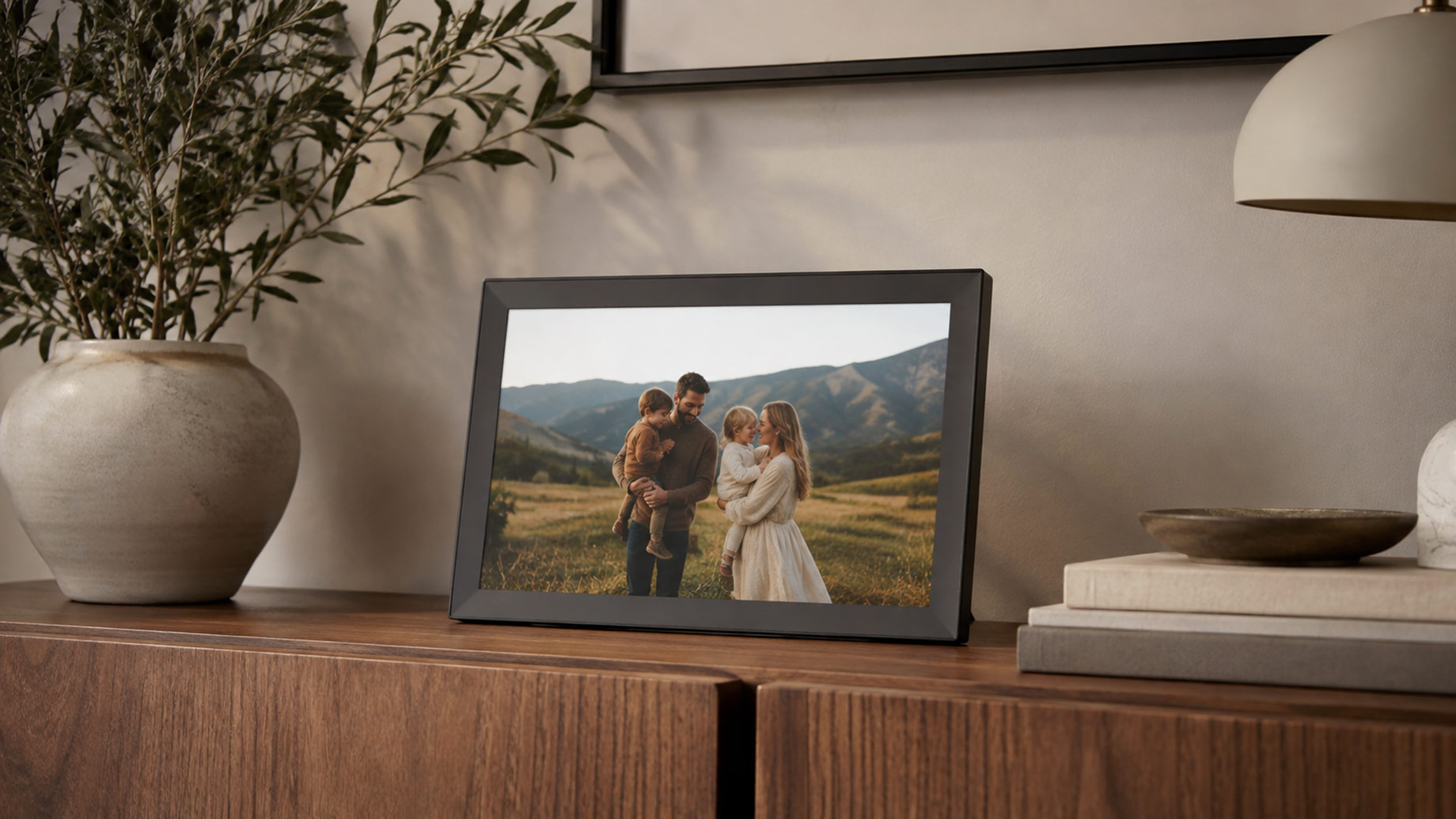
A digital photo frame should bring memories into a room—not make the room feel more electronic.
Yet many digital frames are designed more like small monitors than home objects. Glossy screens catch reflections, thick plastic bezels stand out against carefully chosen furniture, and poorly fitted photos can leave distracting borders around the image.
For anyone who cares about interiors, those details matter.
Amivoframe takes a different approach. Instead of asking a home to make room for another screen, it is designed to let photographs, not technology, remain the focus.
From its matte display and natural photo rendering to intelligent image fitting and understated form, here is why Amivoframe stands out for people looking for the best electronic photo frame for a considered home.
1. A Screen Designed to Look Less Like a Screen
The biggest challenge with any digital frame is simple: how do you display a digital image without constantly reminding people that they are looking at an LCD?
In bright living rooms, bedrooms, and open-plan interiors, reflections can quickly make a glossy display feel out of place. Poor color tuning can have the same effect, especially when skin tones appear overly saturated or darker areas of a photograph turn gray.
Amivoframe uses a matte, low-reflection display designed to reduce the harsh screen-like appearance common to conventional digital frames.
Its photo rendering is tuned toward natural-looking color rather than exaggerated saturation, helping family photographs retain more realistic skin tones, contrast, and visual depth.
The difference is especially noticeable when the frame sits beside physical photographs, books, ceramics, or other decorative objects. Instead of competing with its surroundings, the display feels quieter and more integrated into the room.
Smart Photo Cropping Without Awkward Borders
Screen quality is only part of the experience.
Family photo libraries contain a mixture of portrait images, landscapes, screenshots, older photographs, and pictures captured in different aspect ratios. On many digital frames, that results in black bars, empty margins, or images being stretched unnaturally to fill the screen.
Amivoframe automatically adapts photographs to the display and intelligently crops the composition while helping preserve the main subject.
That means a portrait can remain centered, a family group is less likely to be awkwardly cut off, and landscape photographs can fill the frame more naturally.
The result feels closer to a photograph that has been intentionally framed for the space rather than an image simply placed on a screen.
2. Proportions That Work With the Room
A digital frame needs enough presence to make photographs enjoyable from across a room, but it should not dominate the furniture around it.
At 10.1 inches, Amivoframe is sized to work comfortably on a living room console, bedside table, bookshelf, kitchen counter, or home office shelf.
Its restrained matte finish and simple frame geometry help it sit alongside different interior styles—from warm contemporary and Scandinavian-inspired spaces to minimalist and mid-century interiors.
More importantly, the design does not try too hard to look “smart.”
There is no need for an oversized technology aesthetic to communicate what the product can do. When idle, Amivoframe is primarily there to display the people and moments that matter.
That visual restraint is important in a home where every object has been chosen deliberately.
3. Touch and Voice Interaction Without Visual Clutter
Good home technology should be easy to use without constantly demanding attention.
Many digital frames rely heavily on smartphone apps or physical controls that make simple actions feel more complicated than necessary.
Amivoframe combines a touchscreen with voice interaction, making everyday use more direct.
For example, family members can ask the frame to bring back a particular memory:
- “Show me our trip to Italy.”
- “Find photos of Emma when she was little.”
- “Tell me about this photo.”
Instead of scrolling through hundreds of images on a phone, the interaction happens around the photographs themselves.
This is where Amivoframe’s AI becomes most useful: not as a feature that needs to be constantly noticed, but as a way to make a family photo collection easier to explore.
The technology stays largely in the background. The memory remains the center of attention.
4. How Amivoframe Compares With a Typical Digital Frame
People searching for the best digital frames often compare screen size, storage, connectivity, and app features.
But for a frame that will remain visible in the home every day, visual presentation matters just as much as the specification sheet.
None of these features needs to shout for attention individually.
Together, however, they solve a problem that many digital frames overlook: the frame itself should disappear visually so the photograph can take over.
5. Technology That Belongs in the Background
The best smart home products are often the ones that stop feeling like technology after a few days.
A thermostat should quietly manage temperature. A speaker should fill a room with sound without becoming the visual center of it. A digital photo frame should do the same for photographs.
Amivoframe is designed around that idea.
Family members can remotely share new photographs and videos, interact with memories using voice, and explore older moments without turning the frame into another device that constantly asks to be managed.
For older family members in particular, that matters. The frame can remain in the home doing what a traditional framed photograph has always done—keeping family visible—while more advanced features remain available when needed.
Conclusion: Let the Memory, Not the Screen, Define the Space
A thoughtfully designed home tells a story through the objects inside it.
Family photographs are naturally part of that story. The challenge with digital frames has always been finding a way to bring more photographs into the home without introducing something that feels like another computer screen.
Amivoframe approaches the problem differently.
Its matte display, natural photo presentation, intelligent image fitting, understated proportions, touchscreen, and voice interaction are all built around one principle:
The technology should support the memory, not compete with it.
For homeowners looking for an elegant way to keep family photographs present in everyday life, Amivoframe offers a more considered alternative to the conventional digital photo frame.
Explore Amivoframe or read our guide to choosing the best electronic photo frame for your home.
