Most under-insulated homes do not look like a problem. They just feel uncomfortable and cost too much to heat. The signs are easy to miss because they build slowly. Here is how to tell whether your home needs more insulation, and what to do next.
Check your bills and your comfort
Start with the two things you notice daily.
- Heating and cooling costs that rise without a change in rates or habits
- Rooms that run colder or hotter than the rest of the house
- A furnace that runs almost constantly in winter
- Temperature swings between floors
An uneven house usually points to missing or compressed insulation, not a failing furnace.
Look for drafts and cold surfaces
Walk the house on a cold day and use your hand.
- Drafts near outlets, baseboards, and window frames
- Interior walls that feel cold to the touch
- Cold floors above a crawl space or garage
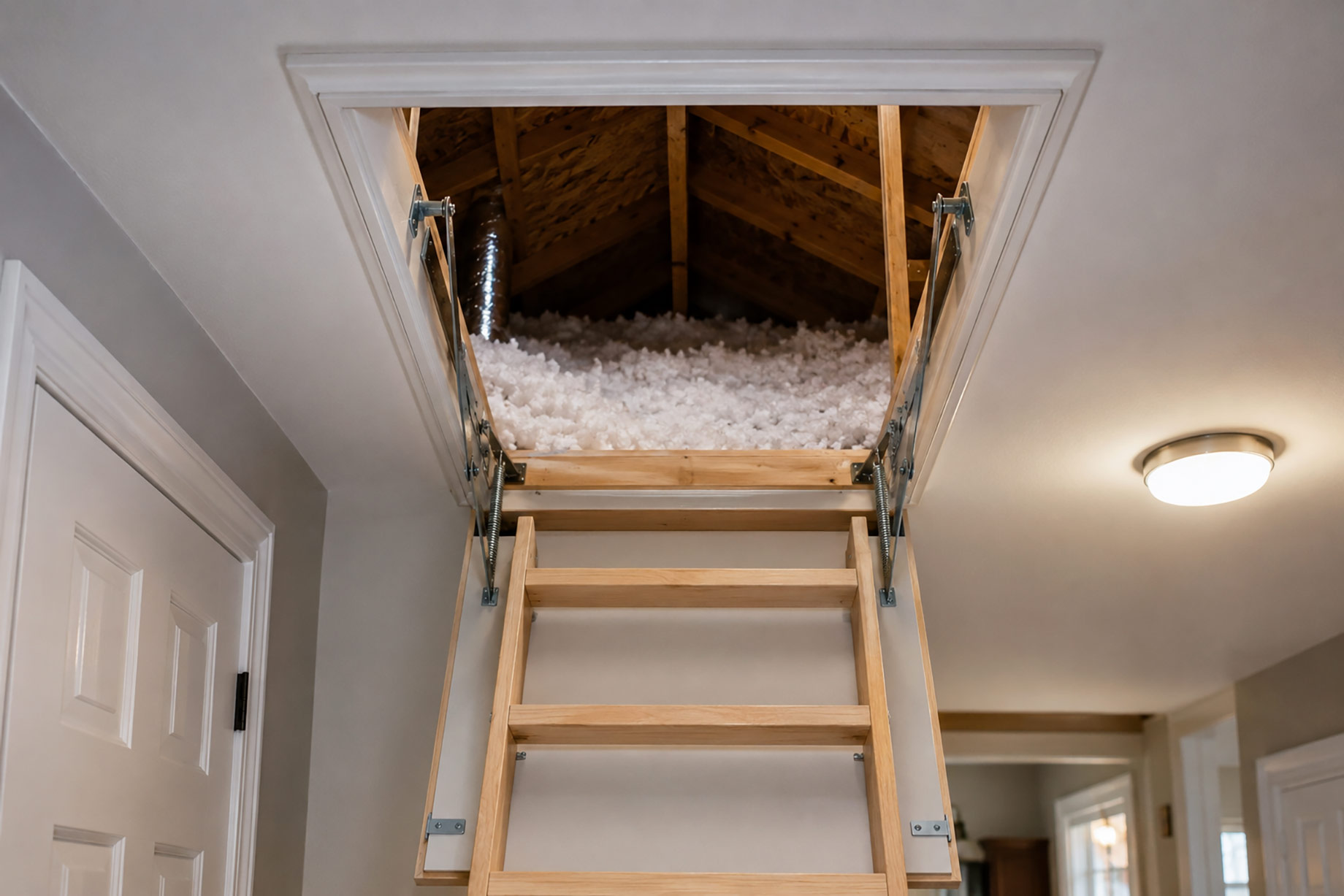
- A noticeable chill near the attic hatch
Cold surfaces mean heat is moving through the assembly faster than it should.
Watch for ice dams in winter
Ice dams are one of the clearest warnings in a cold climate. They form when heat escapes into the attic, melts snow on the roof, and the water refreezes at the cold eaves. The result can back water under shingles and cause interior damage. Ice dams point to attic heat loss and often to air leaks, not just to gutters.
Measure what you have
Go up to the attic and measure the depth of the insulation with a ruler.
- The Department of Energy recommends about R-49 to R-60 in attics for cold climates
- Loose fill fiberglass runs about R-2.2 to R-2.7 per inch
- Blown cellulose runs about R-3.2 to R-3.8 per inch
- If you can see the tops of the joists, you almost certainly need more
Also look for insulation that is matted, damp, or pushed aside, since compressed material loses much of its value.
What to do about it
Fix the causes in the right order.
- Seal air leaks at the attic hatch, recessed lights, and plumbing stacks first
- Add depth to bring the attic to the recommended R-value
- Insulate rim joists and crawl spaces, which are often skipped
- Confirm the attic is properly ventilated so moisture can escape
For batt work in accessible walls and floors, fiberglass batt insulation is a straightforward and affordable choice.
Bring in a professional
An insulation contractor in Brainerd can perform an assessment, identify where the heat is escaping, and recommend the right approach for each area. Ask for a written scope that lists air sealing along with insulation, since the two work together.
An under-insulated home costs you money every month and never feels right. Check your bills, feel for drafts, watch for ice dams, and measure your attic depth. Seal the leaks, add what is missing, and your home becomes cheaper to run and more comfortable to live in.
