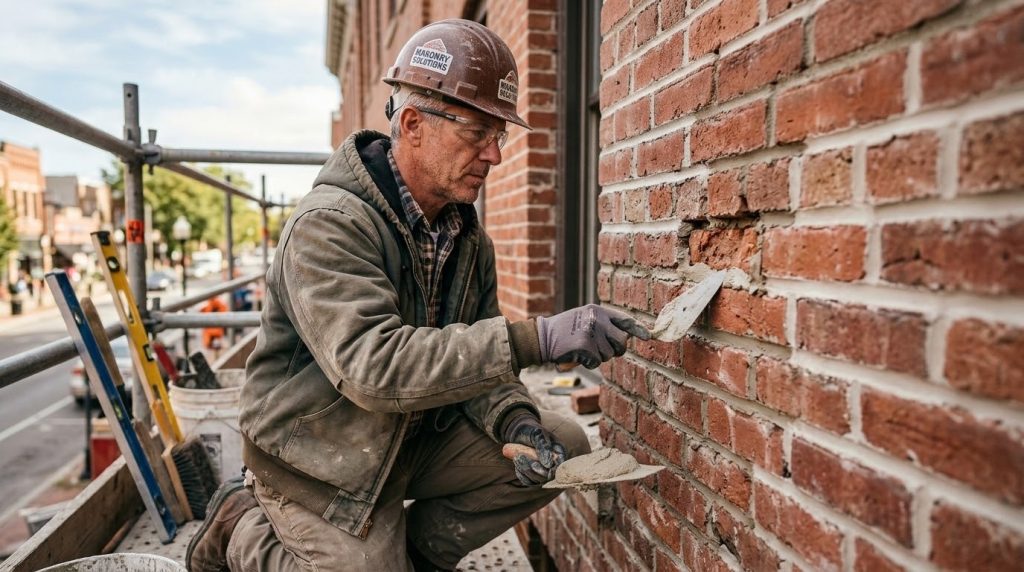
A practical guide for property owners and building managers who need to identify warning signs, reduce repair risk, and address masonry issues before they escalate.
Brick masonry gives buildings a durable exterior, but visible damage should not be treated as only an appearance issue. Cracked mortar, loose bricks, moisture staining, bulging sections, and deteriorated joints can point to deeper problems within the wall system.
For property owners and building managers, the practical goal is to identify concerns early, understand repair urgency, and plan work before small defects become larger building envelope issues.
Know the Difference Between Surface Wear and Warning Signs
Some masonry wear is expected as buildings age. Minor mortar erosion, light staining, or isolated surface damage may be manageable when inspected early. However, wider cracks, repeated water marks, loose units, stair-step cracking, or movement in the wall should be taken more seriously.
Brick masonry works as a system. The brick, mortar, anchors, flashing, drainage, and supporting structure all affect performance. When one part begins to fail, the visible symptom may appear on the exterior long after the underlying issue started.
Property managers should document visible changes with dated photos and notes. If cracks widen, bricks shift, or moisture marks return after repairs, the issue may require more than spot patching. For owners comparing masonry repair considerations in Québec, a resource on Brique Maconnerie can help frame what to review before planning exterior brick work, façade repairs, or wall assessment.
Bulging Brick Should Be Assessed Promptly
A bulging brick wall, often called a ventre-de-bœuf in Québec masonry discussions, deserves careful attention. This condition can appear as an outward curve or swelling in part of the wall. It may be linked to moisture infiltration, anchor deterioration, freeze-thaw movement, poor drainage, aging materials, or previous repair issues.
The concern is that the visible bulge may not show the full extent of the problem. Behind the wall surface, anchors may be corroded, mortar may have weakened, or brick sections may be separating from the support system. Delaying assessment can make the repair scope harder to control.
Building managers should avoid assuming that a bulge can be solved with cosmetic repointing. A qualified evaluation can help determine whether the affected area needs localized repair, brick removal, anchor replacement, rebuilding, or additional investigation into moisture sources.
Moisture Is Often the Hidden Cost Driver
Water is one of the main reasons masonry problems become more expensive over time. Once moisture enters through cracked mortar, failed sealants, damaged flashing, or open joints, it can contribute to freeze-thaw damage, corrosion, staining, interior leaks, and ongoing deterioration.
In Montréal and other cold-weather markets, seasonal temperature changes can make small openings more damaging. Water enters, freezes, expands, and places pressure on the surrounding materials. Over repeated cycles, this can enlarge cracks and loosen masonry units.
A practical masonry review should look beyond the damaged brick itself. It should consider whether water is entering from roof edges, windows, balconies, parapets, missing caps, poor drainage, or failed transitions between materials. Repairing only the visible brick without addressing the moisture path may allow the issue to return.
Permits and Borough Rules Can Affect Exterior Repairs
Exterior masonry work may involve local requirements, especially when bricks are removed, replaced, or the façade appearance changes. Montréal states that if a building’s exterior siding is made of brick, a permit is required as soon as a brick is removed. The city also notes that exterior cladding changes must respect original building components.
Rules can also vary by borough and property type. Montréal’s English guidance explains that some areas and properties are subject to standards intended to preserve historic, architectural, or landscape value, and additional documentation may be required.
Before starting façade work, property managers should confirm borough rules, permit requirements, access needs, safety planning, and whether the repair scope affects the building envelope. This step can help avoid delays once scaffolding, tenants, contractors, and budgets are already coordinated.
Choose Masonry Support Based on Diagnosis, Not Only Price
Masonry repairs should not be selected by the lowest estimate alone. Two quotes may describe very different scopes: one may include superficial repointing, while another may include removing damaged bricks, replacing corroded anchors, addressing moisture entry, and rebuilding affected sections.
A stronger evaluation starts with the diagnosis process. Does the contractor explain what is causing the visible issue? Do they distinguish between mortar failure, brick deterioration, movement, drainage, and structural concerns? Do they clarify which repairs are urgent and which can be planned?
Licensing should also be checked. The Régie du bâtiment du Québec advises property owners to verify that an entrepreneur holds a valid licence before hiring for renovation or construction work. For corporate property teams, this is part of basic risk management.
Plan Repairs Around Access, Tenants, and Building Operations
Masonry work can affect more than the façade. Depending on the scope, the project may involve scaffolding, sidewalk protection, parking coordination, tenant notices, noise management, dust control, and temporary access restrictions.
Planning matters because masonry work is often weather-sensitive. Mortar, curing conditions, exterior access, and site safety can all be affected by temperature and precipitation. Property managers should discuss timelines, staging, protection measures, and communication needs before work begins.
For commercial and multi-unit properties, clear communication helps reduce disruption. Tenants and occupants should know what areas may be affected, when work is expected, and who to contact if they notice interior leaks, vibration concerns, or access issues.
Conclusion
Brick masonry problems are easier to manage when they are assessed early and treated as building performance concerns, not just cosmetic flaws. Visible damage may point to moisture, movement, anchor deterioration, or façade issues that require a more careful repair plan.
For property owners and building managers, the practical approach is to document warning signs, verify permit requirements, choose qualified support, and address the cause of deterioration before repair costs grow.
Additional Resources
For property owners researching visible brick bulging or wall deformation, this réparation ventre-de-bœuf resource offers more context on assessment and repair planning.