Walk a prospective buyer through a home and watch where their attention lands. It isn’t the square footage or the roofline — it’s the kitchen and the bathrooms, the two rooms that read as “expensive” and the two rooms where a wrong material shows its age fastest. Fixtures are the most permanent commitments in either space. They’re plumbed in, lived with daily, and replaced reluctantly, which means the choices you make today are quietly setting both your comfort for the next decade and what the home appraises and shows for when you sell.
The instinct is to shop for the look. The better instinct is to shop for how the piece will behave in year eight.
Why a Small Line Item Carries Outsized Weight
A faucet or a basin is a modest fraction of a renovation budget, yet it’s touched more often than almost anything else in the house — and it’s the thing people put off replacing until it fails. That combination is why fixtures reward patience. Three lenses sharpen the decision:
- Material longevity — will the surface still look intentional after a decade of real use?
- Mechanical quality — does the moving part feel solid, or will it loosen and drip?
- Design restraint — is the silhouette quiet enough that it won’t date the room?
Get those three right and the room ages gracefully. Get them wrong and you’ve installed tomorrow’s renovation line item.
How Fireclay Ages
The kitchen sink is where material honesty pays the clearest dividends, because no other surface in the house absorbs as much daily abuse in plain view.
Stainless steel is light and forgiving but shows water spots and softens to a duller sheen over years of scrubbing. Cast iron arrives with real heft and a deep enamel gloss, but that enamel is a coating — chip it at the drain or the rim and the dark iron underneath announces itself permanently. Fireclay is different in kind, not degree: it’s a thick, kiln-fired ceramic body finished with a dense, glassy glaze fused to the clay, so it shrugs off scratching, staining, and the acid etching that dulls lesser surfaces. Years in, a well-made fireclay sink reads less like an appliance and more like a piece of the architecture.
The apron-front farmhouse profile is the form that suits it — and it’s practical, not just photogenic, putting the working surface forward where your hands actually are. If you’re considering one, a homeowner-direct glazed-fireclay apron-front sink is offered in a workstation configuration, with an integrated ledge that lets cutting boards and racks slide along the rim — the kind of detail that earns its place every day rather than just on listing photos. When you evaluate any fireclay sink, look at the wall and base thickness, the evenness of the glaze at the rim and corners, the drain placement, and how the accessories actually fit.
Where Small Choices in a Bathroom Read as Luxury
Bathrooms trade on restraint. The pieces that feel expensive are rarely the loudest ones — they’re the basins and fittings that look considered and sit well in the room.
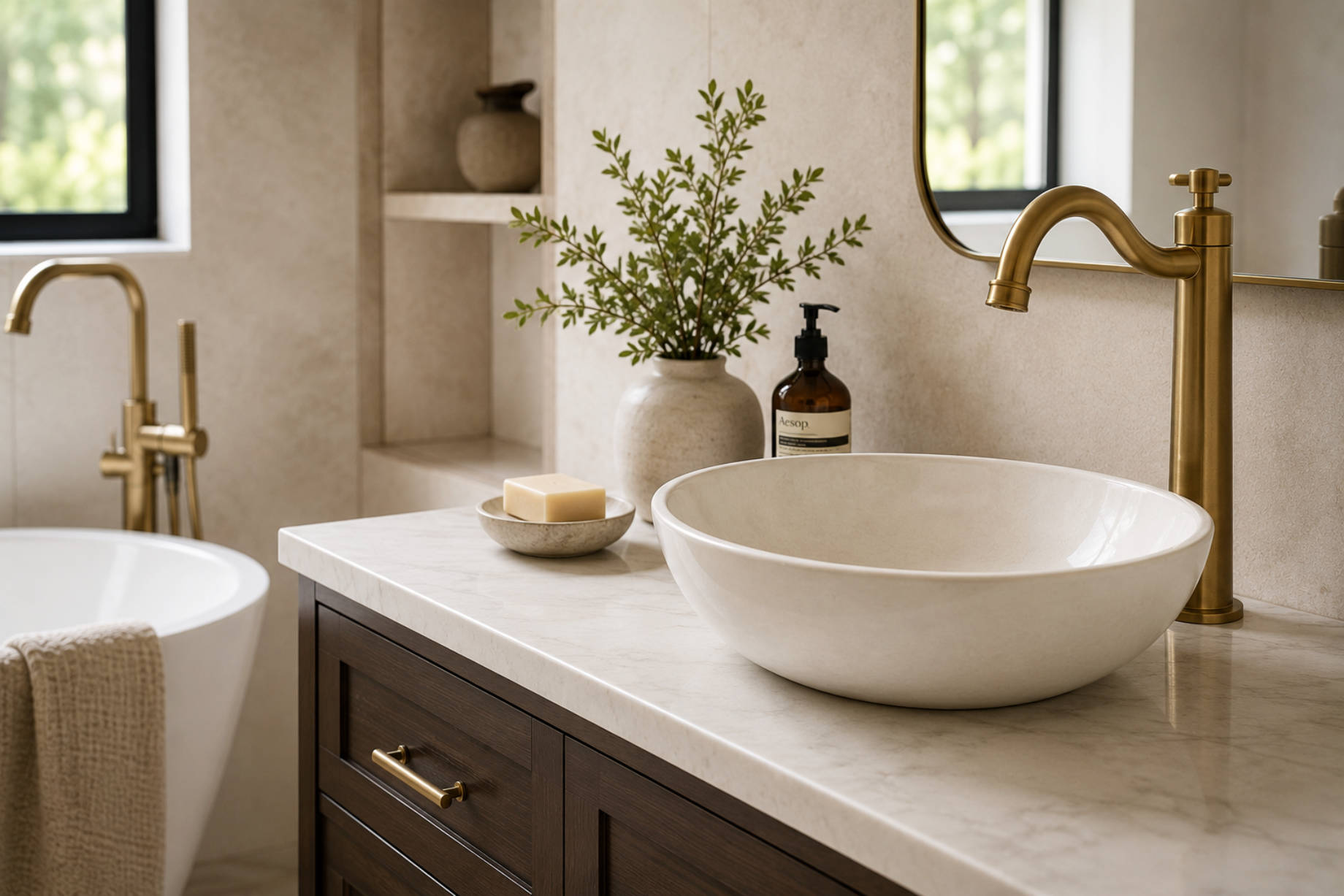
The basin is the anchor, and it’s worth choosing from a range deep enough to keep finishes consistent across a primary bath, a powder room, and a guest bath without forcing compromises. A broad collection of bathroom basins spanning fired ceramic and natural stone lets you hold one design language across every bathroom in the house — the kind of coherence a discerning buyer notices even if they can’t name it.
The Faucet You’ll Feel Every Morning
Don’t let the basin steal all the attention from the fitting that meets your hand first. The tell of a quality faucet is tactile: a ceramic-disc cartridge turns with a smooth, weighted quarter-turn and stops cleanly, where a cheaper mechanism feels loose and starts to weep. Reach for the EPA WaterSense label to keep water use sensible, and confirm the faucet was tested to ASME A112.18.1 / CSA B125.1 so the performance is verified rather than implied. PVD finishes, in one line: they hold their color far longer than ordinary plated coatings, which is what you want on a piece you’ll touch thousands of times a year.
Let the Mounting Style Set the Budget, Not the Other Way Around
How a basin meets the counter quietly shapes both the install bill and the daily experience of the room — so decide the mounting before the countertop is templated, not after.
An undermount basin gives a seamless, wipe-clean counter edge and a calm, built-in look, but it asks for precise fabrication and sealing, which shows up in the stone fabricator’s time. A vessel basin sits proud of the counter for a sculptural, boutique-hotel effect, lets you lower the cabinet height, and pairs with a taller faucet — a statement choice for a powder room more than a hard-working family bath. Pedestal and wall-hung basins hide the plumbing for a clean, space-saving footprint, but they leave no margin for error in the rough-in, so they reward accurate plumbing over forgiveness. A drop-in basin is the most forgiving and economical to set, which is exactly why it suits a secondary bath where budget discipline matters more than drama. Match the mount to how the room is actually used, and the install runs cleanly.
A Framework You Can Carry Into Any Showroom
When everything starts to look equally tempting, narrow it the same way every time:
- Start with the material and ask how it ages, not just how it photographs.
- Interrogate the mechanism with your hand — feel the cartridge before you trust it.
- Confirm the certifications that signal water efficiency, tested performance, and material safety.
- Choose the quietest silhouette in the room; restraint is what still looks current a decade later.
The Long View
The pieces that feel like luxury years from now are almost never the flashiest ones at purchase — they’re the ones chosen for how they’ll wear. A fireclay sink that still looks like stone after a decade, a faucet whose cartridge never starts to drip, a basin whose finish matches across every bathroom: these are the quiet decisions that keep a home feeling cared-for and that hold their weight when an appraiser or a buyer comes through. Spec for the long view, and the value takes care of itself.
A note on the author: Daniel Hartley writes about choosing kitchen and bath products that last. His perspective comes from years on the production and sourcing side of the fixture business across the North American, UK, and Australian markets — closer to the kiln and the spec sheet than the showroom floor.
