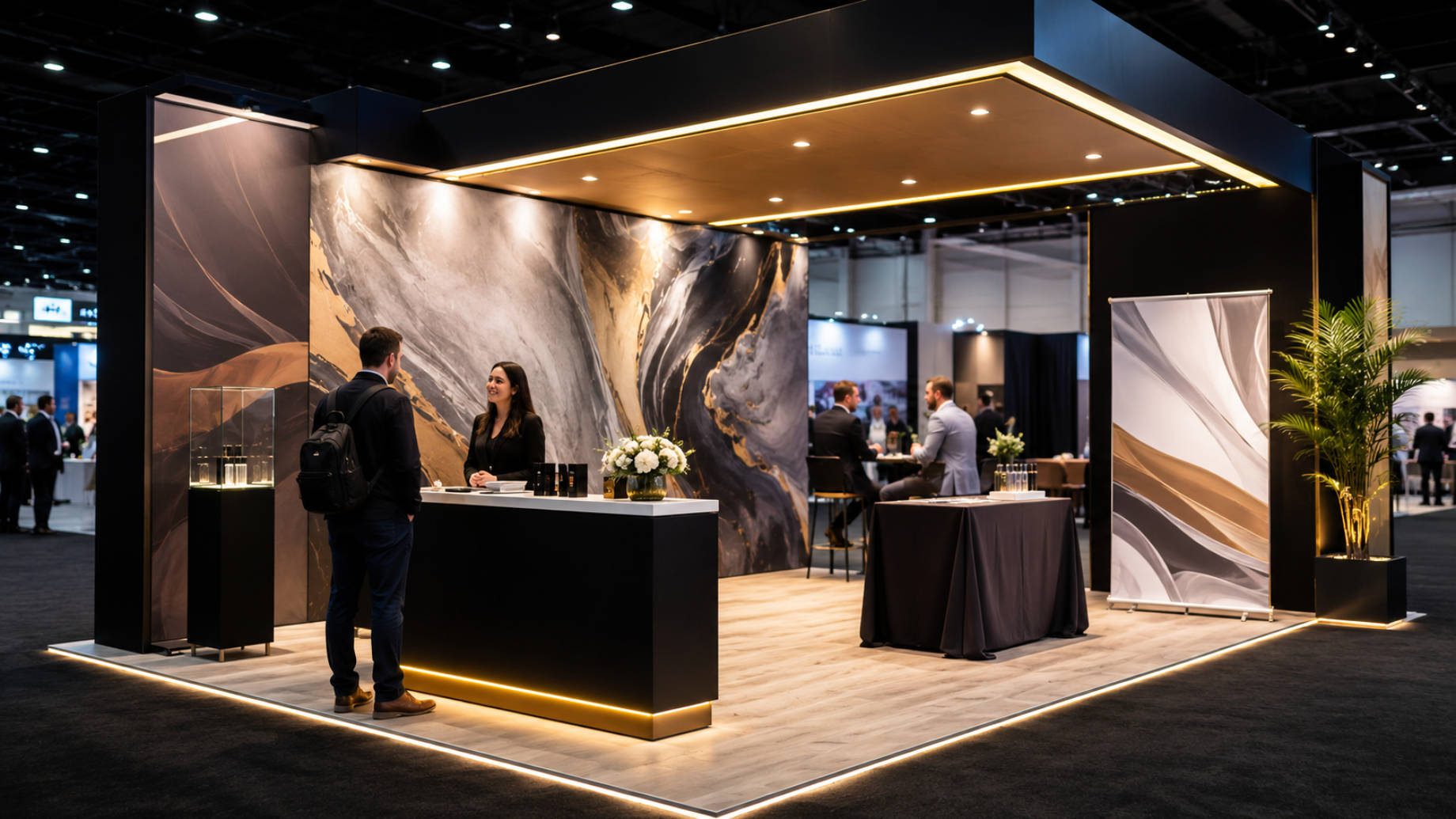
At some point in your event calendar, you will face this decision. You have a trade show coming up, a budget to work within, and two very different price points in front of you. The cheap option looks similar in the product photos. The premium option costs three to four times more. The question is whether that gap in price translates into a gap in your results.
The honest answer is that it depends entirely on how you plan to use the display.
Where Cheap Displays Actually Break Down
If you attend one or two events per year on a limited budget, a low-cost pop-up banner or entry-level canopy can do the job. The problem emerges when you use those same products the way most active exhibitors do.
At the structural level, cheap display frames use thinner aluminum tubing and lower-grade connector hardware. That hardware is what takes the most stress every time you assemble and disassemble. After 20 to 30 setup cycles, connectors in budget frames begin to develop play, meaning the structure loses its precision alignment. Your display leans, your graphic hangs unevenly, and your booth reads as slightly off to every person who approaches it.
At the print level, budget displays typically use solvent or UV-printed vinyl graphics rather than dye-sublimation fabric. The distinction matters when you are outdoors. Solvent-printed vinyl retains roughly 70 to 80 percent of its original color intensity after a summer of outdoor UV exposure, with visible fade at red and yellow wavelengths first. Dye-sublimation fabric bonds ink directly into the fiber rather than sitting on the surface, which keeps your color accuracy intact through extended outdoor use.
According to 2026 trade show industry data, cheap displays need replacement within two to three events under regular use. Premium commercial-grade systems last five to ten years with proper care. If you attend five or more events per year, the replacement math tips in favor of the premium investment well before year two.
What You Are Paying For at the Premium Level
Premium event displays carry higher price tags because of specific engineering and material choices that produce measurable results on your event floor.
10×10 custom canopy tents with sidewalls at the commercial grade use have reinforced corner brackets, precision locking mechanisms on the frame legs, and higher-denier fabric rated for sustained outdoor use. Those three things together produce a tent that stays square and stable through a full day in variable weather. When your tent holds its geometry, it keeps the printed graphic under correct tension, which is how your brand identity reads at distance the way you designed it to read.
Sidewalls on a premium tent are engineered to attach cleanly, align with the canopy edge, and hold position in wind. Budget sidewalls often have mismatched attachment points, which creates visible gaps and irregular surfaces that undermine the enclosed brand environment the sidewall is supposed to create.
At the display level, premium fabric tension systems use push-fit or SEG edge mechanisms that keep your graphic flat without wrinkles across the entire surface. Budget stretch systems develop sag at the center panel over time as the fabric loses tension, which is visible and difficult to correct while you are standing on a live event floor.
The Per-Event Cost Calculation That Changes the Decision
The price difference between a budget and a premium display system looks large as a single purchase. It looks very different when spread across events.
A budget 10×10 canopy and display package in the $400 to $700 range that needs replacement after three events costs $130 to $230 per event. However, a premium commercial-grade system at $1,500 to $2,500 that lasts five years at 10 events per year costs $30 to $50 per event. The premium option costs less per event in year two.
That calculation does not factor in the brand cost of a visually deteriorating display, which is harder to quantify but real. A faded canopy, a sagging banner, or a frame that leans draws attention for the wrong reason at exactly the moment the display is supposed to be building your brand credibility.
What Premium Looks Like in Practice
Custom Tents designed for the event marketing sector offer commercial grade hardware in their framing with all-over dye-sublimation printing on each and every component of the tent – the valance, sidewalls, half-walls included. This allows for an exhibit solution that will have your branding communicated from all angles at the same high standard. No more standardized components that need to be fixed during your season just because they were never right in the first place.
Even in terms of your premium products, your accessory system becomes critical as well. From counter display systems, table coverings, banner stands to even carrying cases, you will find that all these elements have been designed with the canopy system in mind and not an add-on feature at all.
The Honest Recommendation
If you are a first-time exhibitor testing a new market or attending a single annual event, a mid-range budget display with commercial-grade frame hardware and professional-level printing is your sensible starting point. Put your budget into the frame and the print quality, and accept fewer accessories for now.
If you are running an active event calendar of five or more shows per year, the premium investment pays back faster than you expect. The longevity is real, the brand consistency across a full season is real, and the operational reliability of not managing damaged or degraded display components mid-season is worth more than the upfront cost difference suggests.
The decision is not really about cheap vs premium. It is about how many events per year you attend, and whether your display will be doing serious marketing work or occasional coverage.
