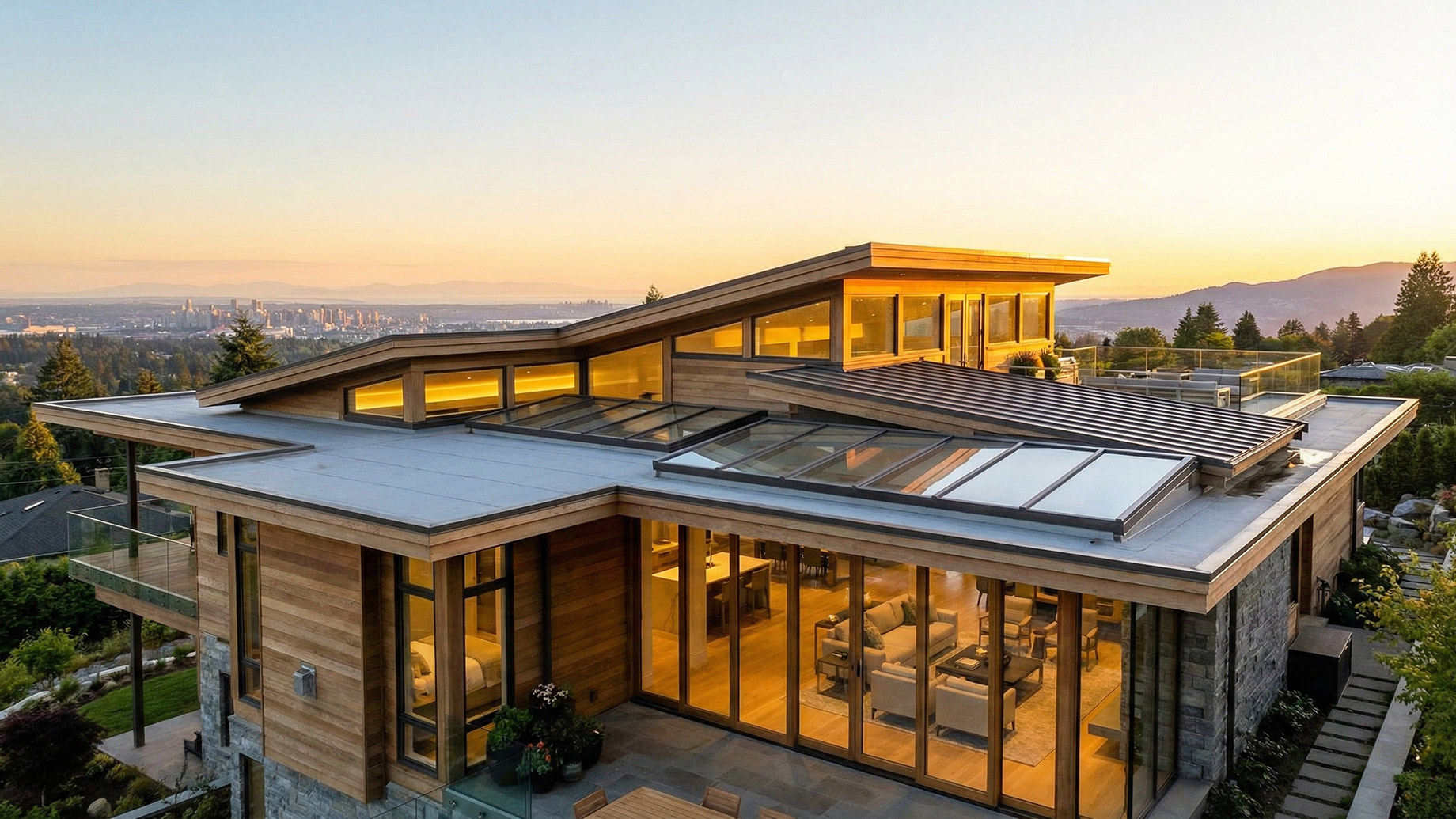
Your roof is blocking your view. It’s also blocking light. These aren’t separate problems. They’re the same problem from different angles.
Most people think about roofs functionally. They keep rain out. They protect the building. They’re infrastructure. But roofs also shape how your home experiences light and views. A poorly designed roof can darken an upper floor. A cleverly designed roof can frame views and flood spaces with light.
The question isn’t whether your roof should be functional. It should be. The question is whether it should only be functional, or whether it should also serve your quality of life.
How Roof Design Affects Light
Light enters a room from windows. This is obvious. What’s less obvious is how roof design controls where light can come from and how much light reaches different parts of your space.
A traditional pitched roof with a sloped underside creates a ceiling that’s lower at edges and higher in the middle. This matters for windows. A south-facing window on an upper floor with a sloped roof ceiling might get less afternoon light than it could because the roof edge blocks light as the sun moves lower in the sky.
What happens if you flatten the roof line? Or create a clerestory—a window running along where roof meets wall? Suddenly the same space receives substantially more light throughout the day.
Dormer windows (windows protruding from the roof) create additional light access. They’re not just functional. A well-designed dormer can flood an attic bedroom or upper-floor space with light that traditional windows wouldn’t provide.
A Norwich terraced property with a typical pitched roof had a dark upstairs bedroom—the back bedroom on the upper floor. Light was limited because south-facing windows were set in a wall at the room’s side, and the roof slope above limited afternoon light. The homeowner added a dormer window facing south. The bedroom became dramatically brighter. It was the same room. The only change was adding vertical window area in the roof plane itself.
Natural light affects more than just visibility. It affects mood, circadian rhythms, and how spaces feel. A room that’s technically bright enough but feels dark because light comes from limited angles is psychologically different from a room receiving light from multiple directions. Roof design controls this.
Does your upper floor feel as bright as you’d want? Could roof modification change that?
Controlling Solar Gain and Summer Heat
More light isn’t always better. Summer sun coming through large roof windows can create excessive heat. This is particularly relevant in Britain, where summer overheating is becoming more common as climate patterns shift.
Strategic roof design manages solar gain. An overhang above a south-facing clerestory allows winter sun through (when the sun is lower) while blocking summer sun (when the sun is higher). The exact angles depend on latitude and specific window placement, but the principle is straightforward.
Dormer windows can be positioned to control seasonal light. A north-facing dormer provides consistent light without seasonal heat gain. A south-facing dormer needs shade management through blinds or overhangs, but provides warmth in winter when most valued.
Modern roof design increasingly integrates solar panels. But before considering solar panels, understand roof orientation. A roof facing south or southwest receives more sunlight. A roof facing north receives minimal solar gain. Roof design determines whether solar technology makes sense.
A bungalow in South Norwich had a north-facing roof receiving afternoon shadow from neighbouring buildings. The owners considered solar panels. A surveyor noted that solar panels on this roof would be inefficient because of orientation and shading. Instead, they focused on south-facing roof modifications—skylights and clerestory windows—that took advantage of available light. Better use of natural light reduced heating and lighting costs more than solar would have.
Views and Sight Lines
Roof design determines what views are possible from upper floors.
A traditional pitched roof with a low eave height severely restricts views from upper-floor windows. You can see what’s immediately in front of you, but raised perspectives—seeing across a garden, seeing distant landscapes—aren’t possible because the roof cuts off sight lines.
Raising the roof line or creating a flat roof with parapet walls changes sight lines dramatically. A bedroom window that previously looked at a fence at eye level suddenly provides views across the area. This matters more than it sounds. Views—even just seeing distance rather than an immediate barrier—affect how spaces feel.
In Norwich, properties with flat roofs or raised roof lines have upper-floor windows that frame views across the city toward the cathedral. Properties with traditional pitched roofs don’t. The views aren’t just pleasant. They’re assets. They affect property value. They affect how people experience daily life in those spaces.
Can you see anything from your upper-floor windows except the immediate surroundings? Could roof modification change that?
Skylights and Roof Windows
Skylights are the simplest way to bring light through a roof. They’re direct access to the sky. They allow light to penetrate deeper into buildings than wall windows can achieve.
Modern skylights come with options:
- Fixed skylights are simple and leak-resistant. They provide light but not ventilation.
- Opening skylights provide light and ventilation. They’re useful for removing moisture from bathrooms or attics.
- Blinds and shades control light intensity and heat gain.
- Solar-controlled glass reduces heat transmission while maintaining light.
The key design consideration is placement. A skylight directly above a work surface—a desk, kitchen counter, or craft table—provides ideal light for detailed work. A skylight in the wrong location creates glare or provides light to areas where it’s not useful.
A home office that was poorly lit from side windows improved dramatically with a skylight positioned above the desk. Natural light for detailed work became possible without requiring desk lamps. The change seemed simple. The impact on usability and user experience was substantial.
Skylight sizing matters. Too small and they don’t provide meaningful light. Too large and they can create heat issues. A surveyor or architect can calculate optimal sizing based on ceiling height, roof orientation, and intended use.
Clerestory Windows and Daylighting
A clerestory is a horizontal band of windows running along where a wall meets the roof. They’re common in historic buildings, particularly churches. They’re increasingly popular in modern residential design because of how effectively they introduce light.
Clerestory windows work by being positioned high on walls, allowing light to penetrate deeper into spaces. Combined with painted ceilings that reflect light, they distribute daylight effectively across interior spaces.
A Norwich Victorian villa had a dark dining room. Wall windows were limited because of building layout. Adding a clerestory window along where the dining room wall met the roof transformed the space. Light now entered from above, reflecting off the ceiling and illuminating the entire room. The space felt larger and brighter without any structural changes beyond the roof modification.
Clerestories also offer privacy benefits. You get natural light without creating windows at eye level where people can see in or out. This appeals to people living on narrow streets or adjacent to neighbours.
Dormers: Functional and Aesthetic
Dormers serve multiple purposes. They introduce light into roof spaces. They create headroom in attic areas. They’re architectural features that change how a building looks.
Different dormer styles offer different benefits:
- Gabled dormers match traditional pitched roof architecture. They’re common on period properties.
- Shed dormers are simpler, with single-slope roofs. They’re increasingly popular in modern design.
- Eyebrow dormers curve in distinctive shapes. They’re distinctive but more complex to construct.
The choice affects both function and appearance. A period property usually suits traditional gabled dormers. A modern property might suit shed dormers or flat-roof designs.
Dormers affect view access significantly. A well-positioned dormer can turn an attic bedroom from a cramped space with limited views into a bright, usable bedroom with outward views. Dormer design determines how much difference this makes.
A terraced property in Eaton had an underused attic bedroom—dark and cramped. The homeowner added a shed dormer to the rear elevation. The bedroom became a bright, spacious retreat with views across nearby gardens. The dormer added both usable space and quality of life improvement.
Roof Terraces and Outdoor Light Access
Flat roofs enable something pitched roofs can’t: roof terraces. These aren’t just outdoor living spaces. They’re light-access points for rooms below.
A roof terrace with glazed panels or glass barriers allows light to reach upper-floor spaces while creating outdoor usable area. This is particularly valuable in dense urban areas where outdoor space is scarce.
The view from a roof terrace looking across an urban area is entirely different from views from ground level or mid-level floors. In Norwich, several properties have converted flat roofs into terraces, gaining both outdoor space and dramatically improved light access and views for upper floors.
Building regulations and structural requirements restrict roof terraces. But where possible, they offer substantial quality-of-life benefits.
Planning Considerations and Building Regulations
Modifying roofs to improve light and views requires planning permission in most cases. Designing and building regulation compliance can be complex.
Dormer windows require planning permission in most circumstances. Changes to roof height require permission. Skylights and clerestories sometimes fit within permitted development rights, but not always. Location, conservation area status, and property type affect what’s possible.
Listed buildings and conservation areas have additional restrictions. A property in a conservation area might not be able to modify its roof if it would affect the streetscape. This limits light and view improvements.
Working with architects or surveyor experienced with planning is essential. They understand what modifications are possible and what’s restricted. They can design solutions that work within constraints.
A property owner wanted a flat roof conversion to improve light and views. The property was in a conservation area. A simple flat roof wouldn’t have been approved. An architect designed a modified pitched roof with integrated clerestories that provided light benefits while respecting conservation area character. The solution worked for both the owner’s needs and planning requirements.
Integration With Heating and Energy
Modern roof design increasingly integrates energy efficiency with light and view improvements.
A roof with excellent light access might reduce daytime lighting energy costs. A roof designed to minimise summer heat gain reduces cooling costs. These benefits compound with other energy improvements.
Solar panels on optimally oriented roofs can offset lighting and heating costs. But orientation also matters for natural light. A south-facing roof receives good light and good solar potential. North-facing roofs provide light without heat gain—useful in summer but not helpful for solar generation.
Thermal insulation in roof spaces improves when roof design is considered holistically. A well-designed roof for light and views can also be well-designed for insulation.
Making Roof Design Decisions
Start by understanding your current situation. What light does your upper floor actually receive? From where? At what times? How do views work? What limitations do roof shapes impose?
Next, identify what improvement would most benefit you. More consistent light? Better views? Reduced summer heat? These goals might conflict. A south-facing window provides views and light but creates summer heat. North-facing provides light without heat.
Then consider constraints. Are you in a conservation area? Is the building listed? What do building regulations allow? These constraints often determine what’s possible.
Finally, work with professionals who understand both design and technical requirements. An architect can design solutions that improve light and views while meeting building regulations and respecting planning constraints. You must ensure you choose a skilled roofing company who has experience with roof lights and designs.
Your roof doesn’t have to be purely functional. It can enhance how you experience light, views, and space. The investment in thoughtful roof design often pays back through improved daily experience and sometimes through property value improvement.
Better light and views aren’t luxuries. They affect how you feel in your home every single day. Roof design can provide both.
