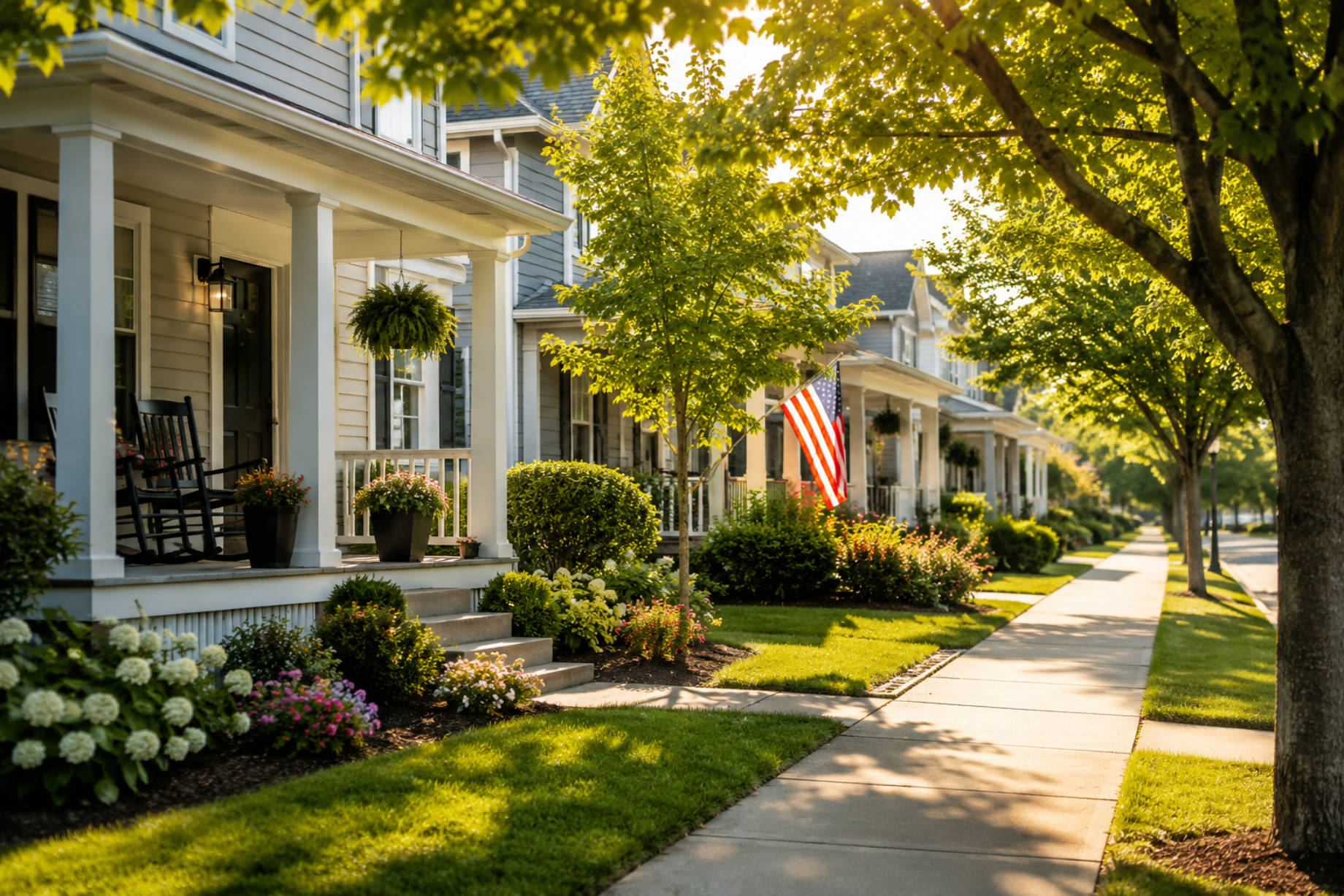
Walk down two streets in the same zip code on a warm July evening, and the difference can be striking. One feels alive — kids on bikes, neighbors chatting from porches, string lights glowing above a patio. The other is quiet, buttoned-up, almost indifferent. The houses might be the same size, age, and price point, yet one street pulls you in and the other doesn’t. Understanding why some neighborhoods feel more welcoming during summer even when the homes are similar comes down to a handful of subtle but powerful factors — and most of them are within a homeowner’s control.
Why Do Some Streets Feel More Inviting Than Others During Summer?
It rarely has anything to do with square footage or architectural style. Two subdivisions built by the same developer in the same decade can produce completely different social atmospheres depending on how residents use and present their outdoor spaces.
Neighborhood design plays a real role here. Streets with sidewalks, mature tree canopy, and shorter setbacks naturally encourage foot traffic and casual conversation. Walkable communities tend to generate more spontaneous interaction simply because people are outside and moving past each other.
But design alone doesn’t explain everything. Two equally walkable streets can still feel worlds apart. The difference usually lives in the choices homeowners make — what they plant, how they maintain things, and whether they treat their front yard as a lived-in space or just a buffer between the house and the road.
The Role of Front Porches and Outdoor Living Spaces
Porch culture has a measurable effect on neighborhood atmosphere. A front porch with seating sends a signal: people are welcome here. When one household puts out chairs, a neighbor across the street is more likely to do the same. That visible social permission compounds over time.
Outdoor gathering spaces — covered patios, front stoops with planters, even a bench near the mailbox — all lower the invisible barrier between private and public life. During summer months, when evenings are long and the air is warm, these spaces become natural gathering points.
This isn’t nostalgia. Research in urban design consistently links front-facing, semi-public spaces to higher levels of community interaction. Neighborhoods with active porch cultures tend to report stronger connections between residents, faster responses to safety concerns, and a general sense that people look out for one another.
How Landscaping Shapes First Impressions
Front yard landscaping is one of the most immediate visual signals a neighborhood sends to anyone passing through. Blocks with varied, well-kept plantings feel intentional and cared for. Blocks with patchy grass and overgrown beds feel neglected — even if every house on the street is structurally sound.
Landscape design doesn’t need to be elaborate to be effective. Consistent mowing, defined edges along walkways, seasonal flowers in visible spots, and healthy shrubs near the foundation all contribute to an impression of neighborhood pride. That pride is contagious.
Color matters more than most people realize. Summer-blooming plants — coneflowers, black-eyed Susans, ornamental grasses — add visual energy that hardscaping alone can’t replicate. A block where several homeowners invest even modestly in front yard landscaping feels dramatically more welcoming than a block where no one does.
Why Well-Maintained Front Yards Encourage Community Interaction
There’s a social psychology element at work here. When people see that their neighbors care about their property, they feel a shared investment in the street’s appearance. That shared investment reduces the social distance between households.
Home exterior maintenance is about more than aesthetics. A tidy front yard communicates stability and engagement. It signals that someone is present, paying attention, and contributing to the collective environment. In contrast, neglected yards — even on otherwise nice homes — can subtly discourage people from lingering outside.
HOAs sometimes codify this through maintenance standards, but the effect happens organically in many neighborhoods without any formal oversight. Peer influence, visible effort, and neighborhood pride create a self-reinforcing cycle where upkeep becomes the norm rather than the exception.
The Impact of Evening Lighting and Summer Ambiance
Summer evenings extend social time outdoors by several hours compared to winter. How a neighborhood looks and feels at dusk and into the evening has an outsized influence on its overall atmosphere.
Outdoor lighting is a surprisingly powerful variable. Streets with warm, consistent lighting — whether from streetlamps, porch fixtures, or landscaping lights — feel safe and inviting after sunset. Blocks that go dark early feel empty, regardless of how active they were during the day.
At the residential level, homeowners who add pathway lighting, uplighting for trees, or string lights across a patio contribute directly to the neighborhood’s evening ambiance. The same mindset often carries into other seasons, including choices like professional Christmas light installation in Brownsburg IN, which reflects ongoing attention to how a home looks and feels from the street. These aren’t just decorative choices — they extend the window during which people feel comfortable being outside and interacting with neighbors.
Lighting also has a subtle effect on perceived security. Well-lit residential streets see more foot traffic in the evenings, which naturally increases informal social contact and the general sense that a neighborhood is alive and watched over.
How Shared Outdoor Spaces Strengthen Neighborhood Connections
Community parks, pocket greens, shared walking paths, and public green spaces act as anchors for neighborhood life. When residents have a reason to be in the same place at the same time — a playground, a community garden, a shaded bench near a cul-de-sac — organic relationships form.
Neighborhoods built around shared outdoor spaces tend to produce stronger community bonds than those designed around pure private ownership. Even small interventions matter: a strip of grass between sidewalk sections, a community bulletin board near a mailbox cluster, a few picnic tables in a common area.
During summer, these spaces see their heaviest use. Families bring kids outside after dinner. Dog walkers loop the same path each evening. Casual conversations repeat often enough to become actual friendships. The physical infrastructure of a neighborhood either supports this pattern or works against it.
Why Year-Round Curb Appeal Planning Matters
Summer gets most of the attention when it comes to outdoor presentation, but the neighborhoods that feel genuinely welcoming didn’t get that way by accident. They reflect an ongoing commitment to seasonal curb appeal — a cycle of effort that runs through every month of the year.
That means thinking beyond summer annuals. It means considering how a property looks in November, February, and March, not just July. Homeowners who plan their exterior presentation year-round — maintaining clean beds in fall, adding tasteful seasonal decorations in winter, and refreshing plantings in spring, sometimes with services like professional Christmas light installation in Brownsburg IN — set a standard that elevates the entire block.
In some communities, that commitment extends to professional seasonal services. Homeowners who schedule services such as professional Christmas light installation in Brownsburg IN often view exterior upkeep as a year-round responsibility rather than a seasonal task. That consistent attention helps certain streets feel polished, cared for, and welcoming in every season.
The cumulative effect of year-round attention is a neighborhood that never fully lapses into neglect. And neighborhoods that maintain their appeal across seasons tend to feel more welcoming during summer precisely because the habits and standards are already in place.
Why the Feeling of Welcome Goes Deeper Than Curb Appeal Alone
The reason why some neighborhoods feel more welcoming during summer even when the homes are similar comes down to an accumulation of small, intentional decisions — the chairs on the porch, the trimmed hedge, the warm light spilling from a covered patio at 8 p.m. None of these factors are architectural. All of them are behavioral.
Walkable streets, active outdoor spaces, thoughtful landscaping, consistent home exterior maintenance, and a culture of neighborhood pride work together to create an atmosphere that invites people outside and keeps them there. Even details tied to seasonal presentation, such as professional Christmas light installation in Brownsburg IN, can reflect the kind of steady exterior care that shapes how a street feels year-round. For anyone looking to improve their street’s character, the most effective place to start is surprisingly simple: make your own front yard a place worth pausing beside.
