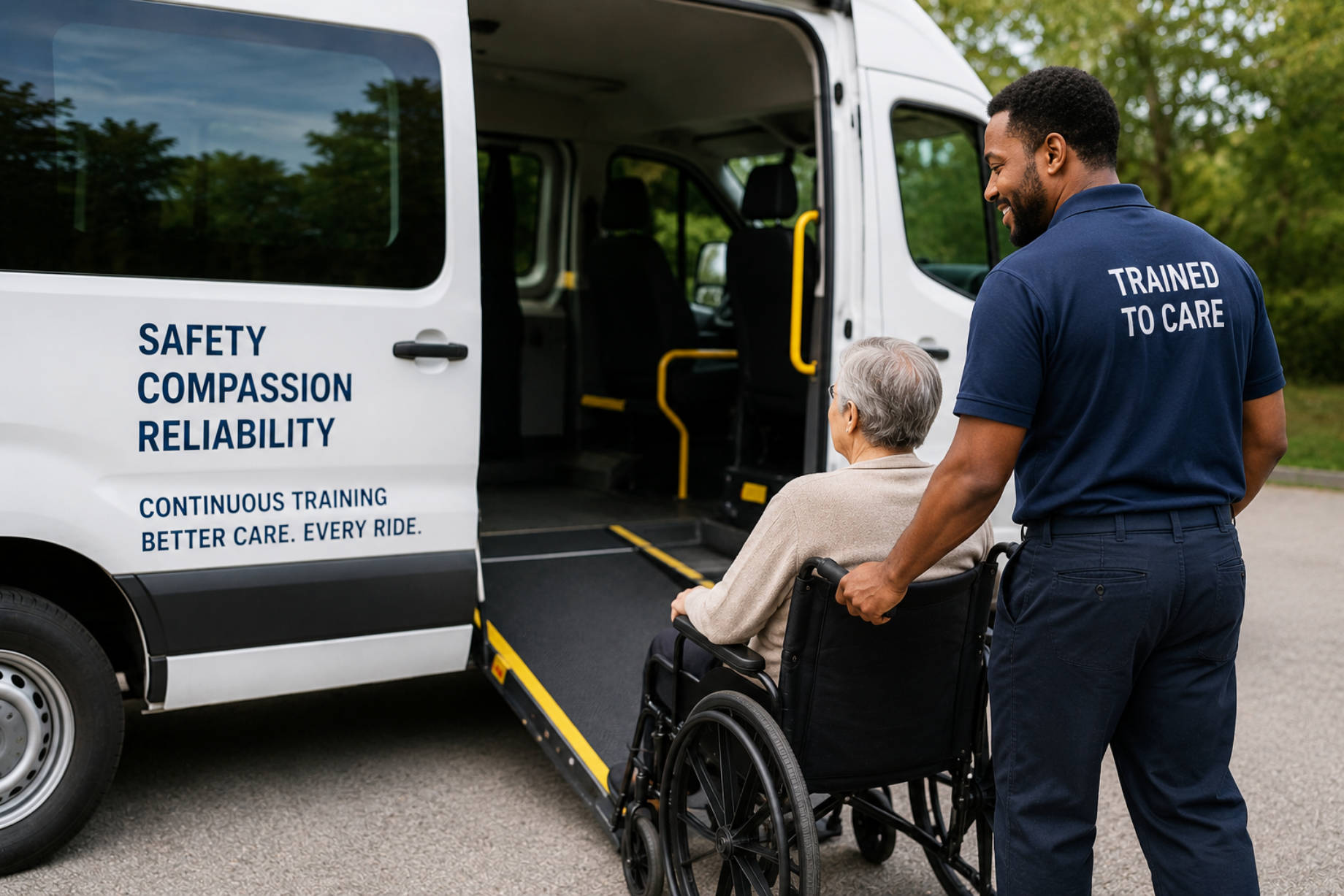
The non-emergency medical transportation field moves people who depend on safe, reliable rides to dialysis, therapy, and routine appointments. That responsibility never stays still. Rules change, vehicles get smarter, and patient needs grow more complex every year. This is where NEMT driver training becomes more than a one-time requirement. Continuous education keeps drivers sharp and operators competitive, and it protects the people in the back seat. When providers commit to ongoing learning, passengers receive better care and companies build stronger reputations. Both sides win when knowledge keeps pace with the work.
Why the NEMT Industry Continues to Evolve
Demand for non-emergency medical transportation keeps climbing. An aging population means more seniors need rides to medical care, and many can no longer drive themselves.
Patients also expect more today. They want punctual pickups, courteous drivers, and vehicles that handle wheelchairs and walkers with ease. A rushed or unprepared driver simply will not meet those expectations.
The industry itself shifts constantly. New payers enter the market, reimbursement models change, and technology reshapes daily operations. Drivers and operators who stop learning fall behind quickly. Those who keep studying stay ready for whatever comes next.
How Continuous Training Improves Passenger Safety
Safety sits at the center of every quality NEMT service. Defensive driving courses teach drivers to anticipate hazards, manage distance, and react calmly under pressure. These skills fade without regular refreshers, so repeated practice matters.
Patient assistance is just as important. Drivers learn how to support someone with limited mobility, secure a wheelchair correctly, and avoid injuries during transfers. Small mistakes here can cause real harm.
Strong programs also cover:
- Emergency preparedness for medical events during transport
- Safe loading and unloading near busy curbs
- Proper vehicle inspections before each shift
- Handling weather and road conditions safely
When transportation safety becomes a habit rather than a checkbox, passengers feel the difference on every trip.
Regulatory Compliance Requires Ongoing Learning
Healthcare transportation operates under strict oversight, and the rules rarely sit still. The Americans with Disabilities Act (ADA) sets clear standards for wheelchair accessibility and equal treatment, and drivers need to understand those obligations fully.
The Centers for Medicare & Medicaid Services (CMS) influences how many trips get authorized, documented, and reimbursed. Misunderstanding these requirements can cost a company contracts and trust.
State rules add another layer. Licensing, vehicle standards, and driver certification often differ by region, and they update regularly. Ongoing education keeps teams current on documentation practices and renewal deadlines. It also helps maintain professional certifications that prove a provider takes compliance seriously.
Building Better Customer Experiences Through Education
Patient transportation is a service business as much as a driving job. The way a driver speaks, listens, and responds shapes how a passenger feels during a stressful day.
Communication training helps drivers explain delays clearly and answer questions with patience. Compassion matters too, especially for riders dealing with illness, anxiety, or pain. A warm, professional manner can turn an ordinary trip into a reassuring one.
Education also prepares drivers to serve people with diverse mobility needs, from those using walkers to riders who need full wheelchair support. Resources like MediCar Safety demonstrate how structured learning sharpens both technical skill and human connection, giving drivers the tools to handle every passenger interaction with confidence. Strong passenger care builds loyalty, and loyal clients drive steady referrals.
Technology Is Changing Non-Emergency Medical Transportation
Modern NEMT relies on tools that did not exist a decade ago. GPS Fleet Management lets operators track vehicles in real time, monitor driver behavior, and respond fast when plans change. Platforms like MediCar Safety recognize how critical this technological literacy is, which is why driver training now extends well beyond the road and into the digital systems that power modern fleets. Drivers need training to use these systems well rather than ignore them.
Route optimization software cuts wasted miles and trims fuel costs while improving on-time performance. Electronic scheduling reduces double bookings and keeps dispatch organized during busy hours.
Digital documentation matters too. Many providers now link trip records with Electronic Health Records (EHR) systems, which demands accuracy and care with sensitive data. Vehicle monitoring tools flag maintenance issues before they cause breakdowns. Smart fleet management only works when the people behind it understand the technology.
Why Operators Benefit From Investing in Employee Development
Some operators view training as a cost. In reality, it pays back quickly and often. Drivers who complete strong professional driver training programs — supported by industry-focused resources like MediCar Safety — cause fewer accidents, which lowers insurance premiums and reduces liability.
Education also improves retention. When a company invests in its people, those employees tend to stay longer. Lower turnover means fewer hiring headaches and a more experienced team.
The benefits add up across the operation:
- Stronger compliance with payer and state rules
- Fewer service complaints and missed trips
- A reputation that wins new contracts
- Smoother daily scheduling and dispatch
Better mobility assistance and consistent service quality set a provider apart. In a crowded market, that reputation becomes a real competitive edge.
Preparing the NEMT Workforce for the Future
The next generation of NEMT services will look different from today. Telehealth, shifting demographics, and tighter budgets all push the field toward smarter operations and higher standards.
Continuing education keeps drivers ready for these changes. Guides and programs from MediCar Safety show how cross-training in technology, customer service, and safety builds adaptable teams that handle new challenges with confidence.
Leadership development matters too. Today’s skilled drivers become tomorrow’s dispatchers, supervisors, and operators. Companies that grow talent from within create stability and depth.
Healthcare providers increasingly expect transportation partners to act like true extensions of the care team. Meeting that expectation requires a workforce that learns continuously and treats professionalism as a daily standard.
Conclusion
Ongoing education is not a luxury in this field. It is the foundation of safe, reliable, and respectful service. Strong NEMT driver training protects passengers, keeps providers compliant, and helps operators run leaner, more dependable fleets. Drivers gain confidence and skill, while companies earn the trust that fuels long-term growth. As the population ages and technology advances, the providers who keep learning will lead the way. Those who treat education as a continuous commitment, rather than a one-time task, will shape a stronger future for healthcare transportation and the people who rely on it every single day.
