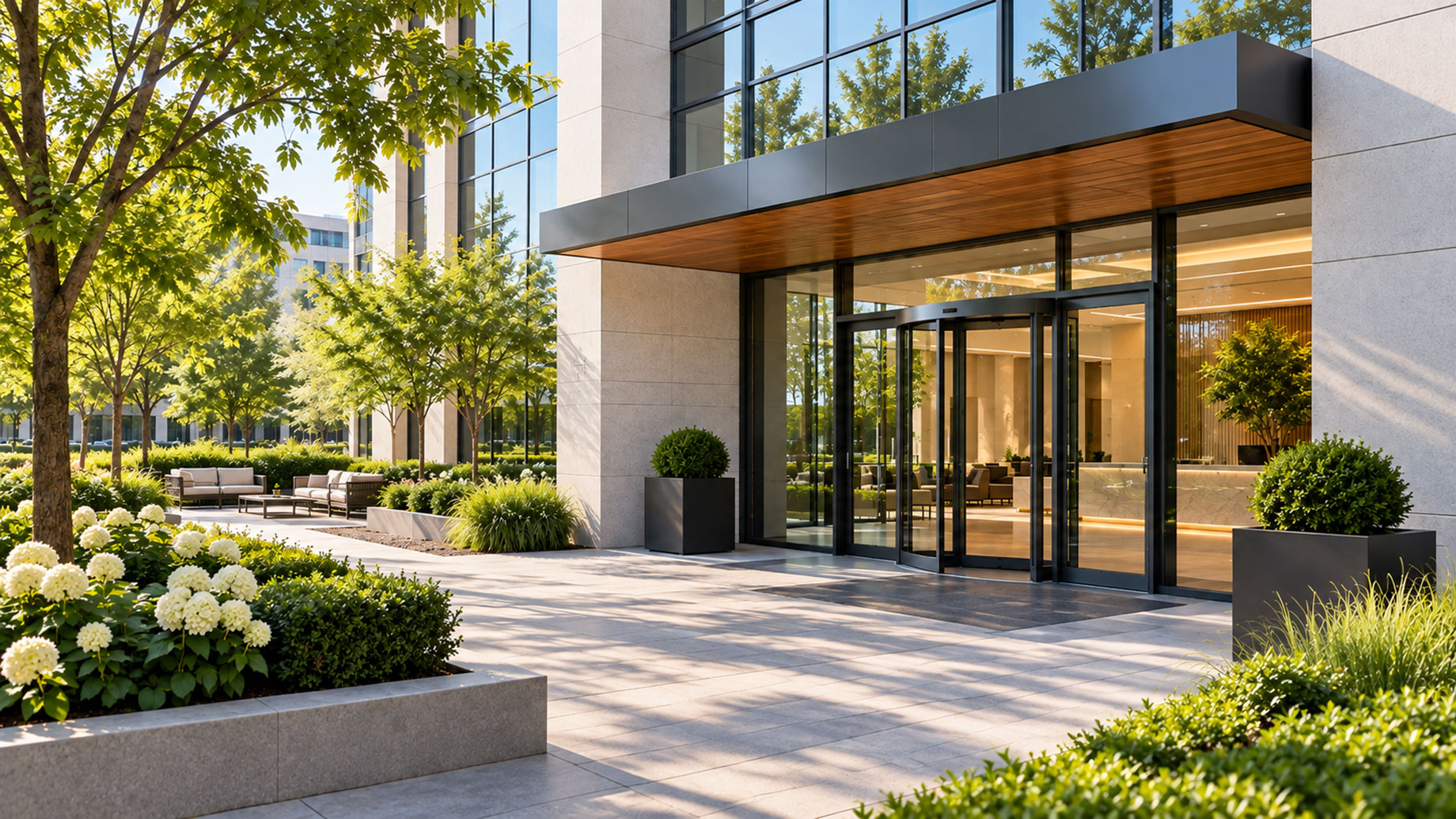
Curb appeal gives office landlords a way to demonstrate building quality before prospective tenants reach the lobby. A welcoming entrance, thoughtful planting and usable outdoor space help businesses picture the experience their employees and clients would have every day. As occupiers weigh workplace quality alongside costs, exterior grounds deserve a place in the leasing conversation.
First Impressions Start Before the Tour
The approach to an office building provides an early indication of management standards. Healthy planting, clear signage and tidy walkways can suggest consistent attention to detail. Dead shrubs, overflowing planters or standing water may raise questions about how diligently the rest of the property is maintained.
For businesses comparing otherwise similar offices, these impressions can influence which address feels appropriate for their brand. An attractive arrival also gives leasing agents something tangible to show, helping the property’s presentation match the promises in its marketing materials.
Outdoor Amenities Add Practical Leasing Appeal
CBRE’s 2026 Americas Office Occupier Sentiment Survey identifies outdoor amenities among the features associated with the strongest rent premiums. That supports attention to exterior space, although it does not establish that landscaping alone delivers higher rents.
The useful distinction is between space that looks appealing and space tenants can actually use. A shaded courtyard with comfortable seating can accommodate lunch breaks or informal conversations. A planted terrace needs suitable furniture, reliable access and maintenance to become a credible amenity.
Landlords should assess these areas during normal working hours. Excessive wind, traffic noise or a lack of shade may undermine an outdoor space that photographs beautifully but offers little everyday comfort.
Landscaping Becomes Part of Building Identity
Exterior design works best when it reflects the building’s architecture and intended tenant experience. Restrained planting and coordinated materials can reinforce a contemporary office’s identity, while a courtyard garden can give an older property a distinctive character.
Specialist providers connect those design choices with ongoing care. Cambridge, for example, offers landscaping for office buildings, combining exterior grounds design and maintenance with a focus on leasing appeal and tenant retention. The broader principle is continuity: an entrance should communicate the same standard throughout the year, including between leasing campaigns.
Connect Grounds Investment to Property Performance
A practical starting point is to follow the route a prospective tenant takes from the street to reception. Address damaged surfaces, obstructed paths, drainage problems and tired planting before adding decorative features. Plan seasonal care alongside installation costs and future maintenance requirements so improvements remain presentable after the initial refresh.
Then gather evidence. Ask brokers what visitors notice, survey existing tenants about outdoor amenities and track use of seating areas. Review that feedback alongside renewals and leasing activity, recognizing that location, pricing and lease terms also influence results.
Curb appeal contributes to an asset strategy when it strengthens the experience the building can consistently deliver. For landlords, the opportunity is to make exterior quality a visible, usable part of the property’s value proposition. Any contribution to asset value depends on sustained tenant demand and costs that remain manageable.
