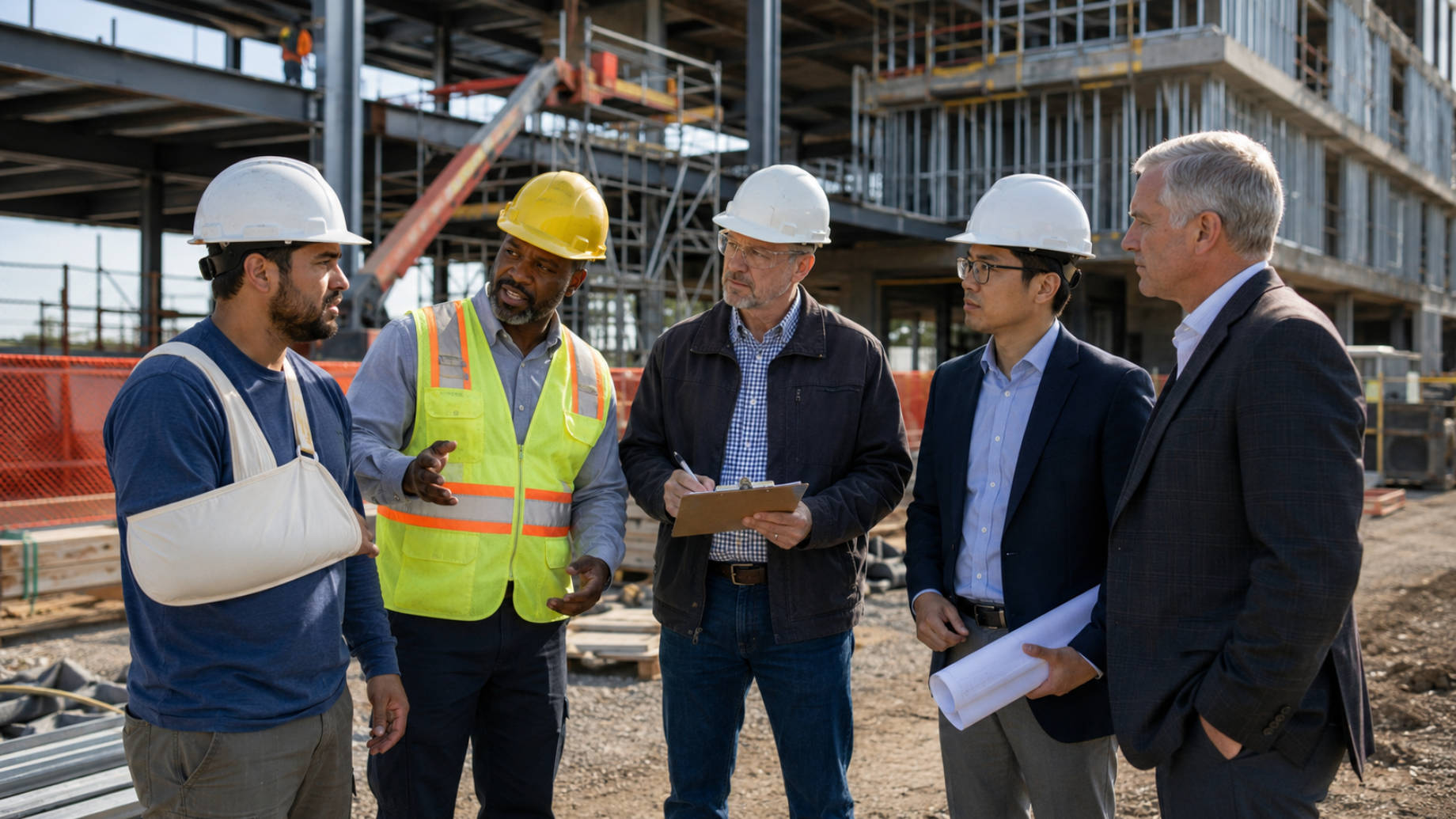
Liability for a construction site injury may fall on general contractors, property owners, equipment manufacturers, supervisors, or even third-party vendors if their negligence contributed to unsafe working conditions. Determining responsibility requires a careful review of safety procedures, equipment maintenance, and compliance with workplace regulations.
When someone is injured while working on a construction site, identifying who is legally responsible becomes an important step in securing compensation for lost wages, medical bills, and long-term recovery needs. Because construction sites often involve multiple companies and overlapping duties, liability is not always straightforward, and more than one party may share responsibility for the accident.
Potential Parties Responsible for Construction Site Injuries
Parties who can be held responsible for construction site accidents depends on who failed to maintain safe conditions or contributed to the unsafe environment that caused the injury.
Architects and Engineers
Architects and engineers may be held responsible if a construction site injury is linked to design flaws, structural miscalculations, or unsafe project plans.
Their work directly influences how a building is constructed, so errors in blueprints, load calculations, or safety design features can create hazardous conditions on-site.
Liability in these cases often depends on whether the injury resulted from professional negligence in the planning or design stage rather than construction execution.
General Contractors
General contractors are responsible for the overall building management and coordination of the construction project, including site-wide safety planning and compliance across all teams.
Their duties include setting safety standards, coordinating subcontractors, and ensuring that proper systems are in place to reduce hazards.
Liability may arise if unsafe site conditions persist due to poor project-wide supervision, inadequate safety policies, or failure to address known risks across the entire construction site.
Property Owners
Property owners may be held responsible if dangerous conditions on the premises contributed to the accident, especially if they were aware of the hazard and did not fix it or warn workers.
Their responsibility is more likely when they retain control over the site or fail to address known structural or environmental risks. In some cases, liability may depend on how much control they exercised over the construction activity.
Site Supervisors and Safety Officers
Site supervisors and safety officers are responsible for enforcing safety rules on a daily, operational level and ensuring that workers follow established procedures in real time.
Their role focuses on direct oversight, such as identifying immediate hazards, correcting unsafe behavior, and conducting routine safety checks.
Liability may arise if they fail to respond to visible dangers, overlook violations during active work, or neglect to enforce building codes, standards, and regulations during ongoing operations.
Subcontractors
Subcontractors are responsible for the specific portion of work they are hired to complete, along with the safety of their workers during that scope of work.
When injuries result from unsafe practices, lack of supervision, or failure to follow safety regulations within their assigned tasks, they can be held accountable. Liability often depends on whether the incident occurred within their area of control.
Equipment Manufacturers
Equipment manufacturers may be held liable when injuries are caused by defects in heavy machinery, tools, or construction equipment used for building and operational work.
This includes issues such as design flaws, production defects, or missing safety mechanisms in equipment like cranes, power tools, forklifts, or drilling machines.
Liability focuses on whether the equipment itself was unsafe to use as intended, regardless of how it was installed or supplied on-site.
Safety Equipment Providers
Safety equipment providers are responsible for supplying protective systems and gear designed specifically to reduce injury risk on construction sites. This includes items such as harnesses, helmets, scaffolding systems, fall protection gear, and temporary safety barriers.
Liability may arise if the protective equipment is incorrectly designed, improperly assembled before delivery, or fails to meet required safety standards, leaving workers exposed to preventable hazards.
Third Parties on Site
Third parties such as delivery drivers, visiting contractors, or maintenance crews can also contribute to construction site accidents. If their actions directly cause or contribute to an injury, they may be held liable for damages. Responsibility in these cases depends on whether their presence and conduct created an unsafe situation outside the core construction team.
Final Takeaways
- Multiple parties can be held responsible for construction site injuries depending on the circumstances.
- Liability may include contractors, subcontractors, property owners, manufacturers, or third parties.
- Someone injured working in a construction site may be entitled to compensation from one or more responsible parties.
- Determining fault requires a detailed investigation of safety practices and conditions.
- Understanding liability is essential for protecting legal rights after a construction accident.
