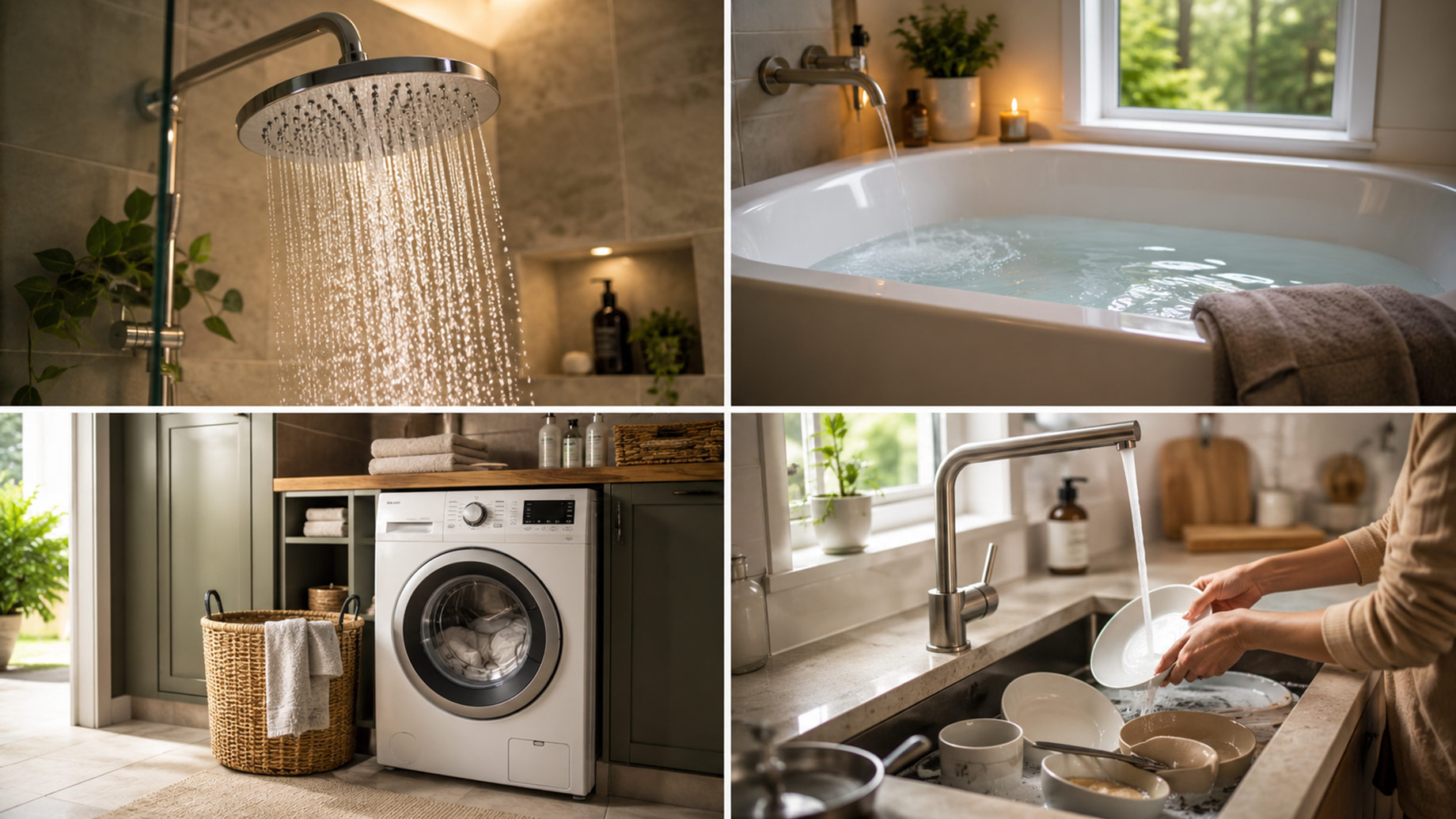
Every shower, load of washing, and turn of a hot tap draws from the same supply throughout the day. Once you know where most of that hot water is going, it’s much easier to spot unusual usage, build better habits, and recognise when a plumbing issue could be hiding in the background.
It Isn’t Just the Shower That Uses Hot Water
Before you ask how much hot water does a shower use, understand that it’s not just the shower that uses hot water. Sure, it’s usually the biggest contributor because it’s part of people’s daily routine, but it’s not the only reason the hot water system works hard.
Baths can use a surprising amount of hot water in one go. Kitchen taps are used for washing dishes, rinsing food and cleaning up after meals. Bathroom basins are switched on countless times each day for handwashing and shaving. Then there’s the laundry. Depending on the washing machine settings, warm and hot cycles can place extra demand on the system. Some dishwashers also draw hot water, although many modern models heat their own water internally.
None of these activities seems particularly significant on its own. Together, though, they can place steady demand on the household’s hot water supply from morning through to night.
The Biggest Everyday Users of Hot Water
The biggest users aren’t always the same from one home to the next. Family size, daily routines, and even the age of household appliances all play a part. Even so, a few activities almost always sit near the top of the list. Here’s where most hot water goes during a normal day:
- Showers: Usually the largest user because, as mentioned, they’re part of everyday life for almost every household.
- Baths: Filling a bath generally requires much more hot water than an average shower.
- Laundry: Warm and hot wash cycles increase hot water demand, although many newer washing machines mainly use cold water.
- Kitchen cleaning: Washing dishes by hand, food preparation, and some dishwashers all contribute to daily hot water use.
No single activity tells the whole story. One household might hardly ever use the bath, while another has teenagers who seem quite happy to stay in the shower until the cows come home.
How Much Hot Water Does a Shower Use?
There’s no single answer because it depends on the showerhead and how long the shower lasts. Most modern water-efficient showerheads deliver around 6 to 9 litres of water each minute. Older models can use considerably more.
One detail that’s easy to miss is that a shower doesn’t use only hot water. Hot and cold water mix together to reach a comfortable temperature before it leaves the showerhead. Even so, longer showers, older fittings and several people showering one after another can quickly place extra demand on the hot water system, especially if it’s a storage system with a limited supply.
Why Two Similar Homes Can Have Very Different Hot Water Bills
Two homes with similar hot water systems can have very different levels of hot water use. Often, it comes down to everyday habits rather than the plumbing itself.
A couple who enjoy long showers each morning may use more hot water than a family of four with shorter routines and water-efficient fixtures. The size and age of the hot water system also make a difference, as do dripping hot taps or small plumbing leaks that quietly waste heated water over time.
If hot water suddenly seems to disappear much faster than it used to, it’s worth paying attention. Sometimes it’s simply a change in household routines. Other times, there’s a plumbing issue that needs a closer look. Here are three signs it’s worth having your plumbing checked:
- Hot water runs out much sooner than it used to.
- Hot taps have started dripping or small leaks have appeared.
- Water pressure or hot water temperature has become inconsistent.
Final Word: Have Your Hot Water System Checked
Showers usually account for the biggest share of household hot water use, but they’re only one piece of the puzzle. If your hot water use changes unexpectedly or your system isn’t performing as well as it once did, a professional plumbing inspection can help identify the cause and recommend the right solution. Of course, it’s important to get an experienced provider to guarantee quality work and customer service.
