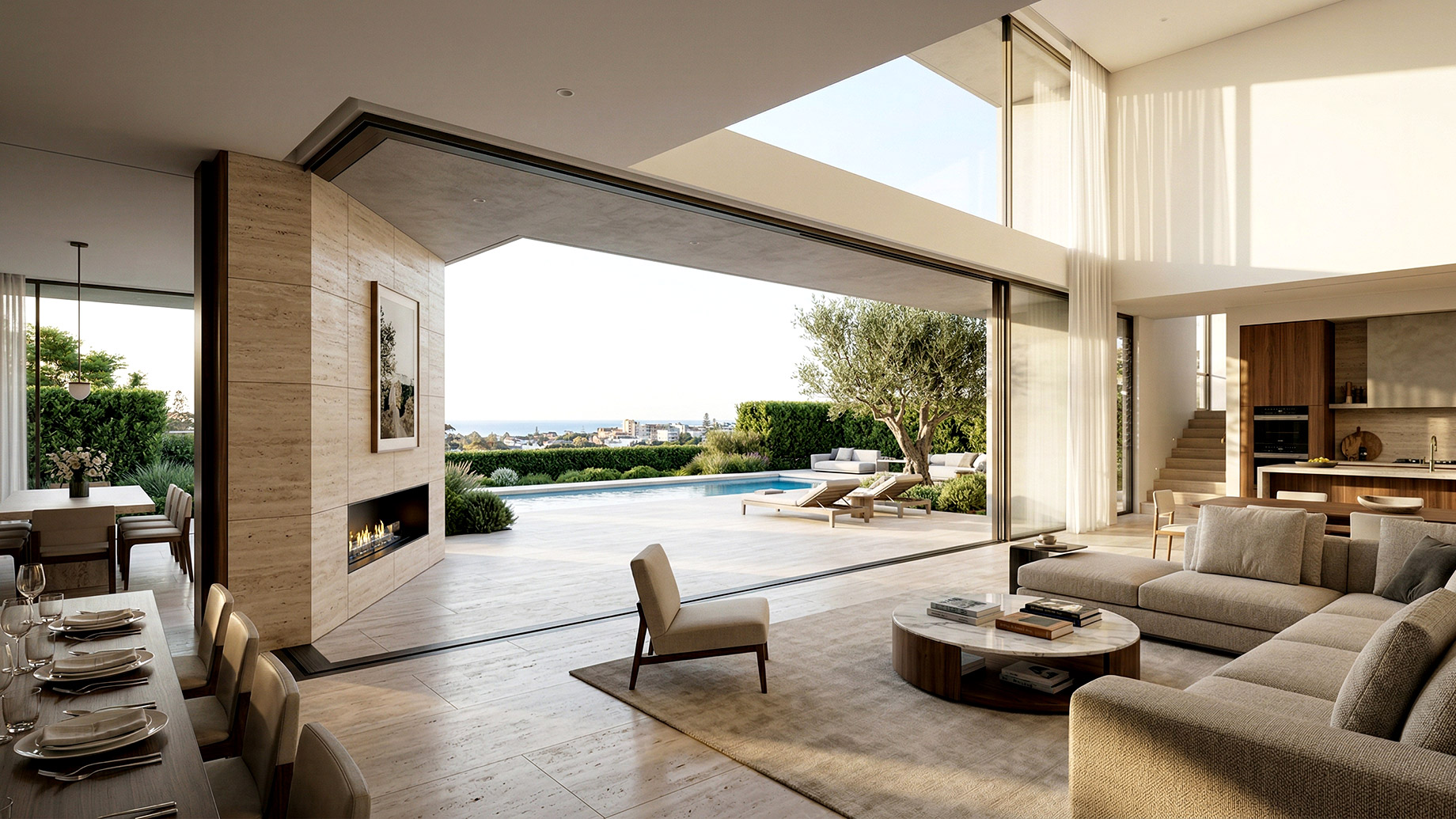
In high-end residential real estate, luxury is no longer defined by size alone. Square footage, premium finishes, and prestigious locations still matter, but they are no longer sufficient on their own.
Today, a truly exceptional home is defined by how space is organized, how light is introduced and controlled, and how the property supports a more refined way of living. The difference between an expensive house and a genuinely luxurious one often lies in decisions that are less visible at first glance, but far more important over time.
Space as a Measure of Luxury
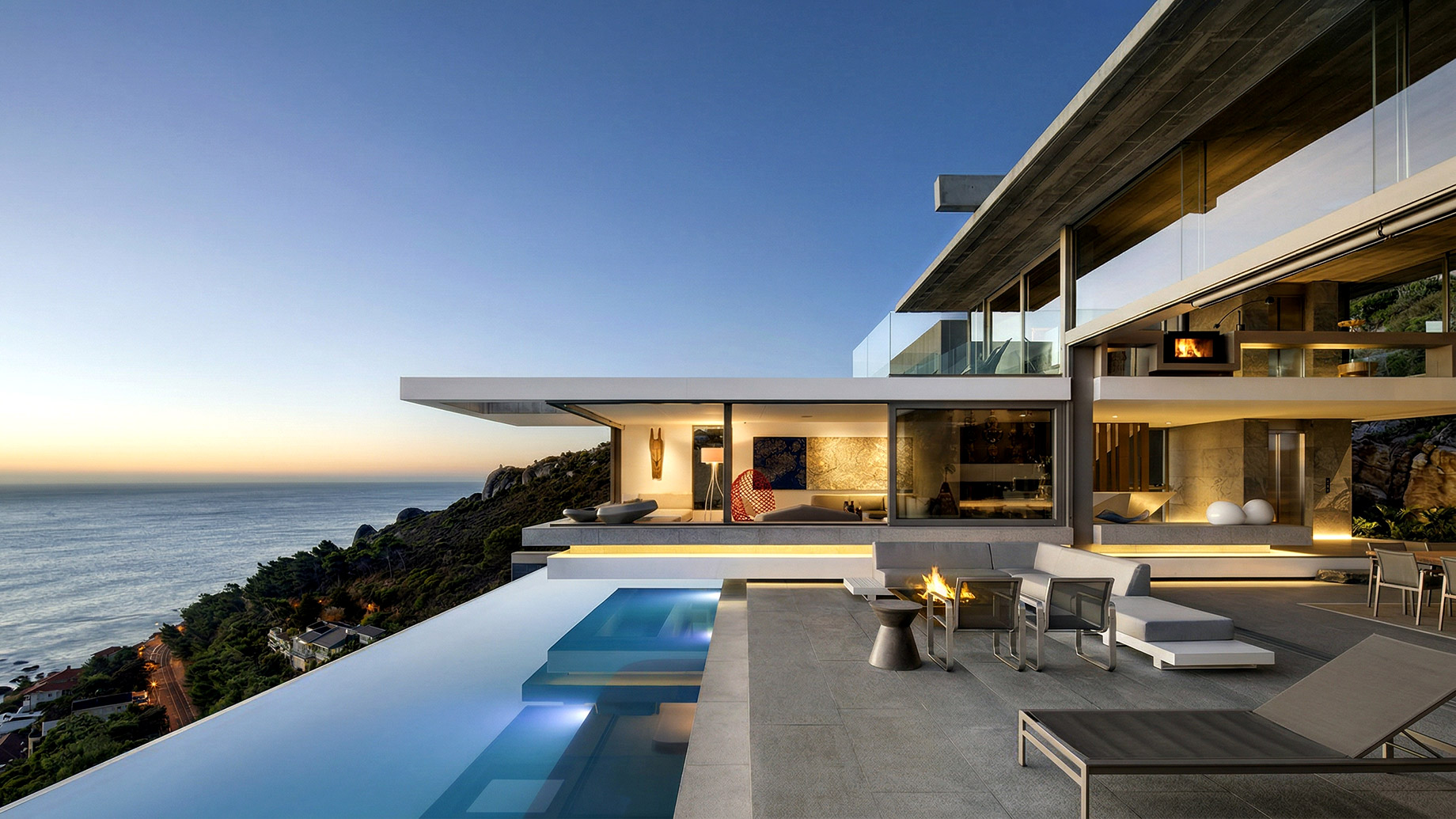
In contemporary high-end residential architecture, luxury is increasingly defined not by scale, but by spatial resolution.
Larger homes do not inherently perform better. Without a coherent spatial strategy, they often result in fragmented circulation, disproportionate volumes, and inefficient use of area. This leads to environments that feel disjointed despite their size.
Well-resolved residences, by contrast, are structured through clear spatial hierarchy and disciplined planning logic. Circulation is intentional, minimizing transitional inefficiencies. Public and private domains are distinctly articulated, while maintaining continuity where appropriate. Arrival sequences, thresholds, and visual axes are carefully composed to establish orientation and spatial clarity from the outset.
Within this framework, planning becomes the primary instrument through which luxury is experienced. Beyond material selection or formal expression, well-developed luxury house floor plans define how space performs over time—supporting daily routines, accommodating varied modes of use, and maintaining a balance between openness and privacy. In this sense, spatial organization operates as both a functional and experiential system.
Natural Light and Spatial Depth
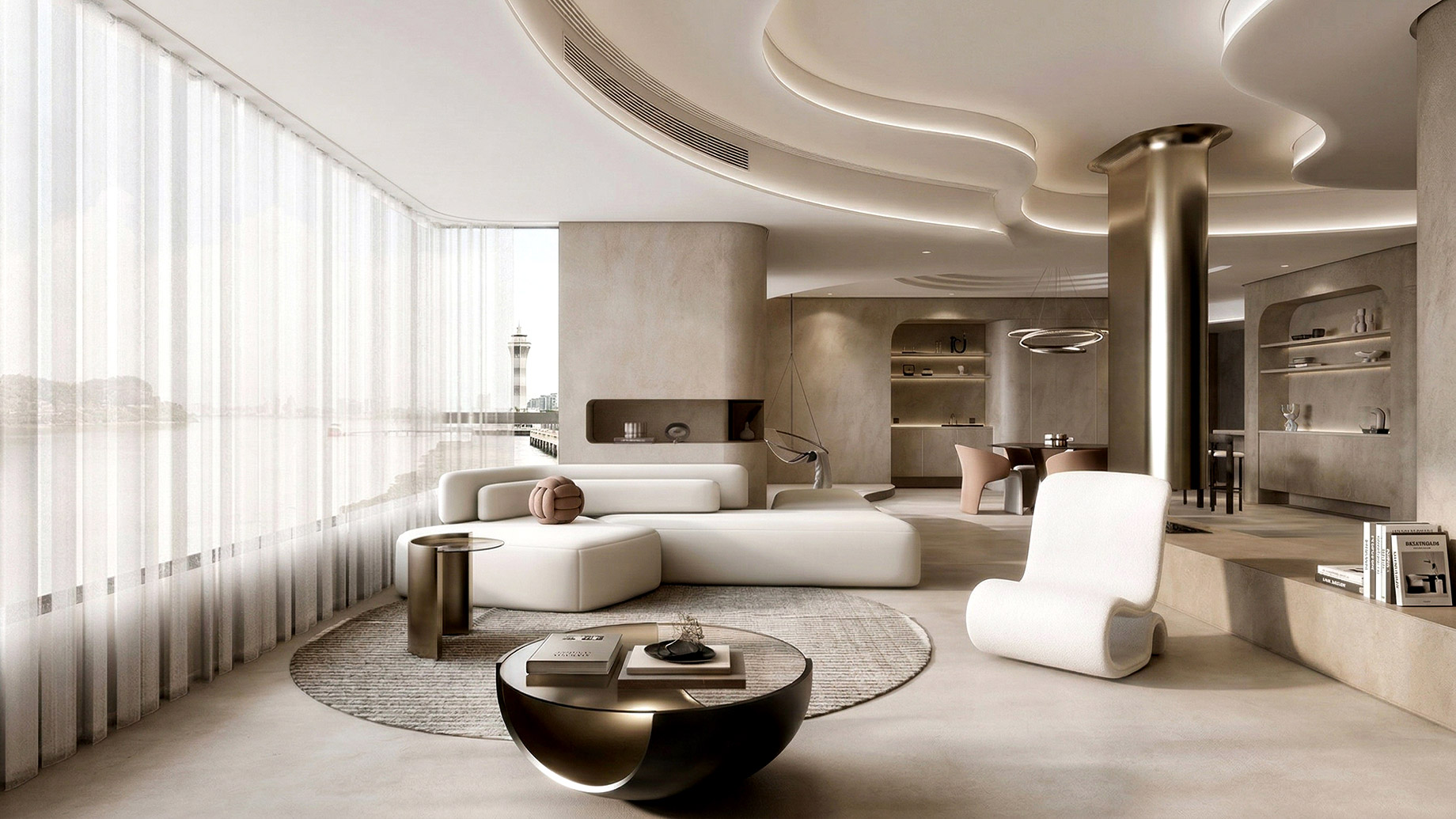
Natural light is a critical architectural medium through which space is perceived, articulated, and experienced.
Rather than being treated as a secondary consideration, daylight should be integrated into the design as a governing parameter. Building orientation, aperture placement, and sectional relationships collectively determine how light enters, diffuses, and evolves throughout the day.
Homes that are resolved with this level of consideration tend to exhibit greater spatial depth and clarity. Light reveals proportion, defines edges, and enhances the legibility of materials. It also contributes to a more stable and controlled interior environment, both visually and psychologically.
In high-end residential projects, the perception of luxury is often tied less to decorative intensity and more to atmospheric quality. Double-height volumes, controlled glazing strategies, and carefully framed views allow light to operate as a compositional element rather than a byproduct. When properly integrated, light reinforces architectural intent and elevates the spatial experience beyond what can be achieved through surface treatments alone.
Lifestyle Integration
In contemporary luxury residential design, spatial programming is increasingly driven by actual patterns of living rather than symbolic representations of status.
A high-performing home is structured to accommodate multiple modes of use—formal and informal, social and private, static and adaptable—within a coherent spatial system. This requires careful calibration of adjacency, zoning, and acoustic separation to ensure that different functions can coexist without conflict.
Private domains must maintain a clear degree of separation and control, while shared spaces are designed to support both daily routines and larger-scale entertaining. At the same time, flexibility has become a critical parameter. Spaces are expected to adapt over time, accommodating shifts in lifestyle, work patterns, and household composition without requiring structural change.
Programmatic elements such as wellness areas, home offices, secondary lounges, and hybrid indoor-outdoor zones are no longer considered optional. Their integration reflects a broader shift toward performance-based design, where value is derived from how effectively a home supports long-term living rather than short-term visual impact.
In this context, luxury is not expressed through excess, but through alignment—where spatial organization anticipates and supports the realities of contemporary residential life.
Indoor-Outdoor Continuity
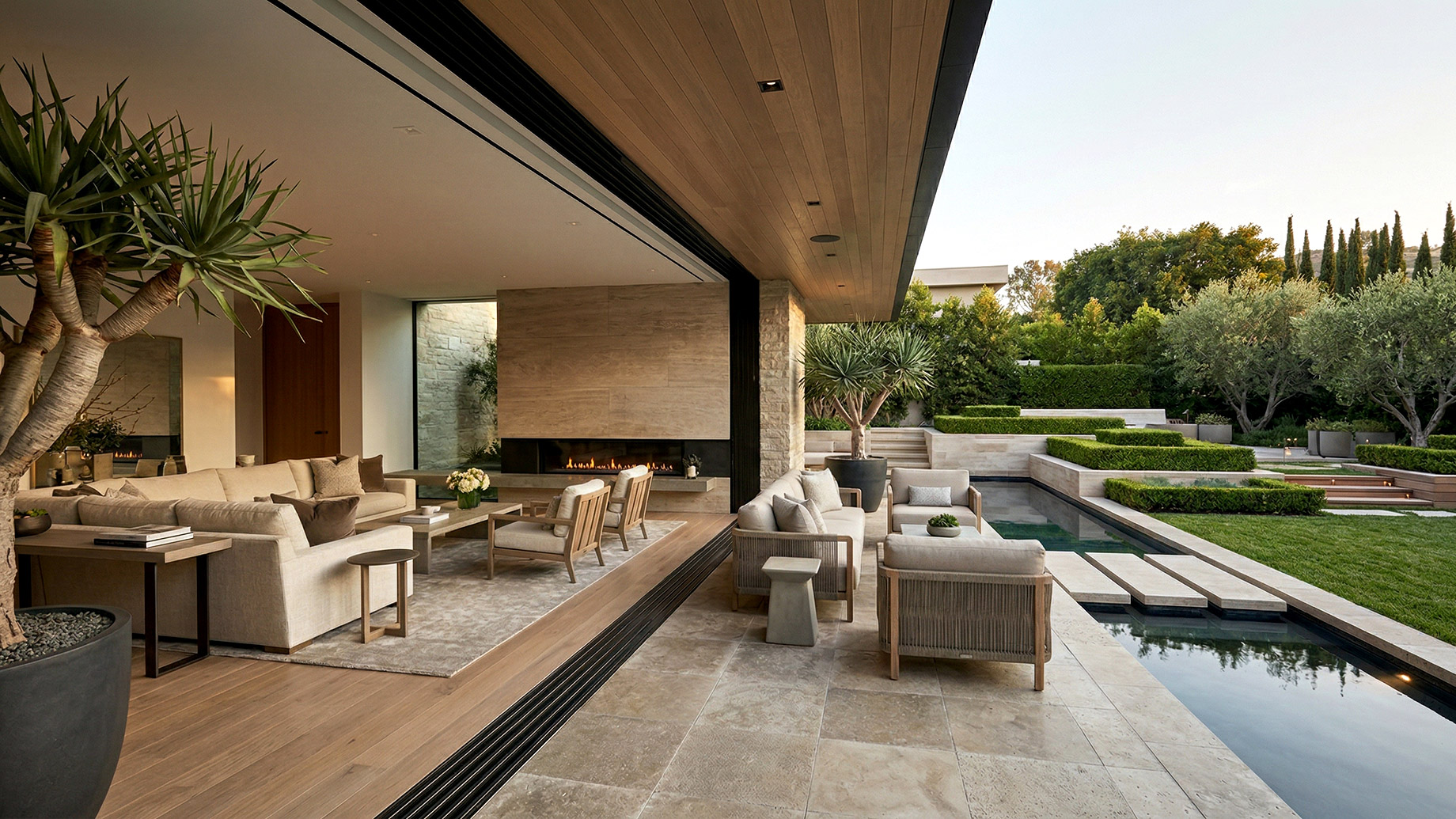
In high-end residential architecture, particularly in climate-responsive regions, the boundary between interior and exterior space is treated as a design condition rather than a fixed separation.
The integration of indoor and outdoor environments requires more than visual connection. It depends on the alignment of floor elevations, structural systems, material transitions, and circulation paths to create a continuous spatial experience. When these elements are resolved cohesively, exterior areas function as extensions of the interior rather than as independent zones.
Terraces, courtyards, and outdoor living areas are most effective when they are embedded within the architectural logic of the project—defined by the same proportional systems, sightlines, and material language. This approach allows exterior space to participate fully in the spatial hierarchy of the home.
Such continuity expands the functional footprint without increasing enclosed area, while maintaining a controlled relationship between openness and privacy. It also enhances environmental performance, enabling passive strategies such as cross-ventilation, shading, and daylight modulation.
In this sense, indoor–outdoor integration is not an amenity, but a fundamental component of how luxury space is conceived and experienced.
Material Restraint and Lasting Quality
In high-end residential architecture, material strategy is increasingly defined by restraint, precision, and long-term performance rather than visual abundance.
A controlled and cohesive material palette allows for greater clarity in both detailing and construction execution. Limiting the number of primary materials reduces junction complexity, improves consistency across assemblies, and enables a higher level of craftsmanship. In contrast, excessive layering or frequent material transitions often introduce unnecessary detailing challenges and increase the risk of inconsistencies on site.
Materials such as stone, wood, metal, and glass achieve their full potential when deployed within a clear architectural logic—where their structural role, tactile qualities, and environmental performance are fully considered. This includes how materials age, how they respond to light, and how they interact at points of connection.
Durability and longevity are central to this approach. Well-specified materials that are appropriate to climate, exposure, and use conditions tend to reduce lifecycle costs and maintain aesthetic integrity over time. In this context, luxury is not a function of material quantity, but of precision—how effectively materials are selected, detailed, and integrated into a coherent system.
The New Standard of Luxury
The contemporary definition of luxury in residential architecture is increasingly rooted in system coherence rather than isolated attributes.
Projects that perform at a high level are those in which spatial organization, structural logic, material strategy, and programmatic requirements are developed as an integrated whole. This level of coordination results in environments that are not only visually refined, but also functionally robust and adaptable over time.
Rather than relying on scale or visual intensity, these homes are characterized by proportional discipline, clarity of circulation, and a well-resolved relationship between public and private domains. They are designed to support both immediate experiential quality and long-term relevance, accommodating evolving patterns of living without requiring fundamental reconfiguration.
Value, in this sense, is derived from performance—how effectively a home operates across spatial, environmental, and functional dimensions. Luxury becomes less about categorization and more about methodology: a standard of design thinking in which every decision contributes to a cohesive and enduring outcome.
