A commercial flat roof fails quietly. No missing shingle is visible from the street, and no granule trail in the gutters tips off the building manager. Water finds a seam, sits under the membrane, and works its way into the insulation layer for weeks before a ceiling tile gives way. By the time the drip appears inside the building, the decking below the membrane has already started to soften.
That gap between when a flat roof begins failing and when the damage becomes visible is the reason commercial property owners need to ask precise questions before hiring a roofing contractor near me to install any new flat or TPO system. The installation decisions made upfront determine how long the roof holds, how much maintenance it requires, and whether the warranty actually covers what it claims to cover.
Here are the questions that separate a durable installation from one that creates problems in year three or four.
What Is the Existing Deck Condition, and Who Inspects It?
Before a contractor cuts a single fastener or rolls out membrane, the structural deck underneath needs a written assessment. On a commercial building, the deck is typically steel, concrete, or wood. Each material responds differently to moisture exposure, and each carries specific fastening requirements for the insulation and membrane layers above it.
What to ask the contractor:
- Who performs the deck inspection, and are they on the installation crew or independent?
- What does the written report cover: corrosion, deflection, rot, fastener pull-out strength?
- If the deck needs repair, is that scoped and priced separately before the contract is signed?
A contractor who quotes the job without walking the deck is pricing the membrane, not the roof system. Request the inspection report in writing before signing anything. No report means a material gap in the scope.
Which Membrane System Is Specified, and Why?
TPO (thermoplastic polyolefin) and EPDM (ethylene propylene diene monomer) are the two most common flat-roof membrane systems on commercial buildings. They perform differently across climates and suit different roof geometries.
Key differences to understand:
- TPO is heat-welded at the seams, producing a continuous bond when installed correctly. It reflects UV well, which reduces heat absorption on south-facing or low-slope roofs.
- EPDM is adhered or mechanically fastened, handles cold-temperature flexibility well, and carries a long track record on low-traffic commercial roofs.
- Neither system outperforms the other in every situation. The right choice depends on your building’s slope, your local climate, the HVAC load, and expected foot traffic from maintenance crews.
Ask the contractor to explain why they specified the membrane they did for your building. A generic answer (“we always use TPO”) tells you the contractor is quoting from habit rather than from your building’s conditions.
How Are the Seams and Penetrations Sealed?
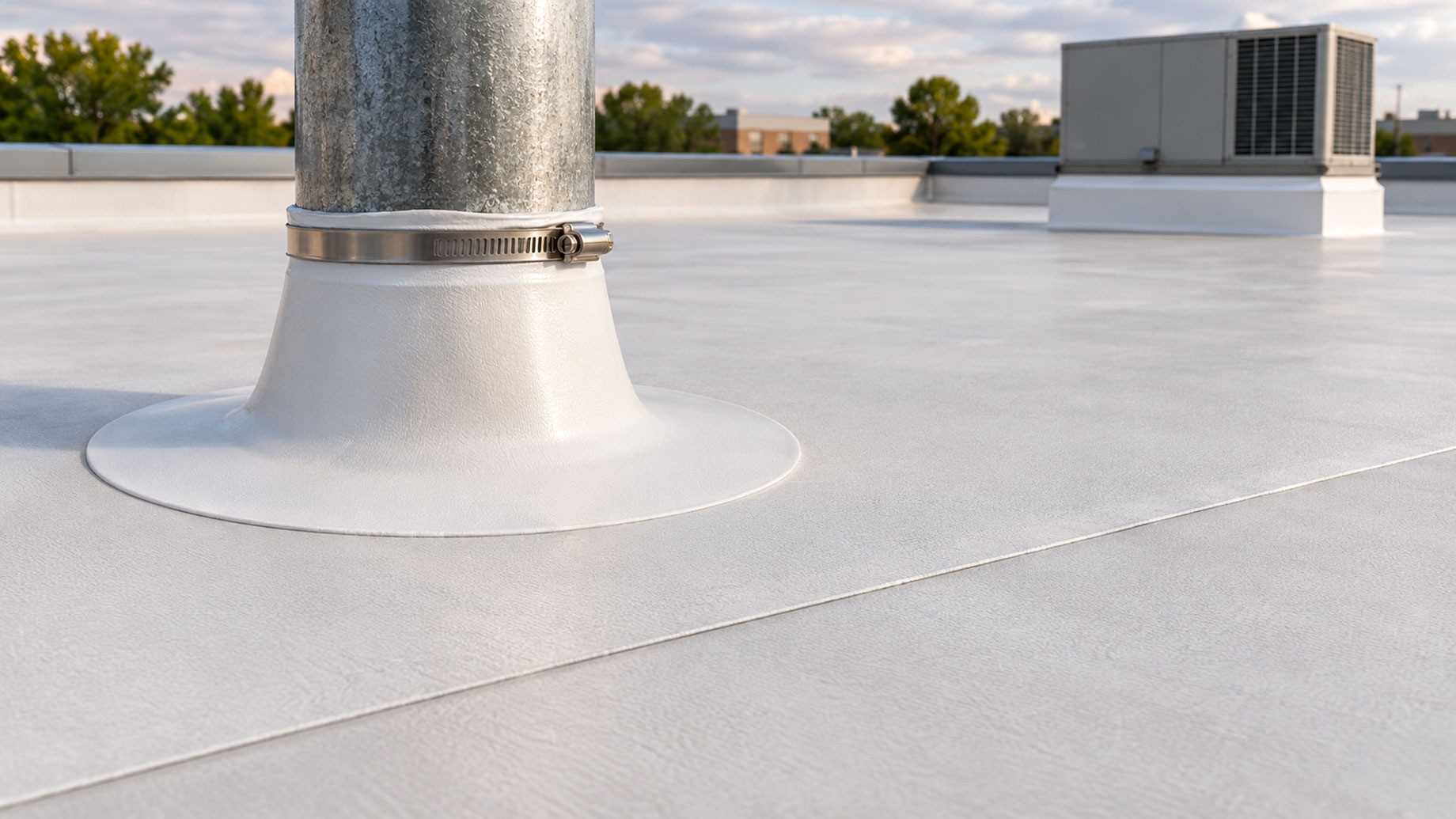
Seams and penetrations are where flat roofs fail. Every HVAC curb, pipe boot, drain collar, parapet flashing, and scupper represents a point where the membrane transitions from a flat field to a vertical or angled surface. Each transition needs to be detailed, flashed, and sealed correctly.
What proper seam and penetration work looks like:
- TPO seam welds tested with a probe after installation to confirm a continuous bond. Any cold seam or under-welded joint is a future leak point.
- EPDM lap seams rolled out with adequate adhesive coverage across the full width.
- HVAC curb flashings detailed with prefabricated or field-fabricated boots, not caulk alone.
- Parapet terminations sealed with metal edge or coping that holds the membrane against the wall through thermal movement.
Ask for the contractor’s penetration-detailing specification before the job starts. If they cannot walk through it, they will improvise those details during installation, which is where most warranty claims originate.
What Does the Warranty Actually Cover?
Commercial roofing warranties operate on two separate tracks, and confusing them is expensive.
The two warranty types:
- Manufacturer’s material warranty typically runs 15 to 30 years and covers membrane defects. It does not cover improper installation.
- Contractor’s workmanship warranty typically runs 2 to 10 years and covers the installation work. It does not cover material failure.
A seam failure can be classified as either a material defect or a workmanship defect, and each warranty will direct the claim to the other party. Read both documents before signing the contract. Pay attention to the exclusions.
Three things to confirm before work starts:
- The contractor holds manufacturer certification as a credentialed applicator (some manufacturer warranties are void without it).
- Both warranties are issued in writing and name your property address.
- The contractor’s workmanship warranty period is long enough to overlap with the manufacturer’s coverage response window.
What Is the Drain Plan, and Who Maintains It?
Water that cannot exit a flat roof stays on it. Ponding water, defined as standing water that remains 48 hours after rain stops, accelerates membrane degradation and adds dead load to the structural deck. Most flat-roof membrane warranties explicitly exclude damage caused by ponding water.
Ask the contractor to walk you through the drain layout: how many interior drains or scuppers the system will carry, what the minimum slope toward those drains is, and whether the existing drain collars will be replaced or reconditioned as part of the installation. A new membrane installed over an aging drain collar that then fails one season later is a warranty dispute in progress.
Confirm in writing that drain maintenance is part of the installation scope, and ask for a recommended maintenance schedule after the job closes out.
Why These Questions Matter Before the Contract Is Signed
A commercial flat roof is a building system, not a surface treatment. The membrane, insulation, deck, flashing, drains, and penetration details all function as a single assembly. A contractor who prices and installs each component correctly produces a roof that holds for the life of its warranty. A contractor who treats the job as membrane-plus-labor generates maintenance calls and disputed claims within a few years.
A quick checklist before signing any commercial roofing contract:
- Written deck inspection report included in the scope
- Membrane specification explained for your building specifically
- Penetration-detailing spec provided before work begins
- Both manufacturer and workmanship warranties issued in writing
- Drain plan documented and maintenance schedule confirmed
Property owners who work through these five questions compare bids accurately, hold contractors to a written scope, and understand what the warranty covers when a problem appears.
For property owners in the Indianapolis metro who want a licensed roofing contractor to walk through these questions in person, TAG Exteriors handles commercial flat and TPO roofing from their base at 5555 S East St, Indianapolis, IN 46227. The crew provides written estimates and inspection reports on every commercial project across the city and surrounding suburbs.
View Your Reliable Roofers in Indianapolis in a full screen map
Media Contact:
- Company Name: TAG Exteriors
- Spokesperson: Jason Arthur
- Phone: 3177575005
- Address: 5555 S East St
- City: Indianapolis
- State: IN
- ZIP Code: 46227
- Country: United States
- Website: https://tagexteriors.com/
- Social Media:
