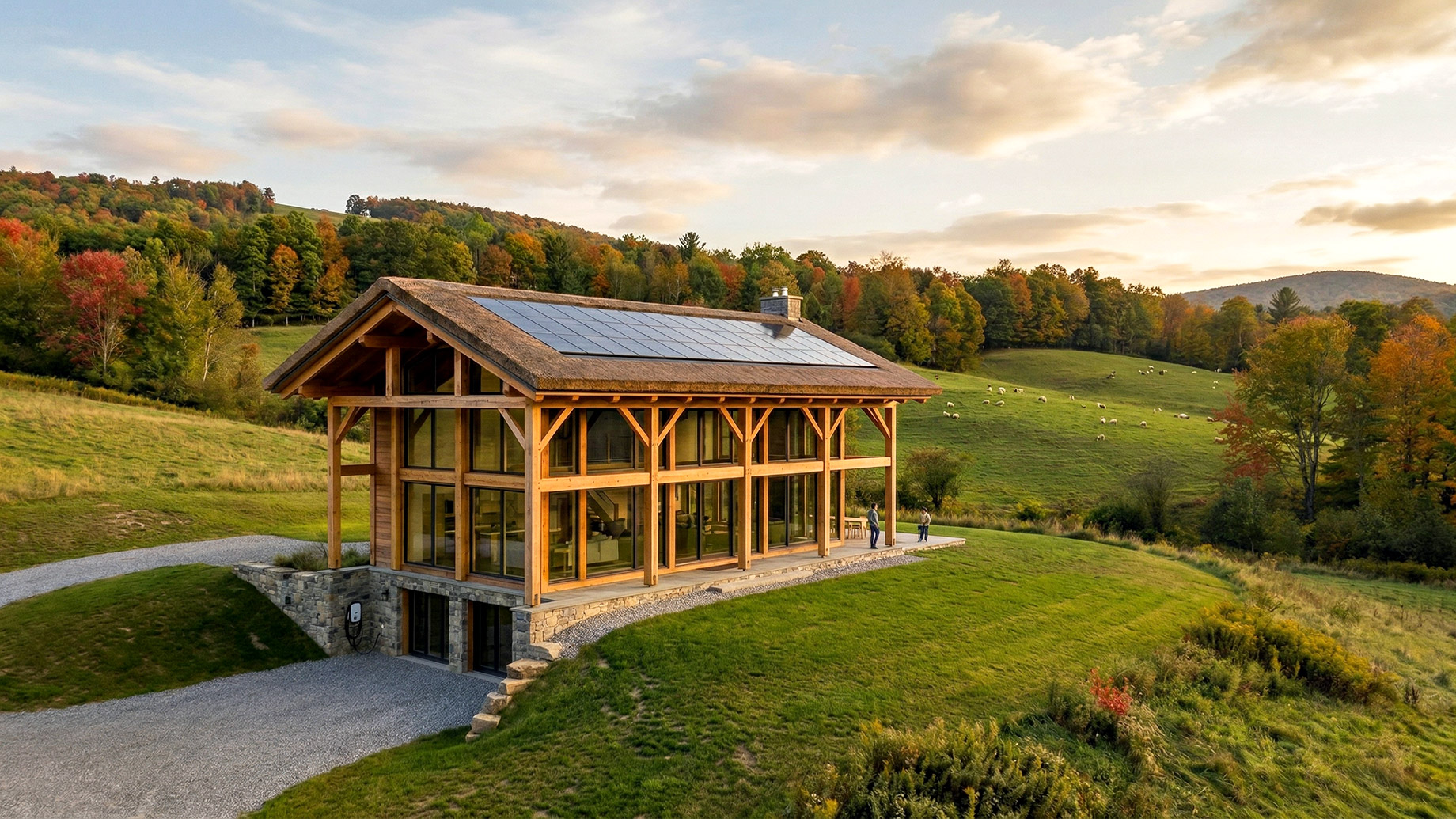
Vermont’s green hills and maple forests have long shaped homes built with muscular timbers. Today, more buyers want that hand-crafted feel plus a shell that meets the state’s 2024 energy code. We’ve ranked seven kit suppliers—scored on sustainability, craftsmanship, cost clarity, customer reviews, and design help—so you can match the right partner to your budget, timeline, and vision.
How We Ranked Vermont Timber Frame Suppliers
First, we gathered everything we could find—company websites, project galleries, price sheets, customer reviews, trade-group records, and forum chatter. Then we called recent Vermont homeowners to test the glossy claims against on-site reality. The goal was simple: build a fair scoreboard so you can choose a partner without second-guessing later.
Next, we turned that stack of notes into hard numbers. Every supplier earned a one-to-ten score in five areas that matter when you live with a timber frame through six-month winters and sticky mud seasons.
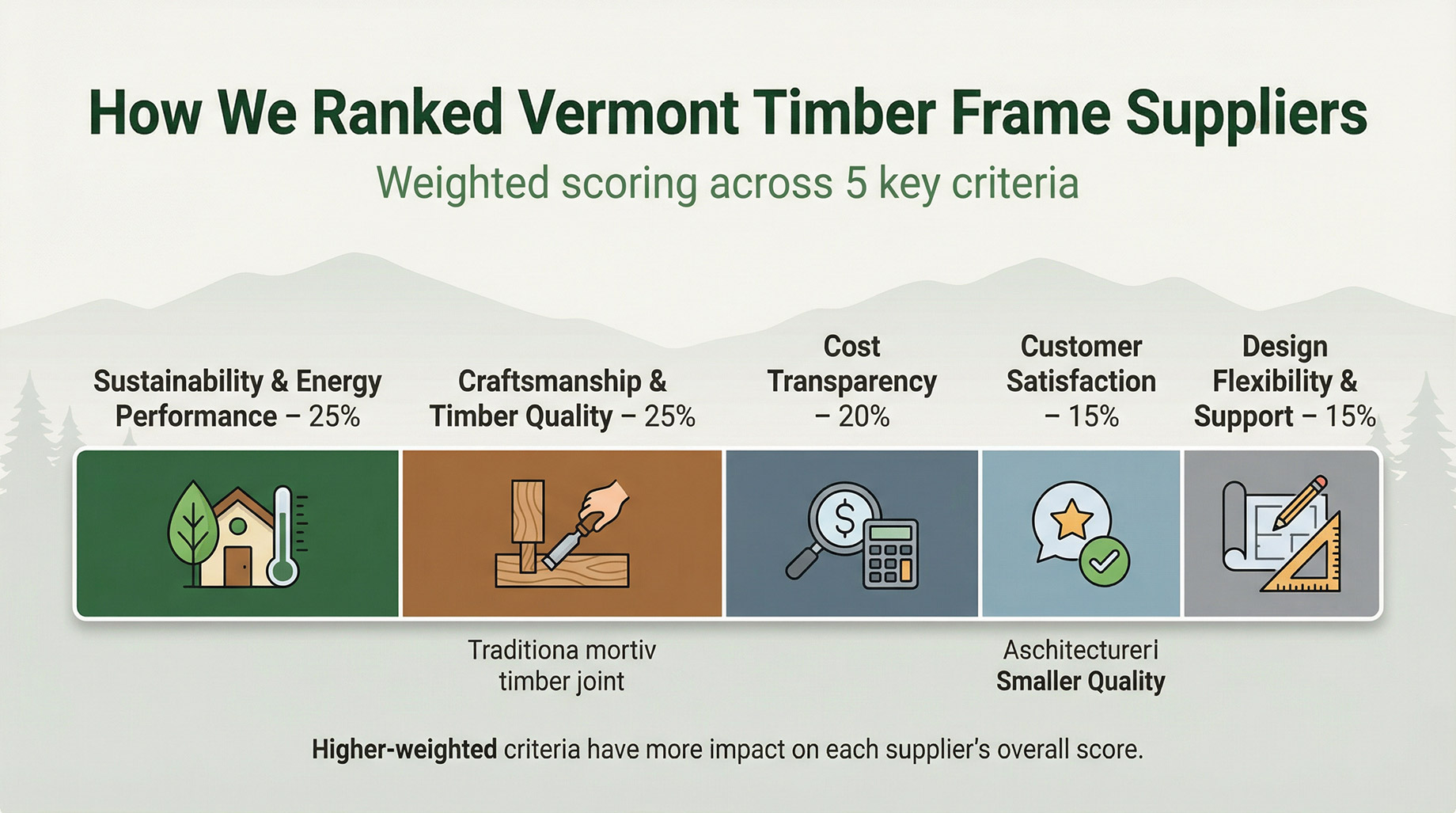
- Sustainability and energy performance (25 percent): Certified or local lumber, insulated panels, and readiness for Vermont’s 2024 energy code.
- Craftsmanship and timber quality (25 percent): Joinery precision, wood species, and years of frame-raising experience.
- Cost transparency (20 percent): Clear kit pricing, realistic turnkey estimates, and no surprise up-charges.
- Customer satisfaction (15 percent): Verified ratings, testimonials, and problem-resolution track records.
- Design flexibility and support (15 percent): Depth of plan catalog, custom options, and help from permit to punch list.
We weighted the categories to reflect real-world priorities. A gorgeous frame means little if it leaks heat or drains the budget. Likewise, an eco-standout with opaque pricing never inspires confidence. Adding the weighted scores produced the final tally that decides each company’s spot in our countdown.
Seven suppliers made the cut. Others dropped off because they lacked transparent costs or couldn’t document energy-code compliance for 2024 builds. The survivors make up the list you’re about to explore, ranked and ready for your short list.
To separate marketing gloss from hard numbers, we awarded extra points to suppliers that publish transparent cost breakdowns right on their websites.
Quick Comparison: How the Top Suppliers Stack Up
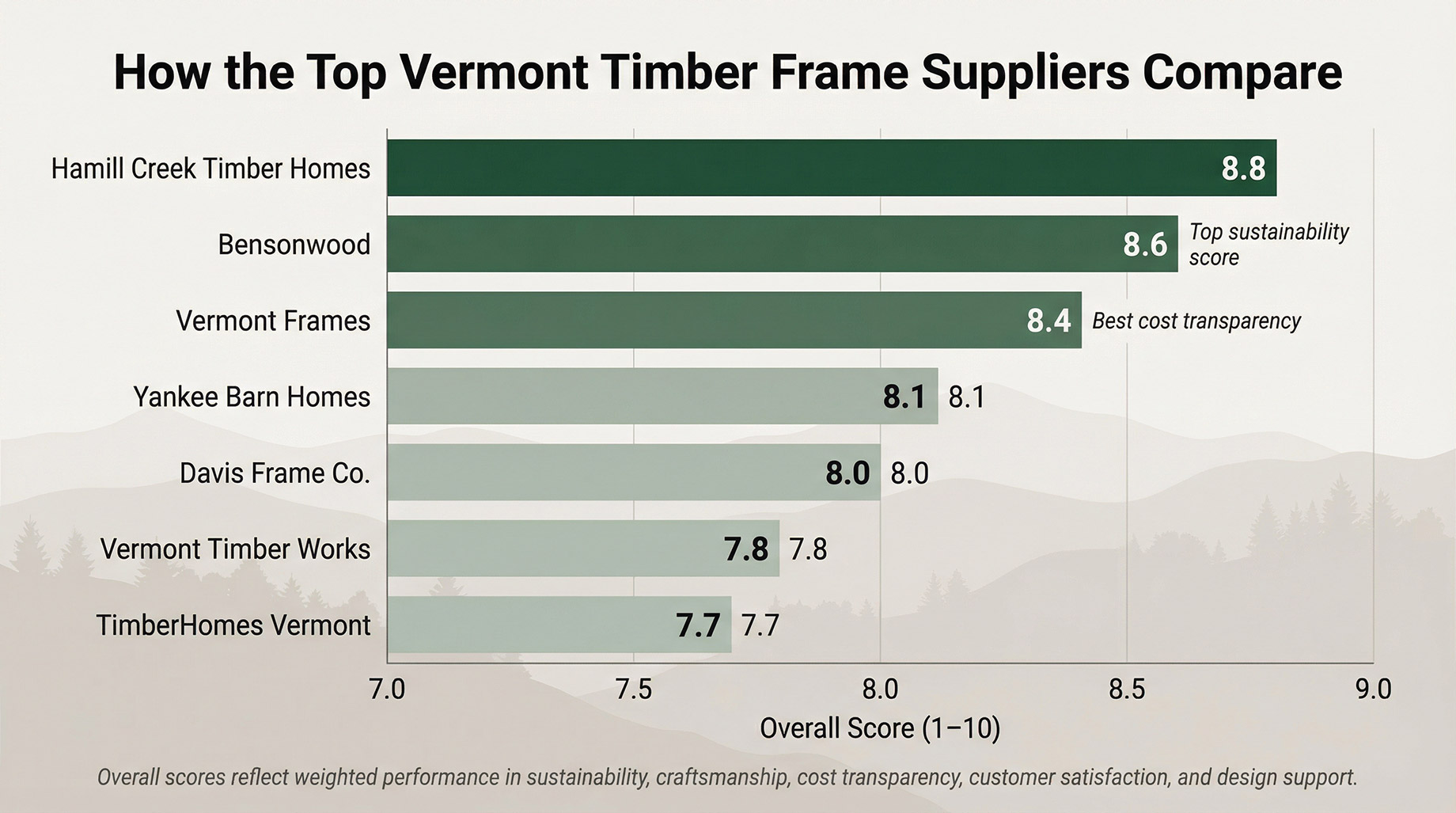
Before we dive into individual profiles, it helps to see every contender side by side. The scorecard below turns pages of research into numbers you can scan in seconds.
Each rating runs one to ten. Higher is better. The overall score follows the weighted formula we covered earlier, so a small dip in sustainability can sink a company that excels elsewhere.
| Supplier | Founded | Base, Ships to VT | Sustainability | Craftsmanship | Cost Clarity | Reviews | Design Support | Overall |
|---|---|---|---|---|---|---|---|---|
| Hamill Creek Timber Homes | 1989 | BC Canada, yes | 9 | 9 | 8 | 9 | 9 | 8.8 |
| Bensonwood | 1973 | NH, yes | 10 | 9 | 6 | 9 | 9 | 8.6 |
| Vermont Frames | 1976 | VT | 8 | 8 | 9 | 10 | 7 | 8.4 |
| Yankee Barn Homes | 1969 | NH, yes | 9 | 8 | 7 | 9 | 8 | 8.1 |
| Davis Frame Co. | 1987 | NH, yes | 8 | 8 | 8 | 9 | 8 | 8.0 |
| Vermont Timber Works | 1987 | VT | 7 | 9 | 7 | 9 | 6 | 7.8 |
| TimberHomes Vermont | 2005 | VT | 10 | 8 | 7 | 9 | 9 | 7.7 |
Use the table as a compass. If energy performance tops your wish list, Bensonwood leads. If budget clarity matters more, Vermont Frames edges ahead. The deep dive starts next.
1. Hamill Creek Timber Homes: Global Craftsmanship, Vermont-ready Performance
Hamill Creek has spent more than three decades perfecting one thing: hand-cut frames that fit together like a maple-syrup puzzle, no matter how far they travel. Every beam is first test-assembled in British Columbia, then labeled and packed for the cross-country haul, a process detailed in the company’s guide for Vermont timber frame builders. When the truck reaches your dirt road in Vermont, every mortise and tenon already lines up.
Sustainability sits at the center of the process. The crew selects FSC-certified Douglas fir and pairs it with structural insulated panels, creating an envelope that meets Vermont’s 2024 energy code without add-on fixes. Clients aiming for net-zero living often start here because the shell arrives prepped for heat-recovery ventilation, triple-pane windows, and rooftop solar.
Design support feels personal. You can browse their plan book for a snug cabin or hop on a video call with an in-house designer to sketch a hybrid lodge that blends timber with light-frame wings. Either way, revisions move quickly thanks to 3D modeling and CNC precision on the shop floor.
Cost clarity is refreshingly direct. Hamill Creek offers a fixed-price kit contract that covers timbers, panels, hardware, and transport to Vermont. You’ll team up with a local general contractor for the foundation and finishes, but the company’s project coordinators stay on the phone until the last peg drops.
Who is Hamill Creek best for? Homeowners who want showroom-level craft and the peace of mind that every joint was dry-fitted before it left the yard. If you value premium materials, airtight logistics, and a partner fluent in both design and building science, keep this name at the top of your shortlist.
2. Bensonwood: High-Tech Passive-House Pioneer
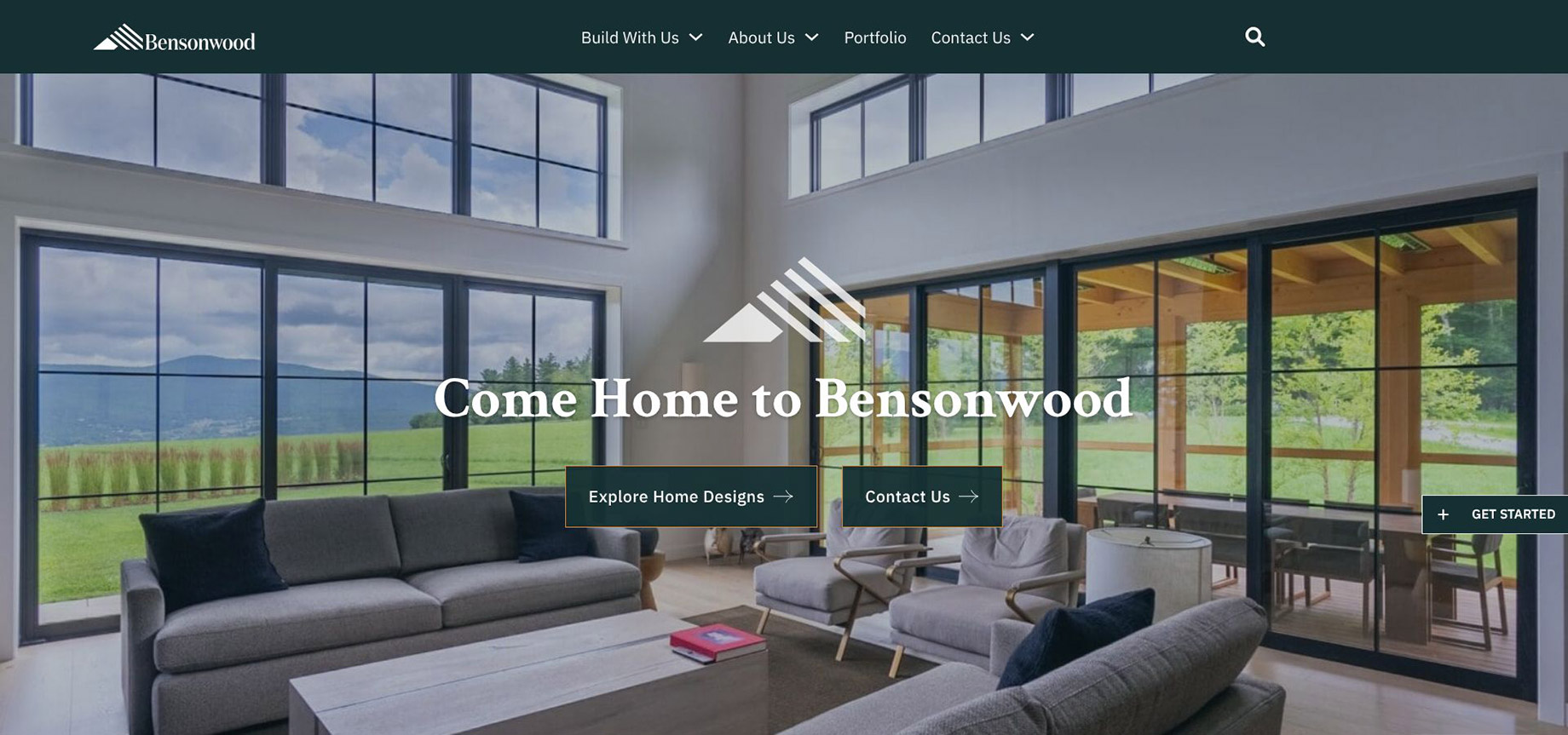
Walk into a Bensonwood home and you notice the silence first. Triple-glazed windows, thick wood-fiber panels, and airtight joinery hush Vermont’s wind to a whisper. That calm is no accident. Founder Tedd Benson has spent five decades refining a factory process that pairs traditional timber framing with CNC-cut wall sections built to Passive House tolerances.
Every piece starts in a climate-controlled shop across the Connecticut River in Walpole, New Hampshire. Robots cut joinery within hair-thin margins, then crews pre-install insulation, wiring chases, and window bucks. The result is a weather-tight shell that cranes together on your site in days, not months. Speed matters when you’re racing mud season.
Sustainability leads the spec sheet. Bensonwood’s wall system reaches R-40 or higher, while roof cassettes surpass R-60. Dense-pack cellulose and wood-fiber boards keep embodied carbon low, and heat-recovery ventilation comes standard. Many clients add rooftop solar and enjoy net-zero utility bills.
That performance costs more up front. Recent Vermont projects landed between 350 and 500 dollars per square foot turnkey, depending on finishes. Owners describe the extra spend as insurance: lower heating loads and fewer construction surprises balance the premium, and resale audits show energy scores that beat neighboring builds.
Design support runs deep. Bensonwood’s in-house architects handle full custom work, while its sister brand, Unity Homes, offers fixed-plan models for buyers who want the tech with predictable pricing. Both paths include virtual-reality walkthroughs so you can fine-tune sightlines before a single timber is milled.
Choose Bensonwood if energy independence tops your wish list and you want a shell that goes up faster than a Vermont thunderstorm. Skip it if you’re chasing the lowest cost or plan to DIY most of the build; this service suits owners who see their home as a long-term performance machine.
3. Vermont Frames: Home-Grown Craft at a Neighborly Price
Starksboro’s Vermont Frames has been raising timbers since the disco era, and that longevity shows in the calm confidence of its crew. Walk the shop floor and you’ll see Eastern white pine and local hemlock stacked to dry, not shipped from thousands of miles away. The short supply chain keeps costs in check and pumps money back into Vermont’s forest economy.
The company focuses on its core skill: cutting and erecting precision mortise-and-tenon frames, then wrapping them with its own SIPs. Because outside architects usually handle the design, the kit arrives lean and purpose-built. That focus translates into some of the clearest, most predictable pricing we found. Owners quoted turnkey numbers in the 350 to 500 dollars per square foot range, a realistic baseline for families aiming above track-built quality.
Craftsmanship still rates high. Timbers are hand-finished, pegs are oak, and frame raisings often become community events. Reviews praise tight joinery and on-schedule deliveries. The trade-off? Lead times can stretch when orders pile up, and if you need full architectural guidance, you’ll hire that talent separately.
Choose Vermont Frames if you value local wood, proven experience, and a builder who treats every project like a small-town handshake.
4. Yankee Barn Homes: Barn-style Warmth, Modern Envelope
If your Pinterest board is packed with soaring lofts, rugged rafters, and sliding hayloft doors, Yankee Barn Homes will feel like a match made in New England. Since 1969 the Grantham, New Hampshire crew has bottled the charm of a classic barn and paired it with energy performance that keeps utility bills quiet.
Their standout feature is a proprietary panel system. Rather than relying on foam SIPs alone, Yankee Panels sandwich dense insulation between high-grade sheathing that arrives with windows and trim in place. Crews bolt the panels to a Douglas fir frame, and the shell locks up within about two weeks, protecting fresh timbers from freeze-thaw cycles common in Vermont’s shoulder seasons.
Customization is generous without feeling overwhelming. More than fifty base models (cottages, farmhouses, ski chalets) act as starting points. You can tweak room sizes, swap dormers, or add a timber-truss garage. In-house designers keep revisions on track, and a photo-rich portfolio sparks ideas faster than any catalog.
Pricing lands in the upper-middle tier. Owners report turnkey costs that start around 400 dollars per square foot once local labor and finishes are tallied. What you pay for is character: reclaimed boards, cupolas, and cathedral-height hammer-beam trusses turn everyday rooms into showpieces.
Choose Yankee Barn if you love barn aesthetics, need a rapid weather-tight timeline, and want the option to weave in authentic reclaimed wood without hunting salvage yards yourself.
5. Davis Frame Company: versatility meets panelized speed
Davis Frame sits just over the Vermont border in Claremont, New Hampshire, yet its reach spans from tiny mountain cabins to sprawling timber estates. The key strength is choice: order a traditional post-and-beam, a hybrid with only great-room trusses exposed, or a fully panelized shell that shows timber accents without the heavier price tag.
All options roll out of the same modern facility. Wall and roof panels arrive numbered, insulated, and sheathed, ready to stand in sequence like a life-size model kit. Crews in Vermont report shells dried in within about two weeks, a schedule win that keeps framing carpenters ahead of November flurries.
Cost clarity is a Davis hallmark. Each plan lists a ballpark kit price, and sales reps walk you through realistic turnkey totals, usually 350 to 450 plus dollars per square foot depending on finishes. The openness lets you adjust scope early instead of hacking dreams later.
Design help is plentiful but focused. A catalog of more than one hundred plans offers jumping-off points, while in-house designers handle moderate tweaks. If you want a blank-sheet custom, they suggest partnering with an architect, then lean in to engineer and fabricate the frame.
Davis earns its spot for buyers who want timber charm without locking into a single construction method. Choose them when you value schedule certainty, appreciate menu-style pricing, and like the idea of adjusting timber exposure room by room.
6. Vermont Timber Works: Signature Frames for One-of-a-Kind Spaces
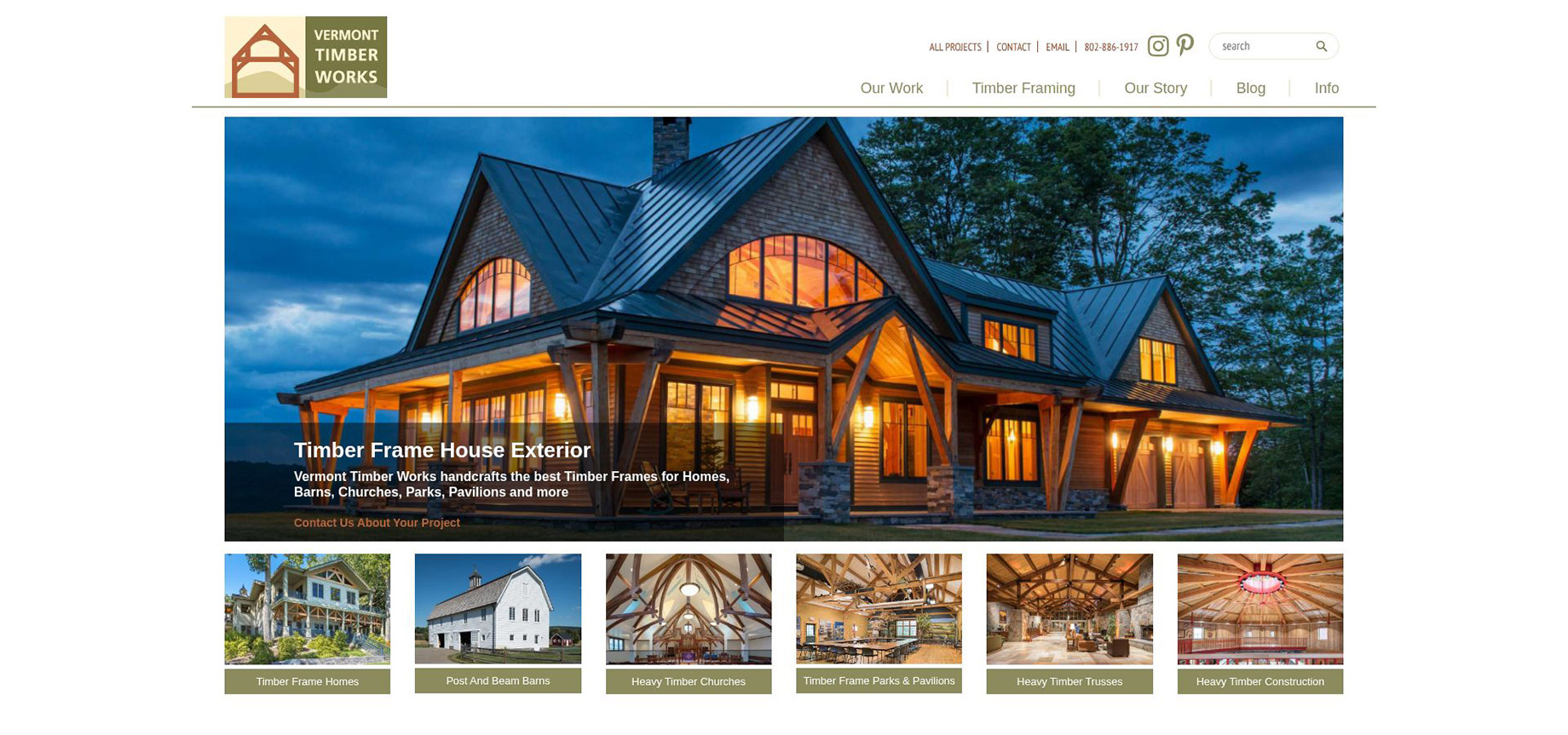
Some projects call for artistry that refuses to fit a template. Vermont Timber Works delivers that artistry. Operating in North Springfield since 1987, the team takes on one-off designs other shops skip, from curved hammer-beam trusses to frames for chapels, breweries, and even covered bridges.
Everything begins with collaboration. Homeowners arrive with an architect, or VTW suggests one. Together they refine the idea until structure and aesthetics click. In-house engineers run snow-load calculations, then craftsmen translate drawings into oak, pine, or reclaimed barn timbers, hand-planed until they glow.
Because every frame is unique, pricing varies more than with kit makers. Clients we interviewed reported shells from the mid-200s to more than 500 dollars per square foot once assembled and enclosed. Each of them used the same phrase: worth it. You are paying for sculpture that also supports the roof.
Installation can include a full raising crew, sparing your local builder the steep learning curve of complex joinery. After the ceremonial last peg, VTW hands off a frame that is plumb and true, ready for SIPs or the high-R wall system your architect specifies.
Choose Vermont Timber Works if you picture a legacy structure that future generations will point to and say, “That beam was cut for this room.” Skip it if you need a fast, off-the-rack plan or must lock costs before the first sketch hits paper.
7. TimberHomes Vermont: local timbers, cooperative spirit
Vershire’s TimberHomes Vermont treats sustainability as action, not slogan. The worker-owned cooperative harvests logs from nearby ridges, mills them in local yards, and hand-cuts frames that feel rooted to the same soil. Short haul routes lower embodied carbon and keep dollars in small-town economies built on forestry.
The company focuses on modest, thoughtfully designed homes and barns. Standard plans such as the Very Fine House come pre-engineered for high performance yet stay under 1,400 square feet, ideal for buyers chasing a smaller footprint without giving up craft. If you want something unique, meet with the co-op’s designers to tweak layouts or blend in straw-bale infill, clay plaster, or live-edge stair treads.
Builds move at a human pace. Crews invite owners to raise the frame, turning construction into a community moment. Because the team tackles only a handful of projects each year, you’ll need to reserve a slot well in advance. Pricing lands in the middle of our list: owners report turnkey totals of about 375 to 500 dollars per square foot, shaped by finish level and how much sweat equity you invest.
Put TimberHomes Vermont on your shortlist if local sourcing, hands-on collaboration, and democratic business ethics matter as much as energy numbers. It’s less about glossy catalogs and more about crafting a home that tells a distinctly Vermont story—one pegged joint at a time.
Conclusion: Why Vermont Timber Frames Are Booming Right Now
Step back from individual brands and you’ll spot a perfect storm driving timber construction across the Green Mountain State.
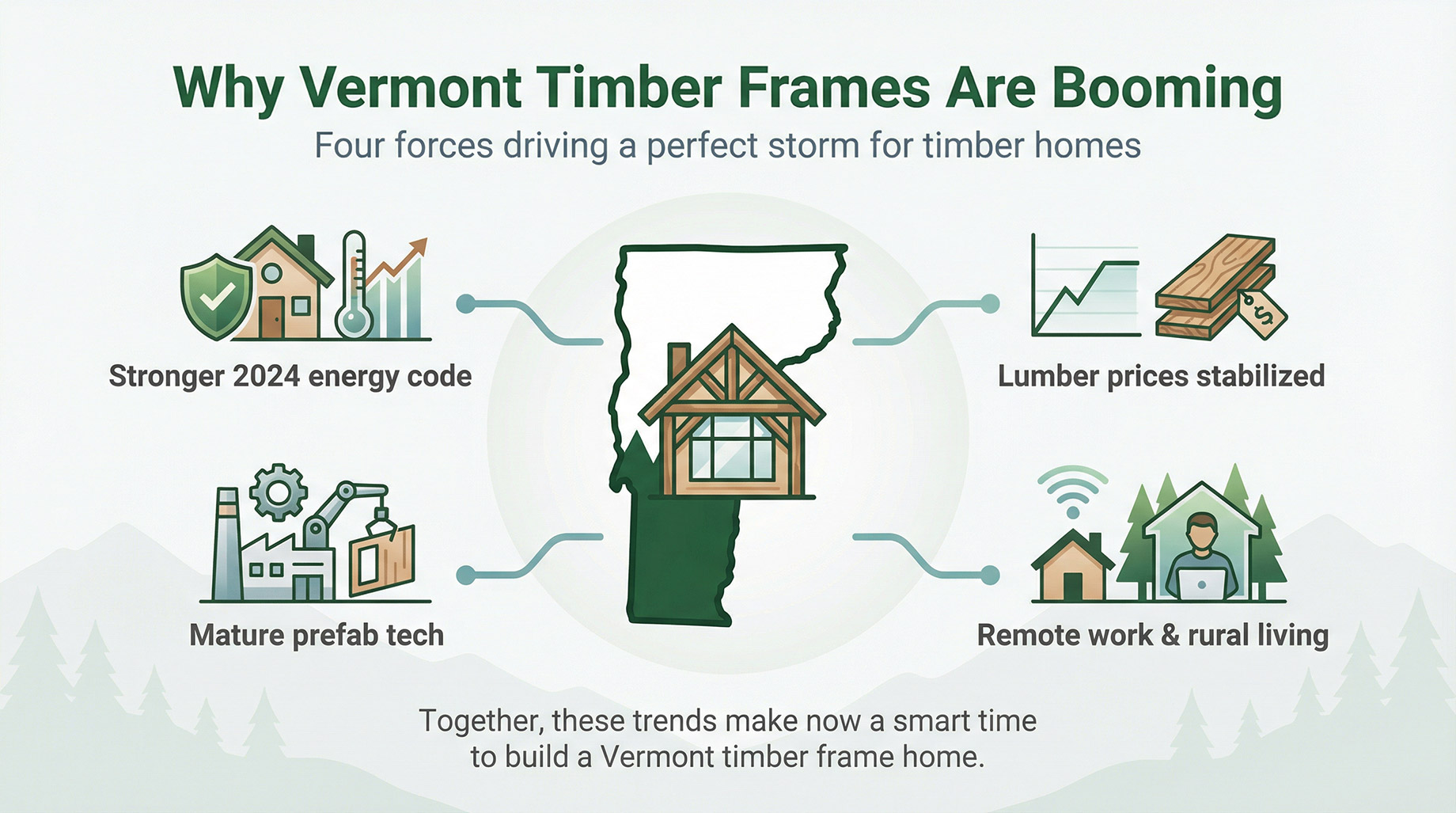
First, Vermont’s energy code tightened in 2024, calling for stricter air-tightness, thicker insulation, and EV-charger conduits. A September 2025 executive order reopened the 2020 code as a cost-relief option. Many buyers still aim for the 2024 benchmarks to future-proof their investment. Timber-frame shells wrapped in high-R panels sail past those requirements and save you from pricey retrofits later.
Second, lumber prices finally settled. After the roller-coaster spikes of 2021, costs leveled through 2023 and early 2024. Suppliers locked in contracts and passed the stability to buyers, which explains the clearer quotes in our rankings.
Third, prefabrication tech matured. CNC joinery, 3D modeling, and factory-built wall cassettes cut on-site time. In Vermont, where mud season and early snow can erase build days, a kit that cranes together in two weeks keeps crews ahead of the weather and trims labor costs.
Finally, lifestyle shifts matter. Remote work pulled more people to rural corners of the state, and they want homes that feel authentic, sip energy, and host family gatherings for decades. Heavy timbers deliver that emotional punch better than any stick-built shell.
Add those forces together and demand soars. Land remains affordable outside ski towns, suppliers are scaling up, and local banks now understand timber projects well enough to finance them with standard construction loans. If you’ve been waiting for the right moment to go post and beam, this is it.
