Have you ever watched a building sway violently in storm footage and wondered why it didn’t just snap? The answer often lies not in the visible steel, but in the invisible choices made years before. Material selection is the quiet hero or the silent culprit in every high-performance construction project. A skyscraper’s survival depends on concrete that breathes, not just concrete that hardens. Bridges now face hundred-year floods every few springs, so their joints must flex like willow branches. Traditional lumber warps under unexpected heat waves, yet mass timber can char slowly to protect its core.
The wrong metal can crack in a polar vortex, while a clever alloy might only shrug. Current supply chain chaos has forced builders to rethink everything. Shipping costs for Italian marble have tripled, so local basalt fibers suddenly look gorgeous. Societal pressure for net-zero carbon means cement plants are testing seaweed-based additives. Even homeowners notice when their new deck splinters after one wet winter. The construction world is learning that a material’s story matters as much as its strength. In this blog, we will share why picking the right slab or screw can save millions, prevent disasters, and even make people smile.
Why Local Expertise Still Matters
Even the best titanium alloy fails if installed poorly. That is why site conditions dictate material choices more than catalogs do. A seaside condo needs stainless steel railings, not galvanized ones. Salt air eats cheap coatings for breakfast. A mountain lodge requires sealants that stay flexible at minus twenty degrees. Many failures happen because someone used a standard product in an extreme place. This is where experienced local teams earn their keep. For instance, reliable paving contractors know that asphalt mix changes with regional rainfall patterns. They adjust the oil content so driveways do not crack after the first freeze-thaw cycle. A contractor from a dry state might bring the wrong recipe to a wet one, causing potholes within months. High-performance projects now demand this granular knowledge. The trend is toward hyper-local sourcing, partly to cut transport emissions. But also because local stone, clay, or timber already behaves well in that climate.
The Carbon Calculus Nobody Mentions
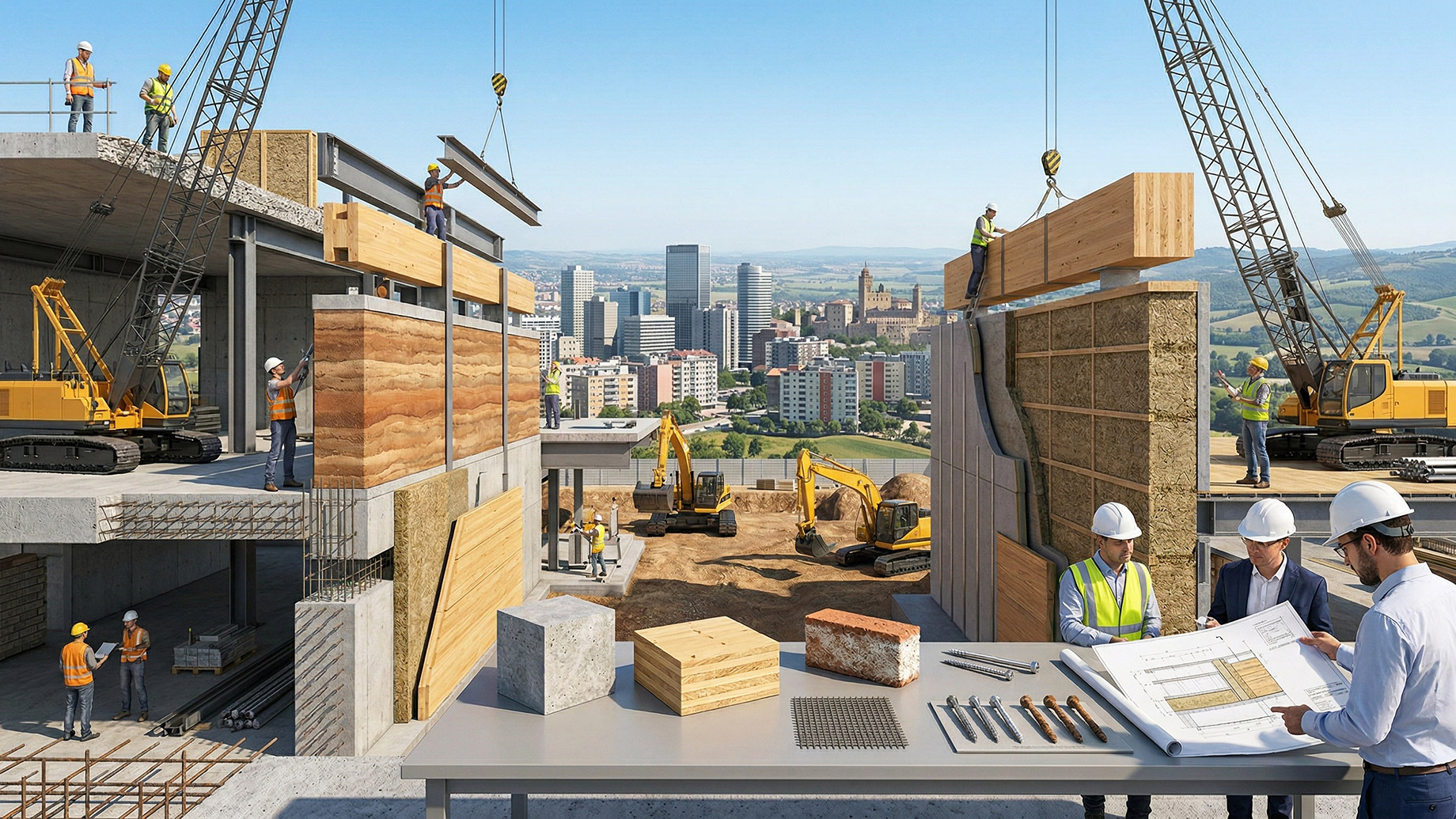
Everyone talks about operational carbon, the energy used to heat and cool a building. But upfront carbon, the emissions from making materials, is the bigger elephant. Producing one ton of ordinary cement releases nearly a ton of CO2. That is insane for a substance that just sits there. So high-performance projects now ask a rude question: do we even need cement? Rammed earth walls use local dirt and a tiny bit of stabilizer. They look like striated sandstone and regulate humidity naturally. Cross-laminated timber stores carbon instead of emitting it. A wooden skyscraper in Milwaukee locks away thousands of tons of CO2. The irony is that ancient building methods are becoming high-tech again. Mud and straw, aka cob, have better thermal mass than many synthetics. The challenge is code approval and insurance.
Fire departments still eye wood towers with suspicion, even when tests show they char slowly. Yet the societal trend is undeniable. Young architects want portfolios with negative carbon footprints. Clients face investor pressure to disclose embodied emissions. So material libraries now feature hempcrete, mycelium bricks, and recycled plastic lumber. Each has quirks. Hempcrete is not structural; it needs a frame. Mycelium smells like a forest floor for months. But the outcomes are worth the weirdness. A building that heals the climate rather than harming it? That is the new definition of performance.
The Human Cost of Cheap Screws
Walk into any big-box hardware store and feel the sadness of a zinc-plated hinge. It will corrode in five years, forcing a replacement. Now scale that sadness to a sixty-story apartment tower. A few bad fasteners can turn a balcony into a safety hazard. High-performance projects obsess over the small parts others ignore. Washers, anchors, and sealants get tested for twenty-year lifespans. The reason is simple: repair costs dwarf initial savings. A leaking window gasket in a high-rise requires scaffolding and cranes. That job runs into hundreds of thousands of dollars. So material selection becomes a bet against future maintenance. Smart owners choose stainless steel screws and silicone gaskets rated for ultraviolet exposure. They know that a cheap rubber seal turns brittle after two summers. The emotional math matters too. Residents feel anxious when they see rust streaks on their building’s face. They worry about falling debris or hidden rot. So high-performance materials deliver peace of mind – a feature no software can simulate.
When Innovation Goes Sideways
Not every new material works as advertised. A famous stadium used translucent plastic panels that yellowed within two years. The team had to replace them at night to avoid embarrassing photos. Another “green” skyscraper installed phase-change wax capsules in walls. The idea was to absorb heat during the day and release it at night. But the wax melted unevenly, creating weird hot spots near the ceiling. So high-performance projects now demand pilot tests and warranties. They treat material vendors like suspects in a mystery novel.
The current trend is toward digital twins, virtual models that simulate material aging. Engineers can see how a new cladding will look after ten years of acid rain. They can watch a foundation crack under simulated drought conditions. This software reduces surprises but does not eliminate human error. A contractor once installed fireproofing spray backward, putting the thick layer on the wrong side. The building passed inspection because nobody checked the drawings against reality. So material selection is a team sport. It requires humility from architects, skepticism from engineers, and stubbornness from owners.
The Future is Already Here
Remember that cheap screws and bad sealants will betray you every time. And support local suppliers who understand your rain, your heat, and your frost. The next time you see a building survive a hurricane, tip your hat to the material selector. That person probably saved lives without ever swinging a hammer. So go ahead and inspect your own front steps. Are they crumbling? Is the railing wobbly? Those are material selection problems, not bad luck. Fix them with the best you can afford. The planet and your future self will thank you.
