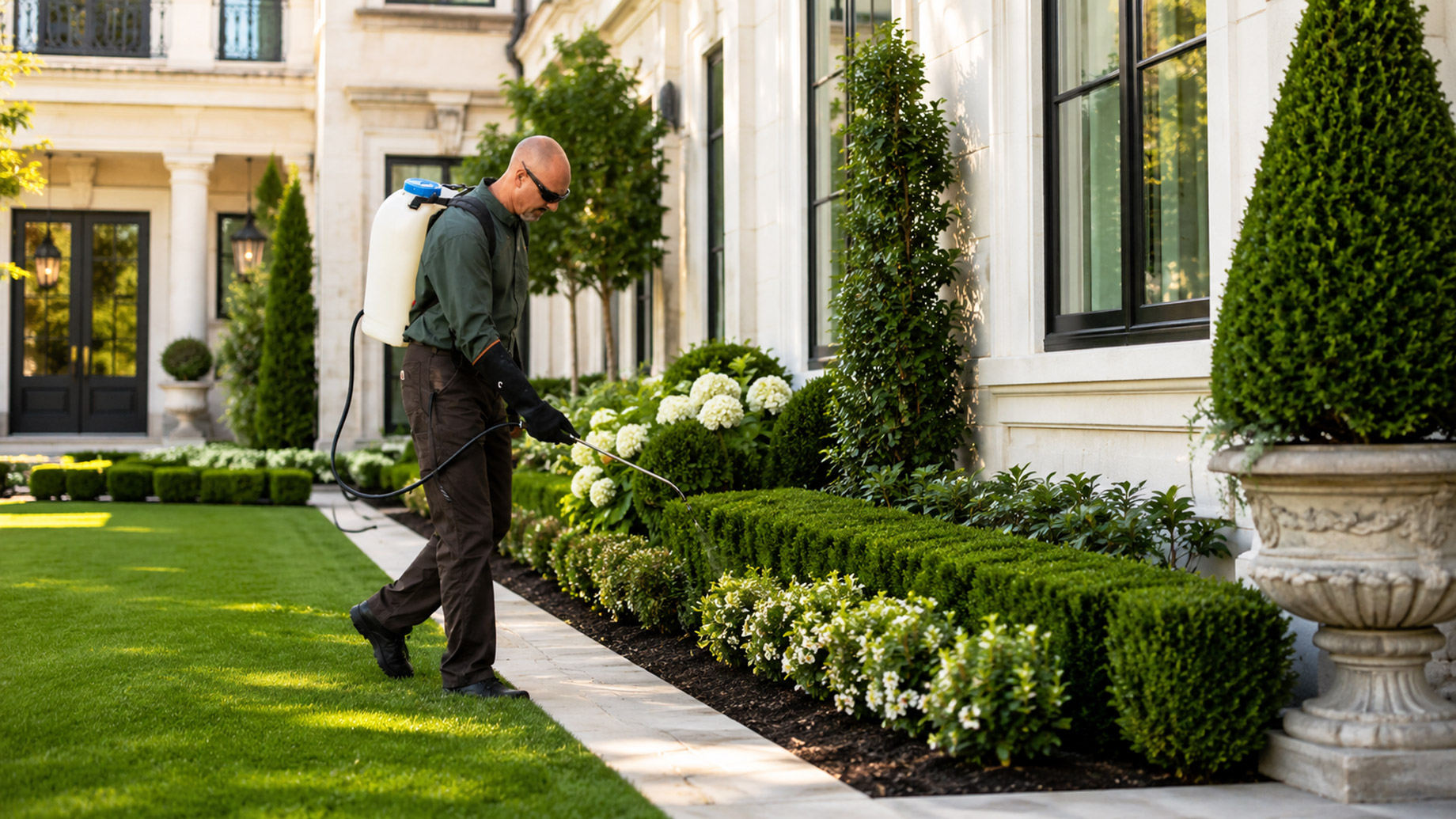
Luxury landscaping is often judged by what people see first. The sweep of the lawn. The texture of stone underfoot. The way olive trees, boxwood, palms, lavender, or ornamental grasses soften the edges of a modern home. Good design makes a property feel calm before anyone reaches the front door.
But here’s the thing. The most beautiful landscape can become a headache if it invites pests too close to the house.
Pest prevention rarely gets the same attention as lighting plans, pool placement, outdoor kitchens, or seasonal planting. It feels less glamorous. Nobody wants to sit in a design meeting and talk about mosquitoes, rodents, termites, ants, or nesting insects while reviewing mood boards. Still, those details matter. In high-end landscape design, pest prevention is not a side issue. It is part of protecting the home, the grounds, and the feeling of comfort that luxury spaces are meant to create.
Beauty Shouldn’t Create Problems
A high-end landscape has to do more than look good in photos. It has to live well. That means every feature, from hedges to water bowls, should be planned with maintenance in mind.
A dense row of shrubs against the foundation can look lush and private, but it also traps moisture and gives pests cover. Thick mulch creates a finished look, yet too much of it near the home can hold dampness where insects thrive. Poor drainage can turn one corner of a garden into a soft, wet zone that attracts mosquitoes and other pests.
The tricky part is that many pest problems start as design choices. Not bad choices, just incomplete ones.
A landscape architect might select plants for color, scent, drought tolerance, or symmetry. A homeowner might ask for a resort-style yard with layers of greenery and a quiet water feature. The design can be stunning. But if no one asks how that planting bed drains after a heavy rain, or how close the vines grow to the exterior wall, trouble creeps in.
And trouble in luxury homes is rarely small. It can affect outdoor dining, poolside lounging, guest comfort, property value, and even interior maintenance.
The Planting Plan Matters More Than People Think
Plants are the soul of a garden. They add softness, movement, shade, and a sense of place. But they also shape pest activity.
Some plants attract pollinators, which is a good thing when handled with care. Others attract insects that homeowners don’t want near patios, doors, and outdoor kitchens. Fruit-bearing trees, for example, look charming and can feel very Mediterranean or estate-like. But fallen fruit becomes a food source if it is not cleaned up often.
The goal is not to design sterile, lifeless landscaping. That would miss the point. A garden should feel alive. The goal is to design with intention.
That means keeping dense plants away from the foundation, choosing species that suit the local climate, and avoiding overgrown planting beds that become hiding places. It also means thinking about spacing. Plants need room to breathe. So does the house.
In warm regions, this becomes even more important. Long summers, irrigation, shaded garden beds, and outdoor entertaining areas create the kind of environment where pests stay active for much of the year. Homeowners who build prevention into the landscape plan, including services like pest control in Chandler, treat it as part of seasonal property care rather than a last-minute fix.
Water Features Are Lovely, Until They Aren’t
Few elements feel more luxurious than water in a landscape. A reflecting pool. A tiled fountain. A narrow rill beside a walkway. Even a small basin can change the mood of a garden.
Water adds sound, sparkle, and calm. You know what? It also adds responsibility.
Standing water is one of the easiest ways to invite mosquitoes. That does not mean water features should be avoided. It means they need movement, filtration, and maintenance access. Designers should make sure pumps are easy to service and that water does not sit still in hidden corners.
The same applies to irrigation. A smart irrigation system can protect expensive plantings and reduce waste, but poor settings create soggy soil. Overspray against walls, fences, and outdoor cabinetry is another quiet problem. It stains surfaces, encourages mold, and gives pests the moisture they need.
Good irrigation design is almost invisible when it works. Plants stay healthy. Soil stays balanced. Hardscape stays dry where it should. It is not the flashy part of the project, but it is one of the parts that keeps everything else from going sideways.
Mulch, Drainage, And The Small Details That Add Up
Mulch is one of those landscape materials people barely notice when it is done right. It gives beds a clean finish, helps soil retain moisture, and controls weeds. But too much mulch, or mulch placed too close to the home, creates pest-friendly conditions.
A neat border between planting beds and the house helps. So does using gravel, stone, or other less pest-friendly materials in certain transition zones. Luxury landscape design often uses layered textures, so this does not have to look plain. Crushed stone, decomposed granite, porcelain pavers, and steel edging can all create a sharp, refined look while helping control moisture.
Drainage is another quiet hero. It is not romantic. No one brags about French drains at dinner. But poor drainage ruins lawns, stains hardscape, damages plant roots, and pulls pests toward the home.
Design teams should study how water moves across the property after rain. Where does it collect? Does it run toward the house? Does a retaining wall hold moisture behind it? Are there low spots near the pool equipment, garage, or outdoor kitchen?
A luxury garden should feel effortless. Drainage is one of the reasons it can.
Outdoor Kitchens Need More Than Good Appliances
Outdoor kitchens have become a major part of high-end living. Built-in grills, pizza ovens, wine fridges, sinks, storage drawers, and shaded dining spaces turn a backyard into a second living room. It is easy to see why homeowners love them.
But food changes the pest equation.
Crumbs, grease, trash, standing water, and warm storage spaces attract ants, flies, rodents, and other pests. Even a beautiful outdoor kitchen can become frustrating if it is not planned for cleaning and sealing.
Cabinetry should close tightly. Trash storage should be practical, not just hidden. Counters should be easy to wipe down. Drainage around sinks and ice makers should be clean and direct. Lighting should support evening use without drawing swarms of insects into dining areas.
Honestly, the best outdoor kitchens are not just pretty. They are easy to reset after guests leave. That is the real test.
Lighting Can Invite Or Discourage Activity
Landscape lighting does more than show off trees and stone walls. It guides movement, creates mood, and improves safety. But lighting also affects insect activity.
Bright lights near doors and seating areas can draw insects exactly where people gather. Softer, warmer lighting placed with care reduces that problem. Path lights, downlights, and shielded fixtures can still create drama without turning the patio into a bug magnet.
This is where design and maintenance meet. A lighting plan should consider how people use the space at night. Where do they eat? Where do they enter the house? Where do children play? Where do guests linger with drinks after dinner?
Good lighting supports those moments without creating new problems. It is a small shift in thinking, but it matters.
Luxury Is Also About Comfort
People often think luxury means rare materials, custom furniture, and dramatic views. It does. But luxury also means comfort. It means sitting outside without swatting mosquitoes every few seconds. It means opening patio doors without worrying about ants trailing inside. It means guests can walk through the garden without stepping around soggy patches or overgrown shrubs.
That same idea applies beyond private homes. Well-kept grounds shape how people feel at retreats, celebrations, and private events. A garden does not need to be the main attraction to influence the mood. Clean paths, trimmed greenery, dry seating areas, and cared-for outdoor spaces help people relax. This is why even places such as wedding venues Athens AL benefit from grounds that feel polished, comfortable, and easy to enjoy without distractions.
And that is the quiet point. Pest prevention is not really about pests. It is about preserving the experience.
The Best Designs Plan For Real Life
A high-end landscape is not a museum piece. It changes. Plants grow. Seasons shift. Irrigation settings need adjustment. Outdoor kitchens get used. Leaves fall. Storms happen. Guests spill things. Dogs dig where they should not. Real life leaves fingerprints everywhere.
That is why pest prevention belongs in the planning stage, not just the maintenance stage.
Designers, builders, gardeners, and homeowners should talk about it early. Not in a dramatic way. Just as part of the process. Where should shrubs stop? How will water drain? What materials make sense near the foundation? How easy is it to clean the outdoor dining area? Will lighting attract insects near doors? Who maintains the water feature?
These questions do not make a landscape less beautiful. They make it smarter.
The best luxury landscapes feel graceful because someone thought through the unglamorous parts. The spacing. The slope. The seals. The cleaning access. The plant habits. The seasonal mess. Pest prevention sits quietly inside all of that.
And when it is done well, no one notices. They just enjoy the garden.