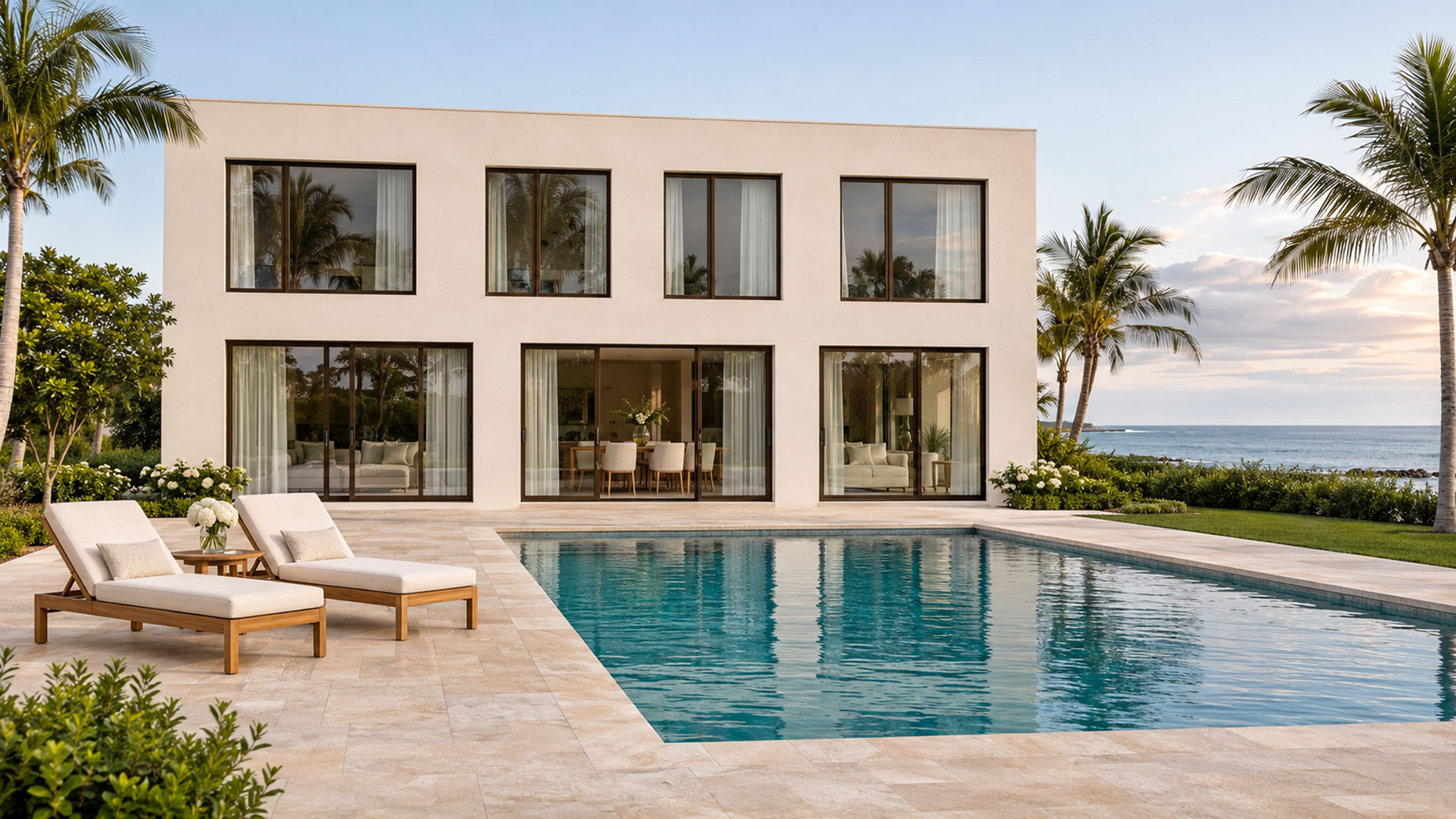
At the high end of the market, the question usually isn’t whether you can find somewhere beautiful to stay. It’s which kind of beautiful suits the way you actually travel. A five-star resort, a staffed private villa and a home you own outright can all deliver a remarkable experience, but they deliver it in very different ways, and choosing the wrong one is an expensive mistake.
This guide walks through how each option works, where each one shines, and what to look for before you commit.
Luxury Resorts: Everything Handled for You
A luxury resort is the right choice when you want the experience to run itself. Dining, housekeeping, spa treatments, activities and transport are all on-site or arranged for you, and the staff are trained to anticipate what you need.
Best for: couples, short trips, wellness getaways, and travelers who don’t want to plan.
What to check before you book:
- Room category, not just the property. At many resorts, the gap between an entry-level room and a suite or private villa within the grounds is bigger than the gap between two different resorts. Look at floor plans, views and which wing the room sits in.
- What’s actually included. Resort fees, spa access, kids’ clubs, airport transfers and certain dining can all be extras.
- Seasonality. A desert resort in July or a ski lodge in shoulder season can be a different place from the one in the photos.
- Crowd size. A resort with a few dozen keys feels very different from one with several hundred, even at the same price point.
Private Villas: Space and Privacy
Villa and estate rentals have grown fast among luxury travelers, especially families and groups. You get a whole property to yourself, often with a pool, outdoor living space and room for everyone to spread out. Many high-end villas also come with staff: a housekeeper, a chef, sometimes a concierge.
Best for: families, multi-generational trips, celebrations, longer stays, and anyone who values privacy above all.
What to check before you book:
- Who manages it. A villa run by an established management company or concierge service is a very different experience from a beautiful house with an owner who lives three time zones away.
- Staffing in writing. Confirm which staff are included, their hours, and what costs extra (chef’s groceries, for example, are often billed separately).
- Layout for your group. Count the bedrooms that are genuinely equal. A “six-bedroom” villa can mean two primary suites and four small rooms.
- Location versus seclusion. A remote estate is wonderful until every meal out means a long drive.
- The rental agreement. Read the cancellation terms, damage deposit and house rules before you pay.
Buying a Luxury Second Home
For travelers who keep returning to the same place, owning starts to make sense. A second home gives you a guaranteed base, the freedom to make it your own, and an asset that may appreciate. It also brings maintenance, property taxes, insurance and the work of managing a home you aren’t living in full time.
Before speaking to an agent, it’s worth spending some time simply browsing. Looking at how waterfront estates, mountain retreats and city penthouses are priced on a curated site like thepinnacleslist quickly shows you what your budget buys in Malibu compared with, say, Palm Beach or Aspen, and helps you work out which features actually matter to you.
Best for: people with a strong attachment to one destination who visit several times a year.
What to check before you buy:
- How you’ll really use it. Be honest about how many weeks a year you’ll be there, and in which seasons.
- Rental rules. If you plan to rent the home out when you’re away, check local short-term rental regulations and any HOA restrictions first. They vary widely and change often.
- Ongoing costs. Budget for property management, landscaping, pool care, security and insurance, which can be high in coastal and wildfire-prone areas.
- Market context. Compare a listing with recent sales and other homes on the market in the same area.
- A local team. A luxury agent who knows the specific neighborhood, plus a real estate attorney and an accountant, will save you far more than they cost.
Where Luxury Clusters in the U.S.
Each major luxury region has its own character, and that often decides which option makes the most sense.
- Coastal California (Malibu, Montecito, Carmel, Laguna Beach): world-class resorts and some of the country’s most sought-after oceanfront homes. Villa rentals are popular, though local rules on short-term rentals can be strict.
- The Hamptons and coastal New England: a summer-driven market where seasonal villa rentals are a tradition and the best homes are booked or sold well in advance.
- South Florida (Miami, Palm Beach, Naples): year-round warmth, waterfront estates, branded residences and resort-style condos.
- Mountain towns (Aspen, Vail, Jackson Hole, Park City, Big Sky): ski-in, ski-out lodges and large mountain homes, with markets that peak in winter and increasingly in summer too.
- Hawaii (Maui, the Big Island, Kauai): destination resorts and private estates where the setting itself is the luxury.
- The desert Southwest (Scottsdale, Palm Springs): spa resorts, golf communities and, in Palm Springs, a celebrated stock of mid-century modern homes.
A Word on Celebrity Homes
Many of these same regions are known for their famous residents, and celebrity homes have a real effect on the luxury market. When a well-known owner buys or sells, it draws attention to a neighborhood, and homes with a notable history or a celebrated architect can command a premium.
For buyers, that history can add value, but it shouldn’t replace the basics. Judge a former celebrity home on its construction, condition, land and location just as you would any other property. And for anyone simply curious, the most interesting coverage of famous homes focuses on their architecture and design history rather than on the private lives of the people inside them.
Quick Comparison
| Feature | Luxury Resort | Private Villa | Second Home |
|---|---|---|---|
| Privacy | Moderate | High | Highest |
| Service | Full service on-site | Depends on staffing | You arrange it |
| Best Group Size | 1–4 people | 6 or more people | Your household |
| Flexibility | Any destination, any dates | Any destination, longer min stay | One location, always yours |
| Commitment | Per stay | Per stay | Long-term ownership |
Conclusion
There’s no single best way to experience luxury in the U.S. Resorts suit travelers who want everything handled. Villas suit groups who want space and privacy. A second home suits people who already know where their heart is. Start with how you travel, who you travel with and how often you return, and the right choice usually becomes clear.
