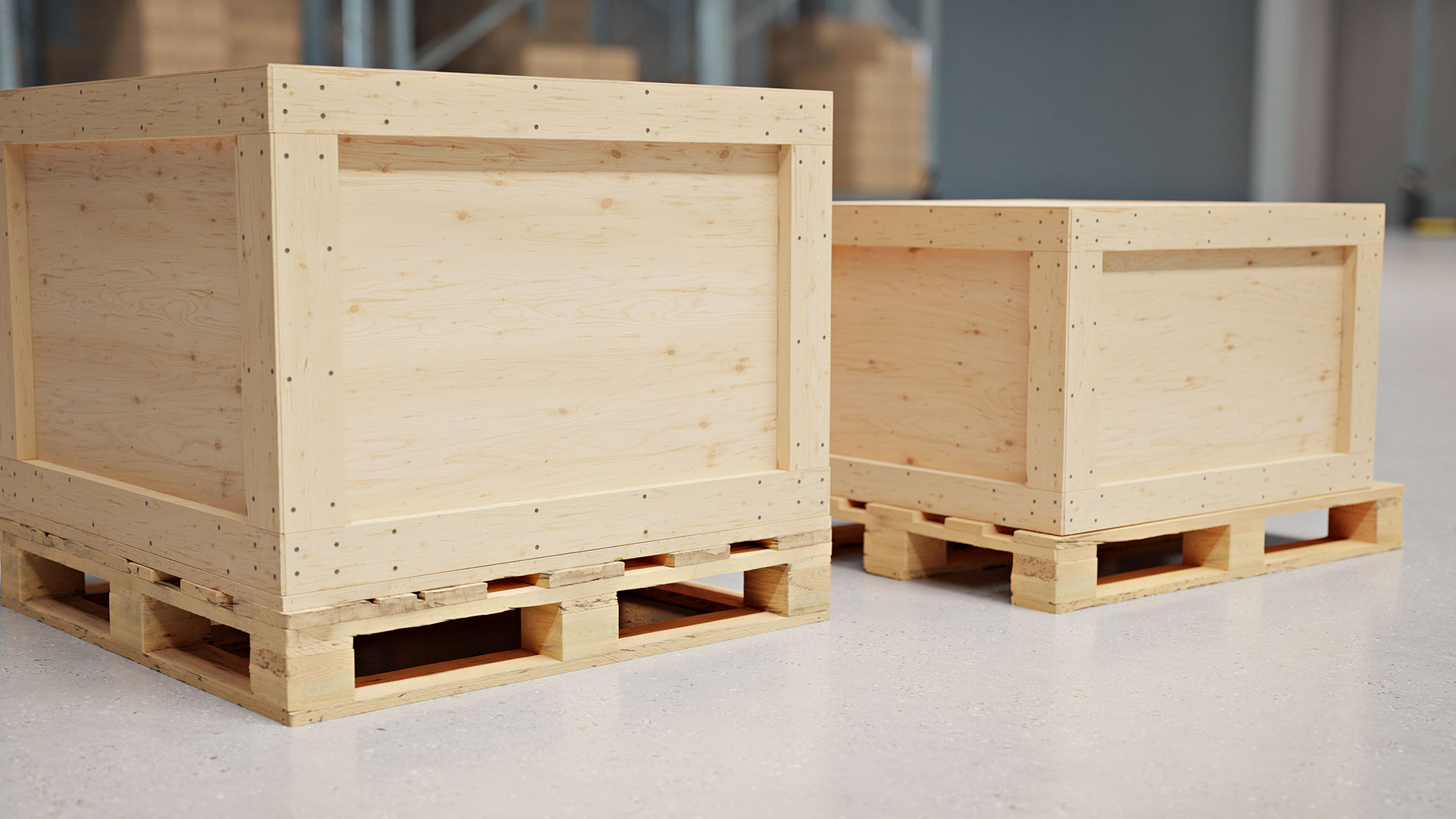
Two enclosures holding identical goods can behave very differently the moment a forklift reaches them. Choosing between palletized crates by Mugele and conventional shipping enclosures comes down to a single question: whether the base is engineered as part of the structure or the structure simply rests on something separate underneath. That distinction shapes lifting, stacking, protection, and cost across an entire journey, which is why the decision deserves more thought than it usually gets when an order is placed.
What Actually Separates the Two
A standard enclosure is a box built around the goods and set on a platform when the time comes to move it. The integrated version treats base and body as one assembly, with the deck, runners, and walls designed together so loads transfer through the frame rather than pressing on a separate platform. The result is a unit that behaves the same way every time it is lifted, because the lifting points and the load path were fixed during construction instead of improvised at the dock. Predictability is the quiet advantage that difference buys.
Handling and Forklift Access
Every lift is a chance for damage, and the two designs carry very different risks. An integrated base offers consistent entry points sized for common equipment, so operators engage the same way each time without hunting for a safe position. A conventional enclosure resting loose on a platform can shift during a lift, and if it is handled directly, tines press against panels never meant to carry that force. Across a route with several handoffs, those small differences accumulate into real damage that only shows up at the far end.
Protection for Fragile and Irregular Loads
Heavier and more delicate cargo generally favors the integrated approach. Machinery can be bolted to the deck, which stops movement inside the enclosure during transit and protects mounting points and calibration that took days to set. Blocking, bracing, and cushioning can then be engineered against a known fixed position rather than a load that may settle in transit. Lighter, uniform goods with predictable dimensions often travel perfectly well in a conventional enclosure, and specifying more structure than the contents require simply adds weight and expense to every shipment.
What Happens During Storage
Freight rarely travels straight through, and time spent waiting shapes the choice more than most shippers expect. Units with an engineered base stack more predictably, tolerate repeated repositioning, and sit level on a rack, which matters when goods wait several weeks between production and a sailing. Facilities offering Mugele warehousing services can hold either type securely, though staff generally report fewer problems moving integrated units repeatedly around a busy floor. Storage behavior, not just transit, belongs in the comparison, since a unit that sits awkwardly on a rack for a month invites exactly the handling that damages its contents.
Comparing Cost Across the Whole Journey
Unit price favors the simpler construction, and that is where many decisions stop. The fuller calculation includes handling time at each transfer, the risk of damage across multiple lifts, storage behavior, and whether a shipment will be repositioned more than once along the way. A modest premium at the outset frequently costs less than a single damaged load. For short domestic moves of sturdy goods, though, the simpler option genuinely remains the sensible economic choice, and honesty about that keeps a packaging program from overspending.
Conclusion
Neither construction is universally better, and treating the question that way leads either to overspending on simple freight or underprotecting difficult freight. The decision rests on how the load will be lifted, how far it must travel, how many hands will touch it, and how long it will wait along the way. Reviewing those conditions honestly before packaging is specified produces shipments that arrive intact without paying for structure the journey never demanded in the first place.
