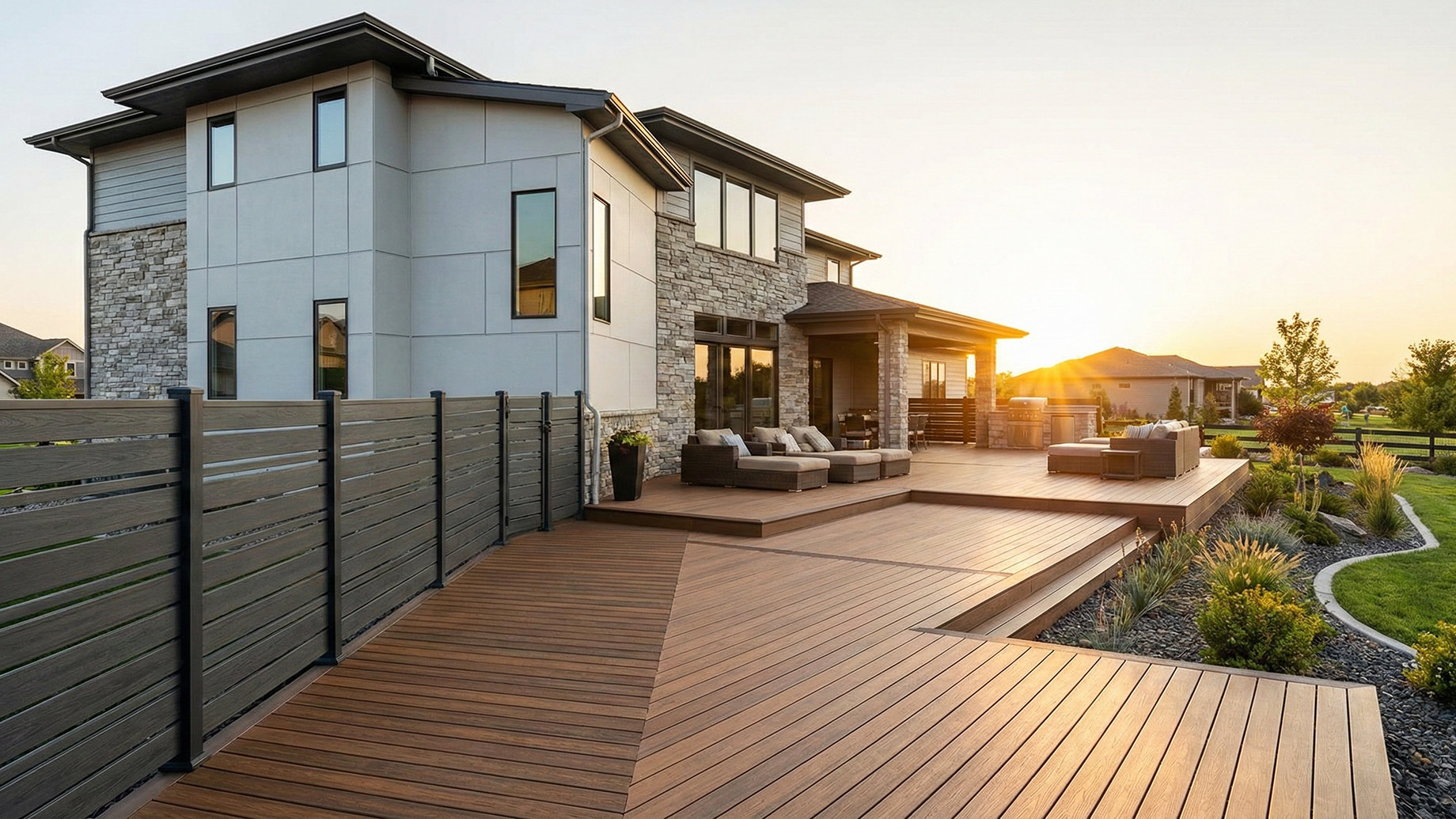
Dreaming of having more time to enjoy your home and less time maintaining it?
Every homeowner has been there. Paint the fences. Replace rotted wood. Stain the deck. Year after year.
Hold up…
What if your material choices could remove most of those chores from your calendar?
Low maintenance products exist that will save you time, money, and stress while keeping your home looking amazing.
Let’s dig into the details.
In this article you’ll learn:
- Why upgrading to low maintenance materials makes sense
- What building materials offer the lowest maintenance options?
- Everything you need to know about composite fencing products
- Considerations when choosing materials for your home
Why upgrading to low maintenance materials makes sense
Homeowners everywhere have reached a breaking point.
According to a 2024 report, nearly 7 in 10 homeowners would prefer to renovate their current home than move to a new one. And with interest rates still high and inventory low, moving is simply not an option for most people.
However, that doesn’t change the fact that…
Traditional materials used in most homes require a lot of upkeep. Wood rots. Metal rusts. Paint and stain fade in the sun. You get the idea.
Regular maintenance is costly.
Asphalt needs grading. Concrete cracks need sealing. Deck wood needs to be stained or painted. Fences need to be painted. Gardens need trimming. Cars need washing.
Don’t get us wrong. Taking pride in your home and property is important. But so is relaxing in it every once in a while.
That’s why many homeowners are cutting maintenance jobs in half with better material choices.
Let’s talk about fencing specifically as one of the most popular home upgrades. Traditional wood fencing requires painting or staining within the first few years. Even if you opt to leave the fence its natural colour, UV rays will fade the surface of the wood.
By replacing wood fence panels with composite fencing products you’ll save countless hours and dollars.
Composite fencing materials use wood fibres combined with recycled plastics to yield a product that withstands the outdoor elements. It won’t rot. It’s not susceptible to pests. And you never have to stain or paint it.
Looking to find composite fencing for your property? Read on. By the end of this article you’ll see why low maintenance options are worth it.
What building materials offer the lowest maintenance options?
Mother nature doesn’t care about your calendar. When she unleashes wind, rain, sun, snow, and ice your property takes a beating.
Yards and exteriors are most affected by weather elements. That makes them a perfect place to start when searching for low maintenance materials.
Here are your main options…
Fencing / Boundary Materials
You nailed it! Fencing is a great place to start. A new fence can transform the look and feel of your property. But not all fences are created equal.
Wood fencing is fine for year one. By year three you’ll see warping, fading, and rot.
Enter composite fencing materials.
These low maintenance products are typically a mixture of recycled wood fibres and plastics. Together they create fencing material that resists:
- Moisture build up and rot
- Termites & pests
- Fading from UV rays
- Warping due to temperature changes
Color and structural integrity lasts for decades. Say goodbye to weekend painting projects and emergency board replacements after heavy storms.
Oh, and one more thing…
Most composite fencing materials are designed to look identical to real wood. You get all the curb appeal without the upkeep.
Decking Products
Decks will experience many of the same issues as wooden fences. Fortunately, there’s a solution. Composite decking material.
Hang on to your tool belt…
Wood decks used to need staining every year or two. You’d have to wash the deck, let it dry, then spend an entire day applying stain.
With composite decks, you can hose them down and call it good.
Sure, composite deck materials are more expensive than traditional wood boards. But when you factor in maintenance products, tools, and time you come out ahead.
Cladding & Siding
The exterior of your home takes a constant beating from wind, rain, sunlight, and just about everything in between.
Fibre cement siding is becoming the gold standard for low maintenance exterior walls. The material resists fire, rot, and insect damage while maintaining its appearance for decades. Some brands offer up to a 30 years warranty.
Vinyl siding is another low maintenance solution. Earlier generations of vinyl didn’t fare well over time. But modern manufacturing has improved durability and appearance.
Everything you need to know about composite fencing products
Okay! You probably noticed we keep mentioning composite fencing materials. They deserve their own spotlight.
Let’s dive in.
Composite materials are typically made from a blend of recycled wood fibres and recycled plastics. The former is usually wood pulp from sawdust or wood chips. Once they’re mixed with plastic together they’re heated and moulded into fence boards.
The resulting product has:
- The look of wood
- The durability of plastic
- Incredible resistance to anything that causes maintenance problems
A recent industry report projects plastic and composite materials to grow at a rate of 8.7% through 2030. Homeowners have finally caught on to the advantages.
Upfront Cost
You can expect to pay more for composite fencing materials vs. traditional wood fencing. But when you calculate total cost of ownership it’s a different story.
Think about all the extra expenses related to wooden fences.
You have to stain or paint a wooden fence every few years. That’s money down the drain. Plus the time it takes you to perform these actions is valuable as well.
Wood fence boards will eventually rot and need replacing. More materials. More labour.
In most cases, composite fencing will cost less over a 15 to 20 year period. The initial investment starts paying you back almost immediately.
Eco Friendly Benefits
Many composite materials are made from recycled wood and plastic. That helps keep waste out of landfills and lowers the demand for harvested timber.
Longevity plays a role here too. A fence that lasts 25+ years is better for the environment than one that needs replacement every decade.
If environmental impact is a concern, composite fencing has plenty of appeal.
Considerations when choosing materials for your home
Don’t just pick the first material you find. Consider the following when evaluating low maintenance options.
Ask yourself these questions:
What kind of weather does your property experience? Salt air along coastal regions requires different materials than northern climates with freezing winters.
What style are you going for? Composite materials come in various colours and textures. Make sure you find the right fit for your home.
How much can you really afford? Remember to account for upfront costs as well as ongoing maintenance costs.
Installation & Warranties
Generally speaking, composite fence materials install in the same fashion as wood fencing. DIY homeowners with experience should be able to tackle the project. Otherwise consider hiring a contractor.
Like with any home improvement product, go with options that have strong warranties. You want backing on the materials lasting without rotting, fading, or warping.
Closing thoughts
There you have it. Don’t work on your weekend. Work in your weekend.
Better material choices can free up your schedule and save you money. You’ve got plenty of options beyond composite fencing materials. Decking, home siding, and more all have low maintenance alternatives.
Here’s a quick recap:
- Low maintenance materials have a higher upfront cost. But you save money over time
- Composite fencing and decking resists rot, pests, and weather
- Modern products look like wood or stone without the maintenance hassle
- Choose quality materials that are installed properly and come with great warranties
Make the investment now. Relax for years to come.
