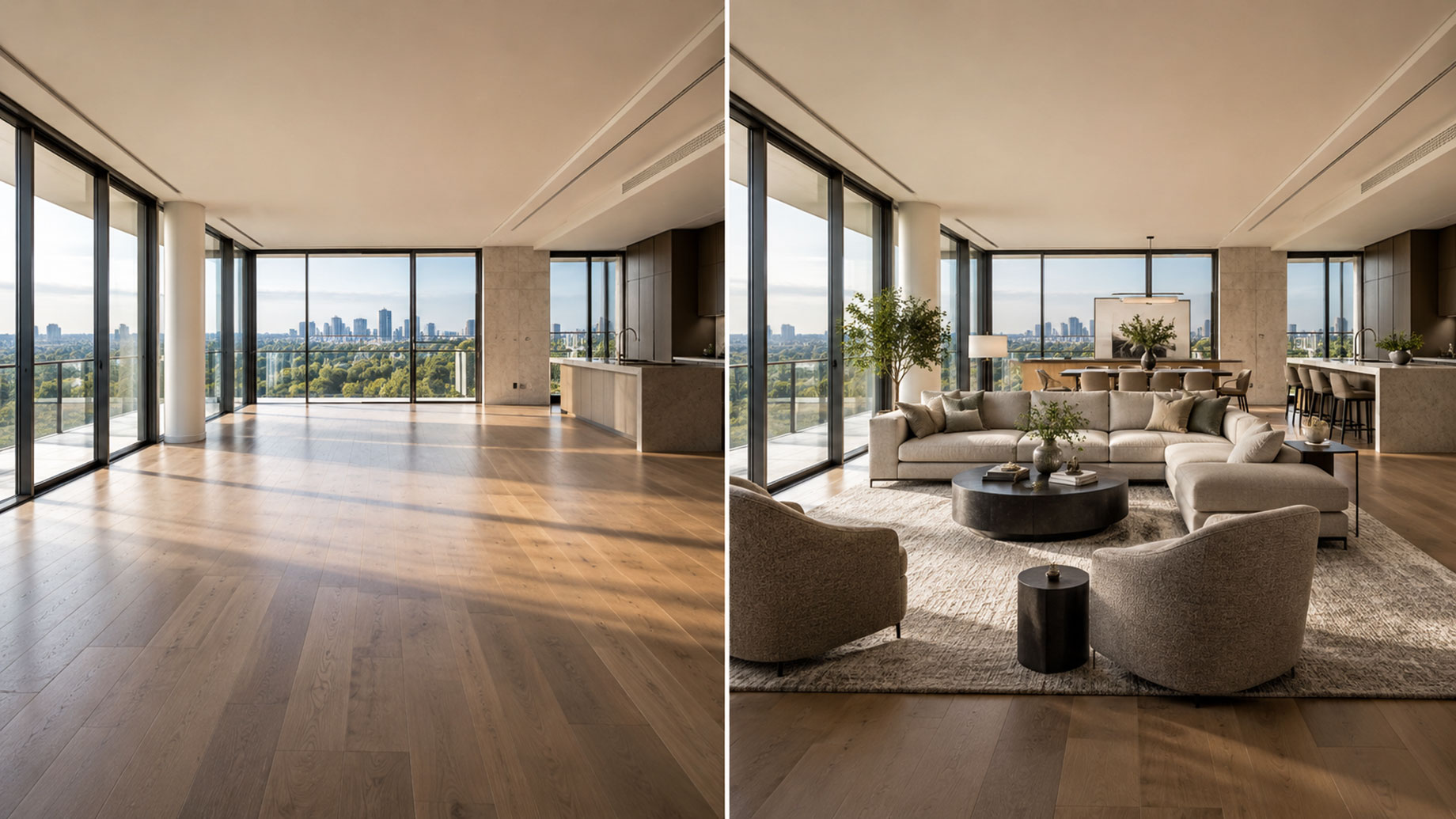
Luxury property marketing has always depended on presentation. Light, materials, proportion, and atmosphere influence how a viewer understands a residence before a visit. Yet even exceptional architecture can be difficult to read when rooms are empty, unfinished, or photographed without furniture. An expansive living area may appear cold, while an unusual floor plan may seem confusing simply because there is no visual clue about how it should be used.
Virtual staging offers a new way to address that gap. A virtual staging AI tool can transform photographs of vacant rooms into furnished visual concepts, allowing agents, developers, and property owners to show possible uses without transporting physical furniture into the space. The result is not intended to disguise the property. It is a way to help viewers understand scale, flow, and lifestyle potential.
For high-value homes, this distinction matters. Buyers are not only purchasing square footage. They are evaluating how a place might support hosting, privacy, work, relaxation, and daily rituals. Carefully presented visual options can make those qualities easier to perceive while keeping the actual architecture at the center.
Empty Rooms Leave Too Much to the Imagination
Some buyers can look at an empty room and immediately imagine furniture, lighting, and activity. Many cannot. They may not know whether a sectional will fit, where a dining table should sit, or whether a bedroom can accommodate both a bed and a reading area. When the visual gap is too large, the property can feel smaller or less inviting than it really is.
Virtual staging provides a reference point. It can show a calm bedroom, an elegant entertaining space, or a focused home office while preserving the room’s visible structure. Viewers can see the relationship between furniture and windows, the scale of the ceiling, and the amount of circulation available.
More Than Adding Furniture
The most effective virtual staging is not a generic furniture overlay. It considers the personality of the architecture. A minimalist coastal residence may benefit from a restrained palette and low-profile furniture, while a historic apartment may call for richer textures and more traditional proportions. The style should support the property rather than compete with it.
AI makes it easier to explore these directions quickly. A marketing team can compare several concepts before deciding which one best communicates the residence. One version may emphasize entertaining, another may highlight a quiet retreat, and a third may show how an extra room could work as a study or gallery.
This flexibility is especially useful for international audiences who may be viewing a property remotely. A set of thoughtful visuals can answer questions that a single empty-room photograph leaves open. It helps a potential buyer begin a more informed conversation before arranging a visit.
Benefits for Developers and Agents
- Faster launch preparation. A vacant property does not have to wait for a full physical staging installation before marketing concepts can be developed. Teams can explore presentation directions early and coordinate final photography more efficiently.
- Clearer positioning. Different rooms can be presented according to the lifestyle they support. A terrace may be shown as an entertaining space, while a smaller room becomes a discreet study or wellness area.
- Remote engagement. International buyers can understand the property more easily when the images provide context for scale and use. This can make virtual tours and initial consultations more productive.
- Lower logistical pressure. Physical staging requires delivery, installation, storage, and removal. Virtual concepts can be created, revised, and presented without those operations, though they should always be labeled honestly.
Transparency Protects Trust
Virtual staging works best when it is clearly identified. Buyers should be able to distinguish existing features from suggested furniture, finishes, or landscaping. Accurate dimensions, original photographs, and professional disclosures remain essential. A beautiful visualization should open a conversation, not create a false expectation.
It is also important to remember that AI images may simplify technical details. Before a purchase decision, buyers should inspect the property, review documents, and rely on qualified professionals for structural and legal questions. The role of virtual staging is visual communication, not certification.
A More Imaginative Property Experience
Architecture becomes meaningful when people can imagine living in it. Virtual staging helps bridge the space between a vacant photograph and that imagined experience. By showing considered possibilities while respecting the underlying property, it gives viewers a richer way to engage with design.
As real estate presentation becomes more digital, the strongest work will combine technology with restraint. The goal is not to make every room look the same. It is to reveal the character already present in the architecture and give prospective buyers enough context to picture their own future there.
