A noisy workplace can make even simple tasks feel difficult. Conversations, ringing phones, office equipment, and background noise can interrupt concentration and make it harder for employees to finish their work on time.
A quiet office does not have to be completely silent. Instead, it should provide a comfortable environment where people can focus, communicate clearly, and work without constant distractions. With a few practical changes to office design, furniture, and sound control, businesses can create a more productive workspace.
In this guide, we explore effective ways to reduce workplace noise, improve office acoustics, and create a comfortable environment for employees.
1. Identify the Main Sources of Office Noise
Before making changes, find out where unwanted noise comes from. Every workplace has different challenges, so understanding the problem helps you choose the right solutions.
Common sources of office noise include:
- Conversations between colleagues in open-plan offices
- Phone calls and video meetings
- Printers, photocopiers, and other office equipment
- Footsteps and movement in busy corridors
- Noise from nearby roads, construction, or shared spaces
- Sound reflecting from glass walls, concrete floors, and bare ceilings
For example, an office with glass partitions and hard flooring may experience excessive echo. Meanwhile, a busy customer service department may struggle with overlapping conversations.
Once you identify the main sources, you can decide whether you need better room layout, sound absorption, quieter equipment, or a combination of these measures.
2. Improve Office Acoustics With Sound-Absorbing Materials
Office acoustics play an important role in how people experience noise. When sound hits hard surfaces, it can bounce around the room and create echoes.
This makes conversations harder to understand and can increase the feeling of noise throughout the workspace.
Sound-absorbing materials help reduce these reflections. They can make speech clearer and improve the overall comfort of an office.
Install Acoustic Wall Panels
Walls are often overlooked when businesses plan office improvements. However, large, bare walls can reflect sound across a room, especially when they are made from glass, plaster, or other hard materials.
Premium Acoustic wall panels absorb some of this reflected sound and help control echo. They are particularly useful in open-plan offices, meeting rooms, reception areas, and shared workspaces.
When choosing panels, consider the room size, wall surfaces, noise levels, and interior design. Panels made with suitable sound-absorbing cores can provide practical noise control while adding colour and texture to the space.
Consider Fabric-Wrapped Acoustic Panels
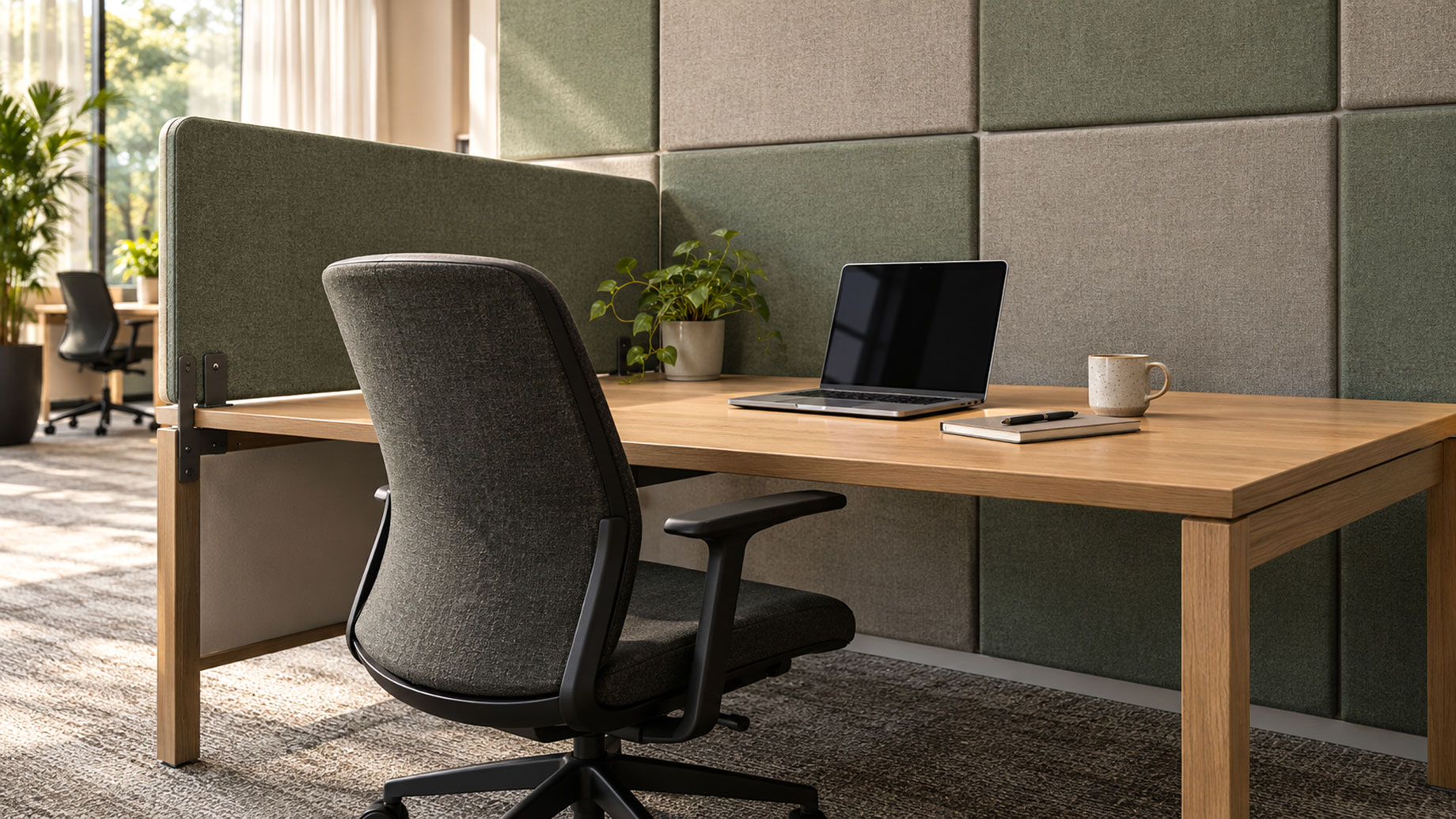
Fabric-wrapped acoustic panels combine sound absorption with a clean, professional appearance. They are available in different colours, sizes, and fabric finishes, making it easier to match them with existing office furniture and branding.
These panels can work well behind desks, along meeting room walls, and in areas where employees regularly communicate. However, their performance depends on the materials used, panel thickness, installation method, and frequency of the sound being absorbed.
3. Reduce Noise in Open-Plan Offices
Open-plan offices encourage teamwork and make it easier for employees to share ideas. However, these layouts can also create problems when several people are talking, making calls, or attending online meetings at the same time.
The goal is to balance collaboration with individual concentration.
Create Separate Work Zones
Divide the office into areas designed for different activities. This allows employees to choose a suitable space depending on the task they need to complete.
Consider creating:
- Quiet zones: Areas for focused work and tasks requiring concentration.
- Collaboration zones: Spaces for team discussions and brainstorming.
- Meeting areas: Enclosed or designated rooms for calls and group conversations.
- Breakout spaces: Comfortable areas where employees can talk without disturbing colleagues.
Furniture, partitions, and room dividers can help define these zones. Combining them with suitable acoustic treatments can further reduce the spread of distracting noise.
Use Desk Dividers and Soft Furnishings
Desk dividers can provide some separation between employees and help reduce direct sound transmission over short distances. Upholstered chairs, fabric-covered furniture, rugs, and curtains may also help absorb sound, depending on their materials and coverage.
Although these items cannot replace a complete acoustic treatment plan, they can contribute to a more comfortable workspace when used alongside other measures.
4. Improve Ceiling Acoustics to Control Echo
Ceilings can have a significant effect on office sound quality. In rooms with high ceilings or hard surfaces, sound may travel and reflect across the space, making conversations more difficult to follow.
Acoustic ceiling panels can absorb sound from below, helping reduce reverberation. Suspended panels and acoustic baffles are useful options for offices with exposed ceilings or large open areas.
Choose the Right Ceiling Solution
Different workplaces need different ceiling treatments. For example, a traditional office may benefit from acoustic ceiling tiles, while a modern workspace with an exposed ceiling may suit suspended baffles or acoustic clouds.
Before choosing acoustic solution, consider:
- Ceiling height and available installation space
- Existing lighting, ventilation, and fire safety systems
- The size and shape of the room
- The level of echo and background noise
- Maintenance needs and the overall office design
Correct placement matters as much as product selection. An acoustic professional can help identify the best locations for ceiling treatments and determine how much sound absorption the room needs.
5. Choose Acoustic Panels That Match Your Workplace
Not every office needs the same acoustic solution. A small private office may require only a few panels, while a large call centre or conference room may need a more detailed treatment plan.
Start by assessing the room and setting a realistic budget. Then compare available products based on their acoustic performance, appearance, durability, and installation requirements.
Businesses looking for suitable options can explore the best acoustic panels for office noise reduction to find solutions that match their workspace and noise-control goals.
When Should You Consider Custom Acoustic Wall Panels?
Standard panels may be sufficient for many offices. However, unusual wall dimensions, specific brand colours, distinctive interior designs, or complex commercial layouts may call for a more tailored approach.
Custom options can help businesses achieve a consistent appearance while addressing particular acoustic needs. Before ordering, check the available dimensions, fabric choices, mounting methods, and product specifications.
For workplaces with specific design or sound-control requirements, explore custom acoustic wall panels for noise reduction to assess options for commercial interiors.
Remember that acoustic panels mainly absorb sound within a room. They do not automatically block noise travelling through walls, doors, or windows. If the main issue is noise entering from another room, additional soundproofing measures may be necessary.
6. Introduce Simple Workplace Noise Policies
Physical improvements can make a difference, but employee habits also affect office noise levels. Clear and reasonable workplace guidelines can help everyone share the space comfortably.
For example, businesses can encourage employees to:
- Take longer phone calls in meeting rooms or designated call areas.
- Keep conversations at a reasonable volume.
- Use headphones for audio when appropriate.
- Avoid unnecessary notifications and loud device alerts.
- Respect quiet zones during focused work periods.
- Keep printers and other noisy equipment away from concentration areas.
Managers should also lead by example. When workplace noise expectations are clear and applied fairly, employees are more likely to follow them.
7. Common Mistakes to Avoid When Reducing Office Noise
Even well-planned office improvements can fall short if the main acoustic problems are overlooked.
Choosing Panels Based Only on Appearance
Decorative panels may look attractive, but appearance alone does not guarantee effective sound absorption. Check the manufacturer’s acoustic performance information and choose products suitable for the room.
Treating Every Noise Problem the Same Way
Echo inside a room and noise travelling through a wall are different problems. Acoustic absorption helps control reflected sound, while soundproofing measures aim to reduce sound transmission between spaces.
Installing Too Few Panels
A small number of panels may have limited impact in a large room with many reflective surfaces. Consider the room’s size, layout, occupancy, and existing materials before deciding how much treatment is needed.
Ignoring Employee Feedback
Employees often know which areas are the noisiest and when distractions are most disruptive. Ask for feedback before making changes, then review whether the improvements have helped.
8. Best Practices for Maintaining a Quieter Workplace
Creating a comfortable office is an ongoing process. As teams grow and layouts change, new noise problems can develop.
To maintain a productive environment:
- Review noise levels regularly. Identify busy areas and recurring distractions.
- Ask employees for feedback. Find out which changes have made the biggest difference.
- Maintain acoustic products. Keep panels clean and follow the manufacturer’s care instructions.
- Review the office layout. Move noisy equipment away from quiet work areas when practical.
- Measure results. Compare employee feedback, reported distractions, and task performance before and after improvements.
These steps help businesses make informed decisions rather than spending money on solutions that do not address their actual problems.
Conclusion
A quieter workplace can support better concentration, clearer communication, and a more comfortable working environment. Businesses can achieve these improvements by identifying noise sources, planning dedicated work zones, introducing sensible noise policies, and using suitable sound-absorbing materials.
Soundproofing solutions like acoustic wall panels, fabric-wrapped panels, and ceiling treatments can all contribute to better office acoustics when selected and installed correctly. However, the best results come from matching each solution to the room’s specific needs.
By combining thoughtful office design with practical noise-control measures, businesses can create a workspace where employees feel more comfortable and have a better opportunity to do their best work.
