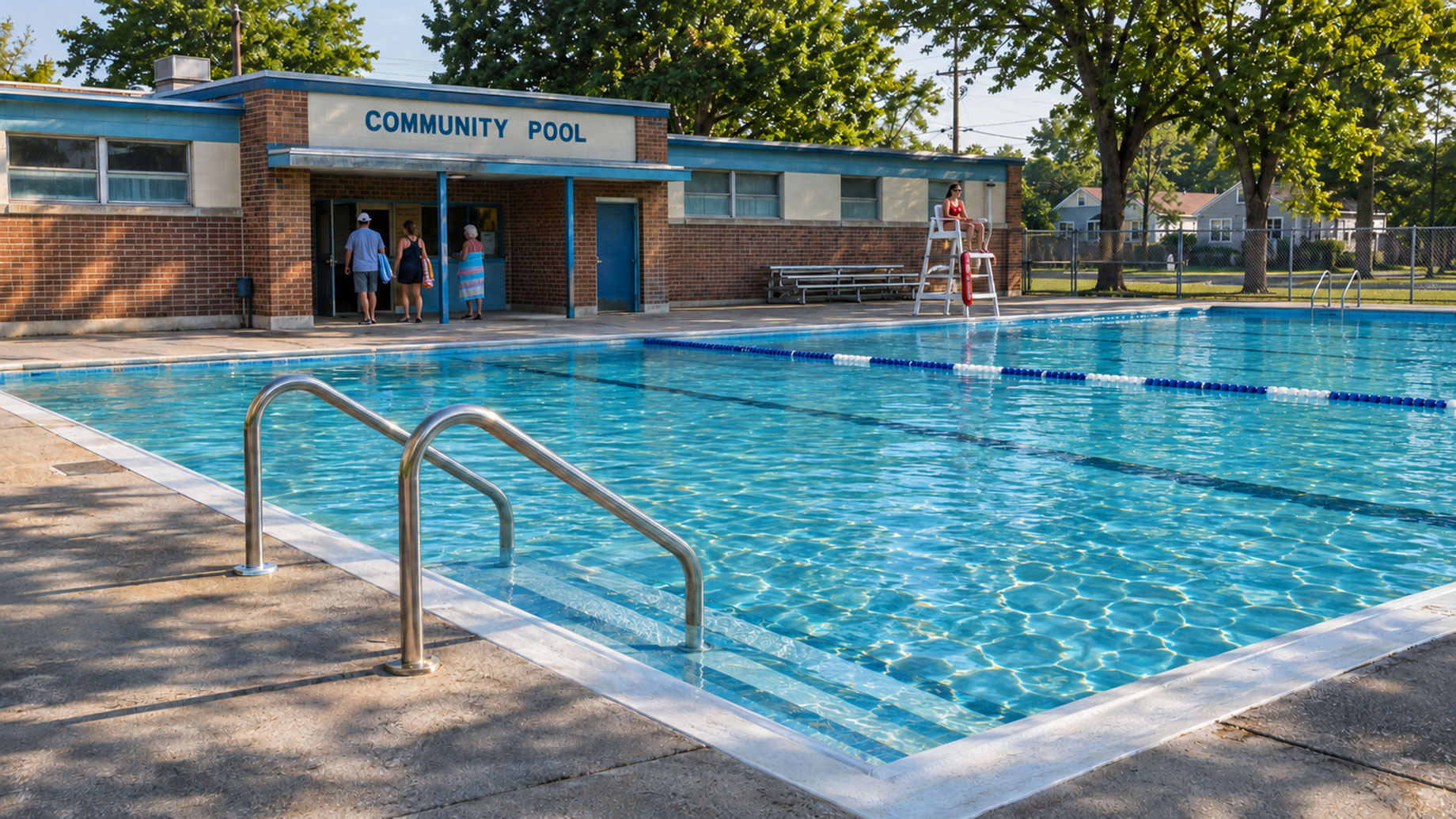
Across the United States, small towns are confronting a painful reality: the public pool that generations of kids learned to swim in is closing, or close to it. Aging infrastructure, shrinking municipal budgets, and rising maintenance costs have pushed many community pools to the brink. Yet in town after town, residents, local governments, and nonprofit groups are finding creative, resourceful ways to save public pool facilities rather than let them shut down for good. Their stories offer a blueprint for communities facing similar struggles.
Why So Many Small-Town Pools Are at Risk
Public pools were once considered essential civic infrastructure, much like libraries or parks. Built in large numbers during the mid-twentieth century, many of these facilities are now 50 to 70 years old. Concrete shells crack, filtration systems fail, and pipes corrode. Replacing or renovating a pool can cost anywhere from a few hundred thousand dollars to several million, a price tag that is simply out of reach for towns with limited tax bases.
At the same time, operating costs have climbed. Lifeguard shortages have made staffing expensive and unpredictable. Chemical and energy costs have risen. Insurance premiums for aquatic facilities have increased as liability concerns grow. For a small town already stretching its budget across roads, schools, and emergency services, a pool can start to look like a luxury rather than a necessity.
The result is a slow but steady wave of closures. When a town loses its pool, it loses more than a place to cool off in summer. It loses a gathering space, a source of childhood memories, a venue for swim lessons that can save lives, and often the only affordable recreation option for lower-income families who cannot travel to a neighboring city’s facility.
Grassroots Fundraising Keeps Pools Afloat
One of the most common and effective strategies to save public pool facilities is old-fashioned community fundraising. In towns without deep municipal coffers, residents have stepped up with bake sales, swim-a-thons, raffles, and crowdfunding campaigns. While these efforts rarely raise millions on their own, they often serve as the spark that unlocks larger funding sources.
Many small towns have formed dedicated “Friends of the Pool” nonprofit groups. These organizations exist solely to raise money, organize volunteers, and advocate for pool preservation. Because they are nonprofit entities, they can apply for grants that municipal governments cannot access directly, and they can accept tax-deductible donations from individuals and local businesses.
Local businesses frequently play an outsized role. Hardware stores donate materials for repairs, restaurants host fundraiser nights where a percentage of sales goes toward the pool fund, and banks or credit unions sponsor matching-donation campaigns. This kind of community buy-in does more than raise money. It builds a sense of shared ownership that makes residents far more invested in the pool’s long-term survival.
Public-Private Partnerships Offer a Lifeline
When grassroots fundraising is not enough, many towns turn to public-private partnerships. These arrangements allow a municipality to share the financial burden and operational responsibility of a pool with private entities, nonprofit organizations, or even neighboring municipalities.
In some cases, a local YMCA or community foundation takes over daily operations while the town retains ownership of the facility. This can reduce staffing costs since larger organizations often have more efficient hiring pipelines and training programs for lifeguards and instructors. In other cases, a private developer or corporation contributes funding in exchange for naming rights or advertising space, a trade-off that purists may dislike but one that keeps the water running.
Some towns have pooled resources with neighboring municipalities to create regional aquatic districts. Rather than each small town struggling to fund its own crumbling pool, several towns combine budgets to support one well-maintained regional facility. This model trades a bit of convenience, since not every resident lives within walking distance, for long-term financial sustainability.
Grants and Government Funding Programs
Federal, state, and county grant programs have become a critical funding source for towns trying to save public pool infrastructure. Programs tied to parks and recreation, community development block grants, and even infrastructure bills aimed at water systems have been creatively applied to pool renovation projects.
Successful towns often hire or designate a grant writer, sometimes a volunteer with professional experience, to track down and apply for these opportunities. Grant applications typically require detailed cost estimates, community impact statements, and matching funds, so towns that pair grant applications with local fundraising campaigns tend to have the best success rate.
State tourism boards have also gotten involved in regions where a renovated pool can double as a draw for visitors. A splash pad or updated pool complex can anchor a small town’s summer tourism strategy, which in turn makes state funding bodies more willing to invest, since the project supports economic development goals rather than purely recreational ones.
Creative Cost-Cutting and Renovation Strategies
Saving a pool does not always mean building a brand-new facility. Many towns have found ways to extend the life of existing infrastructure through smart, incremental renovations rather than expensive full rebuilds.
Resurfacing a pool shell instead of replacing it entirely can cut costs dramatically. Upgrading to energy-efficient pumps and variable-speed motors reduces long-term electricity bills, often paying for the upgrade within a few years. Switching from traditional chlorine systems to saltwater chlorination can lower chemical costs and reduce maintenance demands on equipment.
Some towns have scaled back operating hours or the length of the swimming season rather than closing entirely, choosing to run the pool only on weekends or for a shorter summer window. While this is not an ideal long-term solution, it keeps the facility alive and buys time for more permanent fixes.
Volunteer labor has also proven valuable. Retired contractors, plumbers, and electricians in small towns often donate time and expertise for repairs that would otherwise cost thousands of dollars in professional labor. Local trade schools sometimes get involved too, using pool renovation projects as hands-on training opportunities for students, which benefits both the school and the town.
Building Community Buy-In and Long-Term Sustainability
The towns that succeed in the long run are usually the ones that treat pool preservation as an ongoing community project rather than a one-time emergency fix. This means building sustainable funding mechanisms rather than relying solely on dramatic last-minute rescues.
Some towns have created dedicated pool maintenance funds, financed through small annual property tax levies specifically earmarked for aquatic facilities. Because the funds are legally restricted to pool upkeep, they cannot be redirected to other budget priorities during a tight year, which gives the pool a measure of financial protection that general fund allocations lack.
Membership and pass programs have also helped stabilize revenue. Instead of relying entirely on daily admission fees, many towns now offer season passes, family memberships, and swim lesson packages that generate predictable income before the season even starts. Some towns have added splash pads, water slides, or lazy rivers during renovations specifically to boost attendance and revenue, since newer amenities tend to draw larger crowds than a basic rectangular pool.
Transparency with residents matters too. Towns that publish clear budget breakdowns, explaining exactly how much it costs to operate the pool and where shortfalls exist, tend to generate stronger public support for both fundraising campaigns and tax measures. When residents understand the real numbers, they are far more likely to vote for a bond measure or donate to a capital campaign.
Lessons From Towns That Got It Right
A few recurring themes show up again and again in towns that successfully manage to save public pool facilities. First, early action matters enormously. Towns that address deferred maintenance before it becomes a crisis spend far less money than those that wait until a pool is condemned or shut down by health inspectors.
Second, diverse funding sources outperform single-source solutions. Towns relying only on municipal budgets are the most vulnerable to closure, while those that combine grants, private partnerships, fundraising, and dedicated tax levies build in redundancy that protects the pool even when one funding stream dries up.
Third, community identity plays a bigger role than many officials expect. Pools that host swim teams, host lessons for children, and serve as informal community centers tend to generate far more grassroots support than pools viewed purely as recreational amenities. Towns that lean into this identity, hosting movie nights at the pool, swim meets, or senior aqua-fitness classes, often find it easier to rally support when money gets tight.
Frequently Asked Questions
Why are so many small-town public pools closing?
Most closures come down to aging infrastructure combined with limited municipal budgets. Repair and renovation costs have risen sharply, while staffing shortages and higher insurance costs have made day-to-day operations more expensive.
How much does it typically cost to renovate an old public pool?
Costs vary widely depending on scope. Minor repairs and resurfacing might run in the tens of thousands of dollars, while a full rebuild of an aging facility can cost anywhere from several hundred thousand to a few million dollars.
What funding sources are available to help save a public pool?
Common sources include:
- Community fundraising campaigns and nonprofit “Friends of the Pool” groups
- State and federal parks or community development grants
- Public-private partnerships with YMCAs, foundations, or local businesses
- Dedicated property tax levies earmarked specifically for pool maintenance
- Regional funding partnerships between neighboring towns
Can a pool survive on a shortened season or reduced hours?
Yes, many towns use this as a temporary bridge strategy. It is not ideal long-term, but it keeps the facility open while a town pursues more permanent funding solutions.
Do public-private partnerships mean the pool stops being free or low-cost?
Not necessarily. Many partnerships are structured specifically to keep admission affordable while shifting staffing or maintenance costs to the partner organization. Pricing changes depend on the specific agreement each town negotiates.
What can an individual resident do to help save their local pool?
Residents can volunteer for fundraising committees, donate directly to nonprofit pool funds, attend town meetings to advocate for budget allocations, purchase season passes to support revenue, and spread awareness about closure risks before a crisis hits.
A Community Effort Worth Making
Saving a small-town public pool rarely comes down to one dramatic fix. It is almost always the product of sustained, layered effort: fundraising drives, smart renovations, creative partnerships, and a community that refuses to let go of a shared space. The towns that succeed treat their pool not as an expendable amenity but as a piece of civic infrastructure worth protecting, much like a school or a fire department.
For towns currently facing this struggle, the path forward is rarely simple, but it is well-documented. By combining multiple funding strategies, building long-term financial safeguards, and rallying community support early, small towns across the country are proving that it is possible to save public pool facilities, even in an era of tight budgets and aging infrastructure. The water is worth fighting for.
