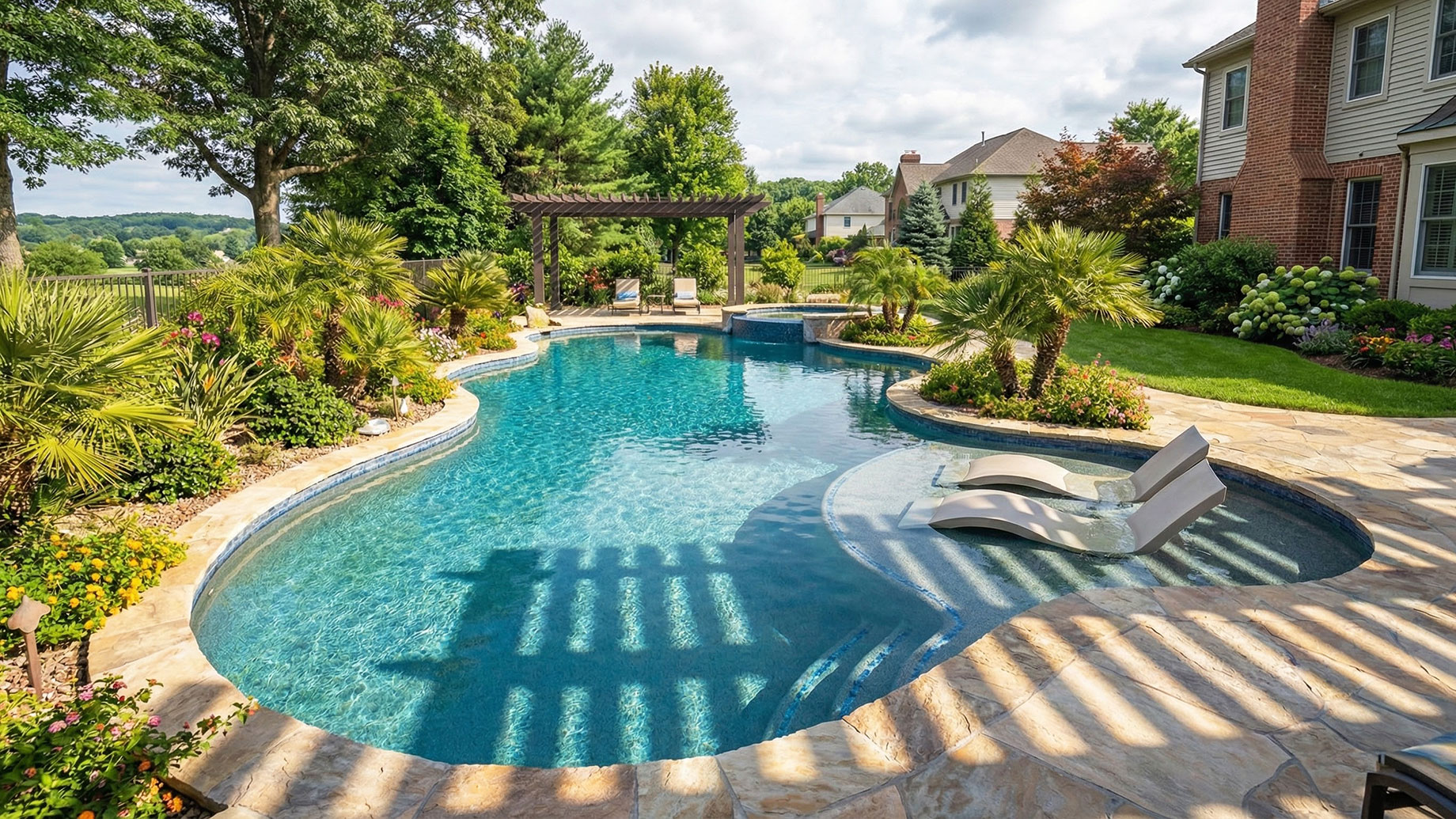
Building a custom pool in New York is never just about aesthetics. The climate plays a quiet but powerful role in nearly every decision, from what goes under the surface to the finishes you see every day. Between freezing winters, humid summers, and wide temperature swings in spring and fall, pools in this region need to be designed with resilience in mind. Homeowners who understand how local weather affects materials and construction choices tend to end up with pools that last longer, look better over time, and require fewer repairs.
Rather than fighting the climate, experienced pool builders design around it. That approach starts early, long before excavation begins, and continues through material selection, structural engineering, and long-term maintenance planning.
Freeze-Thaw Cycles and Structural Design
One of the defining challenges of New York’s climate is the freeze-thaw cycle. Water expands when it freezes, then contracts when it thaws. Over the course of a winter, this process repeats again and again, placing stress on concrete, tile, plumbing, and surrounding hardscapes.
Because of this, structural integrity becomes a top priority. Reinforced concrete shells are common in custom pools across New York, often built with additional steel reinforcement to handle soil movement and seasonal expansion. Builders may also use higher-strength concrete mixes that resist cracking better than standard blends. These choices are not always visible once the pool is finished, but they are essential to preventing structural issues years down the road.
Material Choices That Handle Cold Weather
Not all pool materials perform equally in cold climates. New York builders tend to favor finishes that can handle temperature extremes without deteriorating.
For interior finishes, plaster and pebble surfaces are common, but they are often formulated specifically for colder regions. These mixes are designed to resist micro-cracking and surface wear caused by freezing temperatures. Tile selections also matter. Porcelain tile is frequently chosen over ceramic because it absorbs less water, which reduces the risk of cracking when temperatures drop.
Coping materials follow the same logic. Natural stone like bluestone and granite are popular in New York, partly because they tolerate freezing conditions better than softer stones. Concrete pavers used around pools are usually rated for freeze-thaw durability and installed with proper joints to allow for slight movement without cracking.
Plumbing and Equipment Considerations
Cold winters influence how pool plumbing is designed and installed. Pipes are often buried deeper than in warmer climates to protect them from freezing. Builders may also slope plumbing lines strategically to allow for complete drainage during winterization.
Equipment selection is shaped by seasonal use. Variable-speed pumps and energy-efficient heaters are common, allowing homeowners to extend their swim season into cooler months without excessive energy costs. Automation systems are also popular, making it easier to manage temperature, circulation, and winter shutdown procedures with minimal effort.
Managing Summer Heat and Humidity
While winters dominate most conversations, New York summers also influence pool design. High humidity and occasional heat waves can place stress on surfaces and surrounding materials. Slip resistance becomes especially important during humid weather. Pool decks are often finished with textured surfaces or materials that maintain traction even when wet. Lighter-colored decking materials are also common, as they reflect heat better and stay cooler underfoot during peak summer temperatures.
Landscaping and Drainage Planning
Seasonal rain, melting snow, and fluctuating groundwater levels all affect how water moves around a pool. In New York, drainage planning is as important as the pool itself. Custom pools are typically designed with integrated drainage systems that divert runoff away from the shell and surrounding deck. French drains, permeable pavers, and graded landscapes help prevent water from pooling where it can freeze and cause damage.
Landscaping choices also reflect climate realities. Hardy plants that tolerate cold winters and humid summers are favored, especially near the pool where water exposure is frequent. Thoughtful planting helps protect hardscapes and creates a cohesive outdoor space that looks good year-round.
Planning for Longevity, Not Just Appearance
Perhaps the most important influence of New York’s climate is the mindset it encourages. Custom pool design here tends to prioritize longevity over short-term trends. Materials are chosen because they perform well over decades, not just because they look good in the first year. This does not mean sacrificing style. It simply means balancing aesthetics with practical considerations. A pool that survives harsh winters with minimal repairs ultimately provides more enjoyment and better value.
Building a Pool That Works With the Climate
New York’s climate demands thoughtful planning, durable materials, and experienced construction techniques. From reinforced structures and freeze-resistant finishes to smart plumbing and drainage solutions, every decision is shaped by seasonal realities. If you are looking for custom pools in Temecula, there are contractors who can help.
Homeowners who embrace this approach often find that their pool becomes a reliable, low-stress feature of their property rather than a constant maintenance concern. When a pool is designed to work with the climate instead of against it, it shows in how well it ages, how easy it is to maintain, and how confidently it can be enjoyed year after year.
