Landscaping decisions do more than shape how a yard looks. Grading, tree placement, patios, and irrigation all affect where water goes once it hits the ground. That water eventually reaches the plumbing running underneath the property.
When drainage isn’t part of the plan, problems tend to show up later. A cracked foundation. A damaged sewer line. Plumbing issues that seem to come out of nowhere. Here’s what to know before making landscaping choices that could affect a home’s drainage.
Grading Matters More Than Most Homeowners Realize
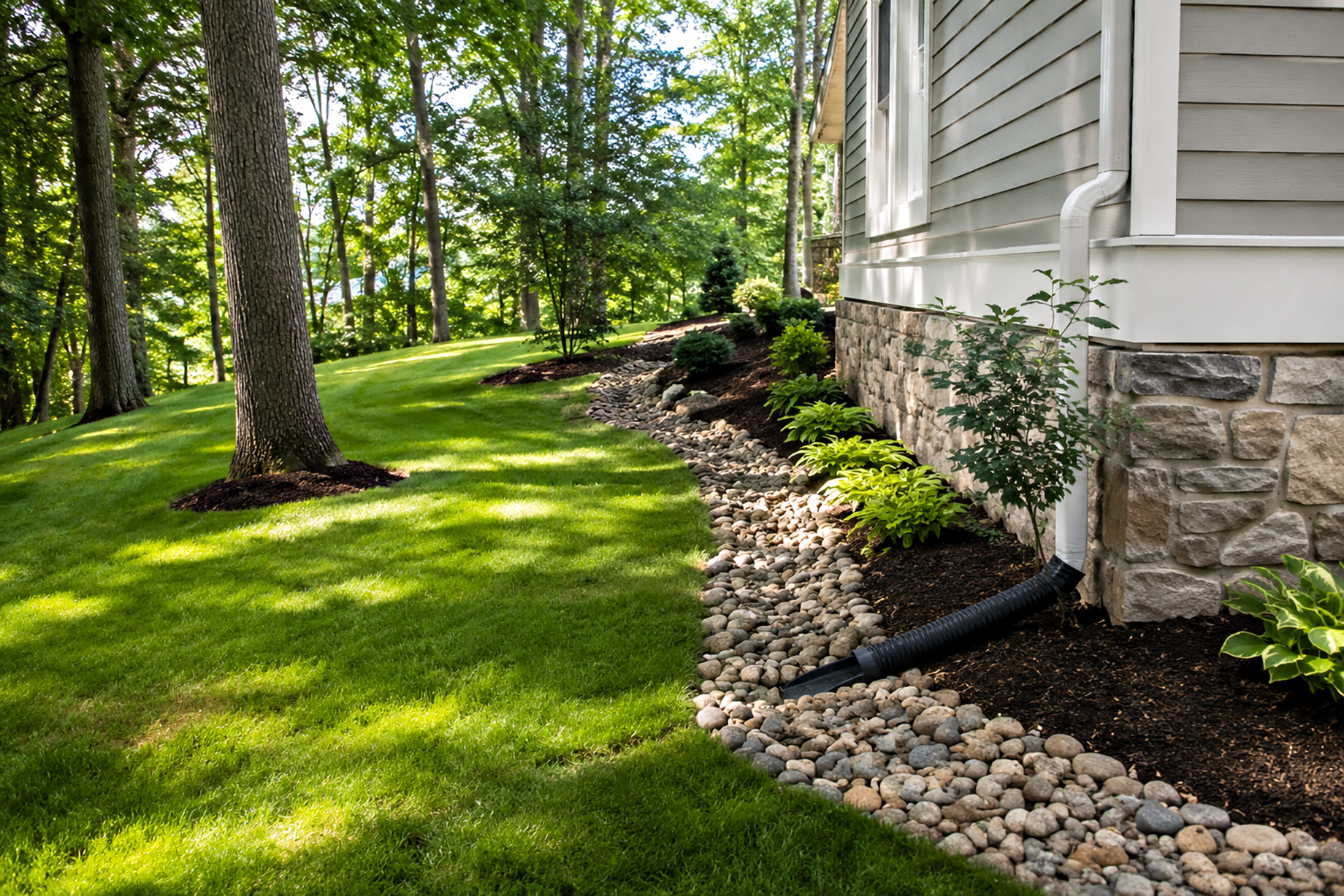
The ground around a home should slope away from the foundation, not towards it. That slope is what keeps water moving away from the house instead of pooling next to it.
Landscaping projects can throw this off without anyone noticing. Raised beds, new soil, or a patio can all change the grade.
If nobody accounts for the slope, water starts pooling near the foundation instead of draining away. Over time, that water works its way into crawl spaces and basements. It can even reach the plumbing running underneath the home.
Tree Roots and Underground Pipes Don’t Mix Well
Few landscaping decisions cause more plumbing trouble than tree placement. Roots are drawn to the moisture inside sewer and water lines, and they’re persistent enough to work their way into small cracks or joints over time.
Once inside, they can block or damage a pipe completely, leading to backups, slow drains, or a sewer line that needs full replacement. Trees like willows, maples, and poplars are especially known for aggressive root systems that seek out underground pipes.
Before planting anything with a mature root spread, it helps to know where sewer and water lines actually run. A plumber Hot Springs homeowners already work with can usually locate these lines quickly, which makes it easier to plan tree placement with enough distance to avoid future problems.
Hardscaping Changes Where Water Goes
Patios, walkways, and driveways look great, but they also change how rainwater moves across a property. Concrete and pavers don’t absorb water the way soil does. Rain that used to soak into the ground now runs off somewhere else, sometimes toward the house. Without proper drainage built into the plan, that runoff can overwhelm gutters, saturate soil near the foundation, or reach a basement.
The bigger the hardscaped area, the bigger the effect. A small walkway rarely changes much. A large patio or an expanded driveway can redirect a lot more water, especially during heavy rain, and that water has to go somewhere. If the surrounding grade wasn’t adjusted for the new hardscaping, it often ends up right back at the foundation it was supposed to stay away from.
Irrigation Systems Can Mask a Bigger Problem
A sprinkler system running too often, or aimed poorly, can keep the soil near a foundation consistently wet.
Over time, this causes the same problems as poor grading, just from a different source. It can also hide an actual plumbing leak, since the ground already looks wet from frequent watering.
A few common irrigation issues to watch for:
- Sprinkler heads aimed at the house instead of away from it, often installed without much thought to where the spray actually lands.
- Zones that run longer than necessary, soaking the same patch of soil well past what the plants actually need.
- Broken or misaligned heads that spray in one concentrated spot instead of an even pattern, saturating that area over time.
Retaining Walls Can Trap Water Instead of Managing It
A retaining wall built without drainage can fail in two ways. The wall itself can bow, crack, or lean as trapped water builds up pressure behind it, usually noticed only once the damage is visible.
The other failure happens underground. Instead of flowing downhill, water pools behind the wall and pushes sideways through the soil, sometimes reaching a foundation or a buried pipe before anyone notices.
Weep holes and a drainage pipe behind the wall prevent both issues. Skipping that detail is a common reason retaining walls cause expensive problems years later.
Signs Landscaping Might Be Affecting Drainage
A few warning signs tend to show up before a bigger problem does.
- Standing water near the foundation usually means water isn’t draining the way it should.
- Cracks in the foundation or basement walls can develop when soil stays consistently wet.
- A soggy lawn in one specific area often points to a grading issue, not just heavy rain.
- Slow drains paired with a suspiciously thriving tree outside can mean roots have reached a sewer line.
- A musty smell in the basement or crawl space is often the first sign of outdoor water getting in.
Landscaping Choices Worth Making With Drainage in Mind
A few simple choices upfront can prevent most of these problems altogether.
- Keep large trees away from sewer and water lines.
- Grade soil so it slopes away from the foundation.
- Add drainage solutions to hardscaping, like permeable pavers or a French drain.
- Position downspouts to direct water away from the foundation.
- Choose smaller-rooted plants near underground utility lines.
- Test soil drainage before planting by digging a small hole and watching how fast it clears after watering.
- Avoid piling mulch or soil directly against the foundation, since it holds moisture right where it shouldn’t.
Conclusion
A beautiful yard and a healthy plumbing system aren’t separate goals. They’re the same goal. Every tree, patio, retaining wall, and sprinkler zone is also a decision about where water goes, whether that’s the intention or not.
The homeowners who avoid foundation cracks, sewer backups, and flooded basements aren’t lucky. They just planned for water from the start instead of dealing with it after the damage was done. That’s really the whole point here: drainage isn’t an afterthought to landscaping. It’s part of the design, right alongside everything else that makes a yard work.
Frequently Asked Questions
How far should trees be planted from sewer lines?
It depends on the tree species, but a general rule is to keep large trees at least as far away as their expected mature height. Species recognized for aggressive roots may need even more distance.
Can bad grading really cause plumbing problems?
Yes. Water that pools near a foundation instead of draining away can saturate soil, put pressure on underground pipes, and eventually find its way into a basement or crawl space.
How do I know if tree roots have already gotten into a pipe?
Common signs include slow drains, gurgling sounds, or recurring clogs in the same area of the home. A camera inspection is the most reliable way to confirm it.
Do I need a professional to fix a grading issue?
Minor grading adjustments can sometimes be a DIY project, but larger regrading, especially near a foundation, is usually worth having a landscaper or contractor assess first.
