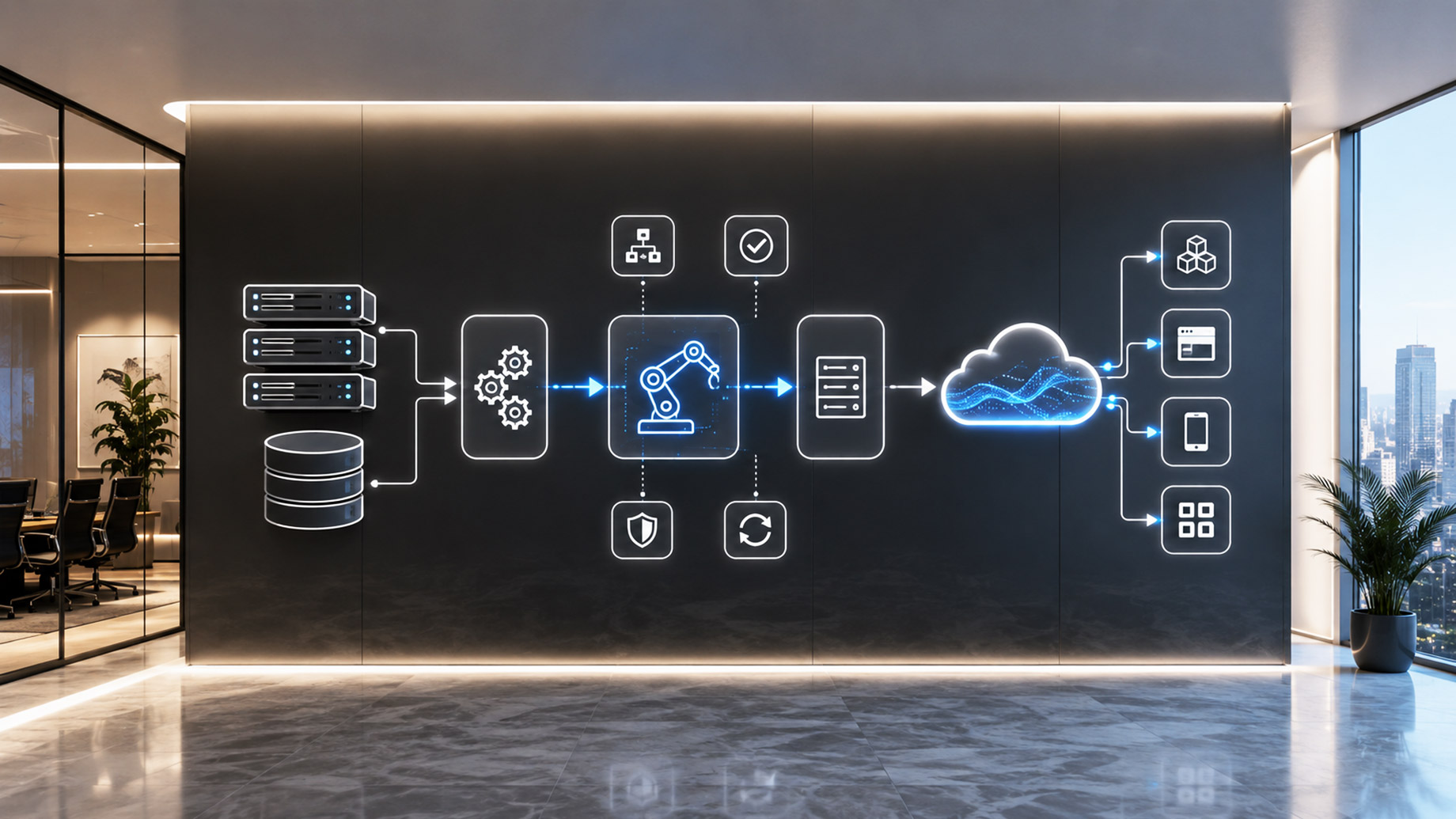
Moving away from outdated technology is a critical step for modern businesses, yet enterprise system migration remains a massive challenge. When organizations decide to overhaul their infrastructure, they face a labyrinth of data security concerns, operational downtime risks, and complicated software dependencies. Doing this manually is no longer a viable option for large-scale operations.
Today, leading organizations rely on automation in IT migration to streamline these heavy lifts. By replacing manual coding and data transfer with intelligent workflows, businesses can accelerate their digital transformation goals without disrupting daily operations. This article explores how modern automation strategies take the friction out of moving vast amounts of data and applications, ensuring a seamless transition to new environments.
The Driving Forces Behind Legacy System Modernization
Organizations cannot afford to remain tied to obsolete technology. Outdated infrastructure often limits scalability, drains IT budgets, and exposes companies to significant security vulnerabilities. Legacy system modernization is the clear path forward, allowing businesses to replace inflexible architecture with agile, scalable frameworks.
However, moving away from systems that have housed core operations for decades is a delicate process. Decoupling enterprise software from rigid servers requires meticulous planning and execution. Automation steps in to map out these complex environments, identifying dependencies that human teams might overlook.
By utilizing automated discovery platforms, IT teams can visualize exactly how applications interact before making a single change. This clear visibility forms the foundation of a successful move, ensuring that critical business processes remain intact as they transition to modern platforms.
Overcoming Data Gravity with Data Migration Automation
Data is the lifeblood of any enterprise, and moving it is often the most stressful part of an infrastructure upgrade. Large organizations generate massive volumes of information daily, creating a gravitational pull that makes data difficult to extract and relocate. Manual data entry or basic scripting often leads to corrupted files, missing records, and compliance violations.
To solve this, companies deploy data migration automation to handle the heavy lifting. Automated pipelines can extract, transform, and load (ETL) petabytes of information with pinpoint accuracy. These systems continuously validate data integrity during the transfer, ensuring that nothing is lost in transit.
This level of precision is especially vital when dealing with sensitive information in ERP systems or conducting a large-scale CRM migration. Automated validation ensures that businesses maintain strict adherence to data security and regulatory compliance standards throughout the entire move.
Minimizing Disruption Through Migration Risk Management
Downtime is incredibly costly for an enterprise. When core applications go offline, productivity stops, and revenue is lost. Consequently, migration risk management is a top priority for technology leaders planning a major infrastructure shift.
Automation drastically reduces the margin for human error, which is the leading cause of migration failures. By automating the testing phase, DevOps teams can simulate the migration in a safe sandbox environment. This allows them to identify bottlenecks and resolve conflicts well before the actual cutover date.
Furthermore, automated rollback features provide an essential safety net. If an unexpected issue occurs during deployment, the system can instantly revert to its previous stable state. This failsafe mechanism gives business leaders the confidence to execute major technology shifts without fearing catastrophic operational failures.
Bridging the Gap with Enterprise Software Integration
During a large-scale move, it is rare for a company to flip a switch and migrate everything simultaneously. Most enterprises adopt a phased approach, meaning legacy systems and new platforms must coexist and communicate for a period of time.
Effective enterprise software integration is crucial during this transitional phase. Automation platforms, especially those built with custom migration tools and automation solutions, act as the connective tissue between old and new technology. By leveraging APIs, businesses can automate the synchronization of data across both environments in real-time.
This dual-running strategy ensures that employees experience no disruption to their daily workflows. Information entered into a legacy application automatically reflects in the new system, keeping all departments aligned until the legacy infrastructure is fully decommissioned.
Deploying Specialized Technology for Seamless Transitions
No two enterprise environments are exactly alike. A strategy that works for a financial institution might fail for a manufacturing giant. Because architectural needs vary so wildly, relying on generic, off-the-shelf transfer scripts is often a recipe for delays and cost overruns.
Instead, businesses achieve the best results by implementing custom migration tools and automation solutions that are tailored to their specific architecture. These specialized frameworks are built to understand the unique quirks of a company’s database structures and application logic.
By utilizing targeted technology, IT departments can orchestrate complex, multi-stage deployments with minimal manual intervention. This bespoke approach to automation ensures that every unique business requirement, security protocol, and performance metric is fully addressed during the transition.
Crafting a Future-Proof Cloud Migration Strategy
The ultimate destination for most modernization efforts is the cloud. However, simply lifting and shifting legacy applications into a new hosting environment rarely delivers the desired return on investment. A thoughtful cloud migration strategy involves optimizing applications to run efficiently in their new home.
Automation plays a central role in this optimization process. Modern cloud migration strategies often employ custom migration tools and automation solutions alongside infrastructure modernization tools that can automatically refactor code, adjusting legacy applications to take full advantage of cloud computing environments. This ensures that software runs faster, scales dynamically, and consumes fewer computing resources.
Additionally, AI-assisted automation is becoming increasingly prominent in cloud transitions. Artificial intelligence can predict resource utilization and automatically provision the exact amount of cloud infrastructure needed. This prevents companies from overpaying for server space while guaranteeing optimal performance during peak usage times.
The Long-Term Value of Workflow Automation
The benefits of utilizing intelligent technology do not end once the final application is moved. A successful migration sets the stage for a more agile, responsive business model. With modern infrastructure in place, organizations can fully embrace workflow automation across all departments.
Freed from the limitations of legacy architecture, companies can use workflow orchestration and custom migration tools and automation solutions to connect previously siloed departments. Automated processes can now handle routine administrative tasks, from customer onboarding to financial reporting, with incredible speed.
Ultimately, simplifying a complex migration is just the first step. The true value lies in the operational excellence that follows. By establishing an automated, modern technological foundation, enterprises position themselves to adapt quickly to future market changes and maintain a sharp competitive edge.
Conclusion
Upgrading enterprise infrastructure is a monumental task, but it does not have to be a chaotic one. By replacing manual processes with intelligent workflows, businesses can navigate the complexities of system upgrades with precision and confidence. Automation in IT migration drastically reduces downtime, protects sensitive data, and ensures a smooth transition to modern environments.
Whether executing a massive shift to the cloud or modernizing decades-old software, enterprises that prioritize automated frameworks mitigate their operational risks. Investing in the right strategy upfront transforms a daunting technological overhaul into a streamlined, predictable process. Ultimately, embracing these advanced methodologies empowers organizations to achieve their digital transformation goals faster and more securely.
