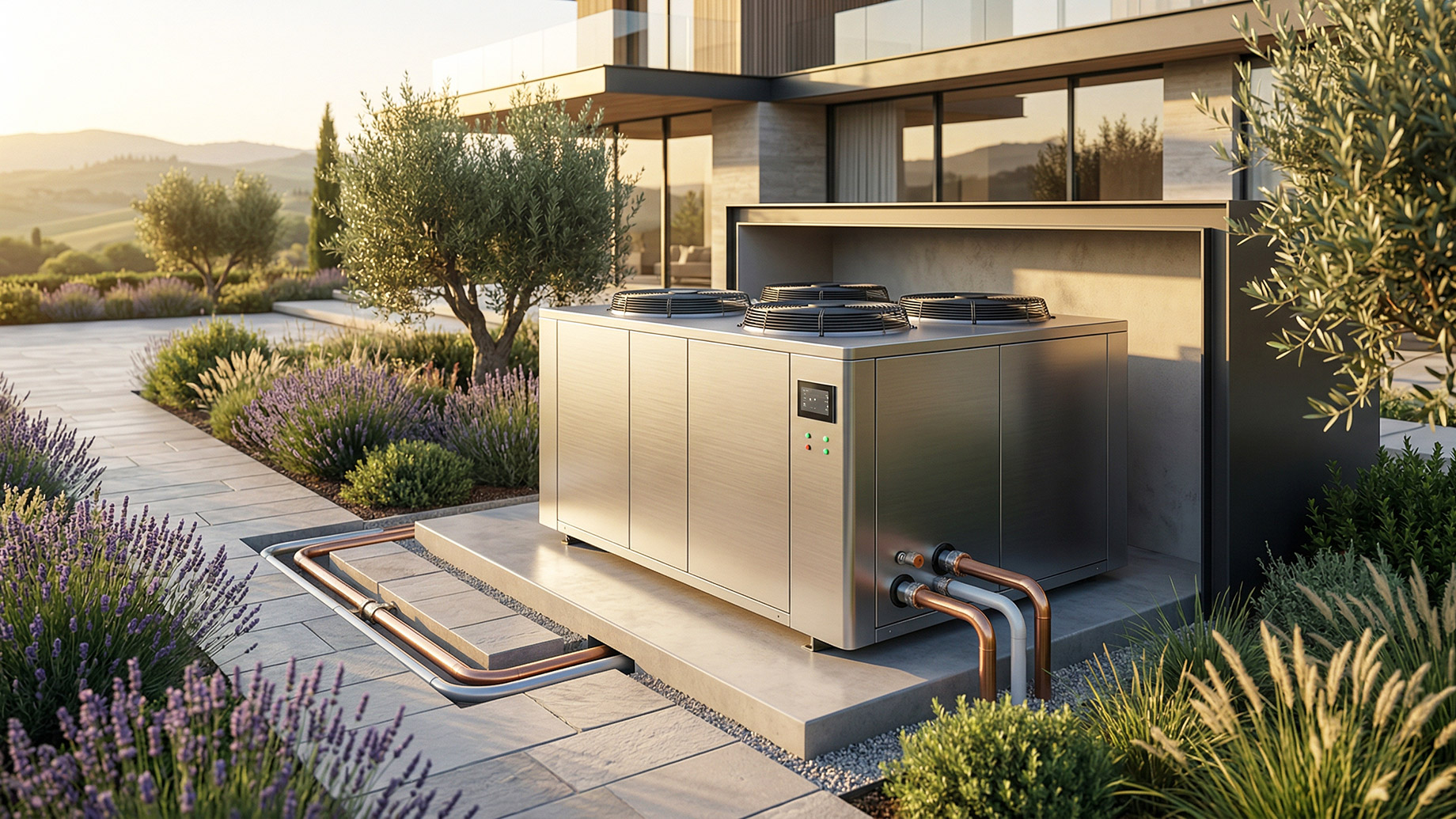
Chillers play a critical role in keeping many industrial, commercial, and residential systems cool, but how exactly do they work?
Whether you’re curious about the technical side of a water chiller, a water-cooled chiller, or the broader HVAC chiller system, understanding the fundamentals can help you better maintain these systems or choose the right one for your needs.
In this article, we’ll break down how chillers work, how water chillers and water-cooled chillers differ, and how HVAC chiller systems fit into the bigger picture.
What is a Chiller?
A chiller is a piece of equipment designed to remove heat from a liquid via a refrigeration cycle.
The liquid is typically water or a water-glycol mixture, which is then circulated through a system to provide cooling in air conditioning systems, refrigeration units, or industrial processes.
Essentially, chillers maintain a specific temperature for various systems by cooling fluids before circulating them to specific areas.
Chillers are used in a variety of settings, including:
- Commercial buildings: To cool large areas, such as shopping malls or office buildings.
- Industrial plants: For processes that require temperature control, such as manufacturing or chemical processing.
- Data center: To maintain optimal operating temperatures for servers and equipment.
- Refrigeration: In food production or storage industries.
Now, let’s break down how these systems actually work.
How Do Chillers Work?
At its core, a chiller uses the principles of thermodynamics to remove heat from a liquid, typically by using a refrigeration cycle. This process involves four main components:
- Evaporator: The evaporator is where the cooling process begins. The fluid (water or another coolant) absorbs heat and evaporates as it passes through the evaporator coils. The chilled liquid is then ready to be circulated through the system.
- Compressor: The compressor is responsible for compressing the refrigerant gas, which increases its pressure and temperature. This creates a high-pressure, high-temperature gas that is pushed through the system.
- Condenser: The hot, high-pressure gas flows into the condenser, where it releases heat into the surrounding air or water (depending on the type of chiller). As the refrigerant cools, it condenses into a high-pressure liquid.
- Expansion Valve: The expansion valve reduces the pressure of the liquid refrigerant, causing it to cool further. This allows it to absorb heat again when it reaches the evaporator, continuing the cooling cycle.
These steps form the basic refrigeration cycle that cools the liquid and helps maintain temperature control. Now let’s look at how different types of chillers work.
How Does a Water Chiller Work?
A water chiller is a type of chiller that uses water as the refrigerant fluid to absorb and dissipate heat.
Water chillers are commonly used in commercial air conditioning systems, industrial cooling applications, and large-scale cooling processes. Here’s how a water chiller system typically works:
- Evaporator: The evaporator coil inside the chiller absorbs heat from the water. The heat from the liquid is transferred to the refrigerant, which causes the refrigerant to evaporate into gas.
- Compressor: The refrigerant gas is then compressed by the compressor, which increases its pressure and temperature.
- Condenser: After compression, the refrigerant passes through the condenser, where it cools and condenses into liquid form. In a water chiller, this heat exchange often happens in a closed-loop system where water is circulated around the condenser, transferring the heat away from the refrigerant.
- Expansion Valve: The liquid refrigerant then travels through the expansion valve, where its pressure is reduced, and it is cooled even further before entering the evaporator again to absorb more heat.
Water chillers are preferred in systems that require a consistent and reliable source of cooling, as they can be more efficient in large-scale industrial or commercial environments.
How Does a Water-Cooled Chiller Work?
A water-cooled chiller operates similarly to a standard water chiller, but it uses water from an external source, such as a cooling tower, to absorb the heat in the condenser. Here’s a breakdown of the process:
- Evaporator: Just like in a standard chiller, the water inside the evaporator absorbs heat from the fluid to be cooled, causing the refrigerant to evaporate.
- Compressor: The refrigerant gas is then compressed, increasing its temperature and pressure.
- Condenser: In a water-cooled chiller, the condenser uses water from an external source, like a cooling tower, to cool the refrigerant. The hot, high-pressure refrigerant passes through the condenser, where the heat is transferred to the external water source, and the refrigerant cools and condenses back into liquid form.
- Expansion Valve: The cooled refrigerant flows through the expansion valve, where its pressure is reduced, preparing it to absorb more heat in the evaporator.
One of the key advantages of water-cooled chillers is their efficiency.
They use water to remove heat more effectively than air-cooled systems, making them ideal for larger buildings or industrial settings.
However, they require a constant supply of water and an efficient cooling tower to function properly.
How Does an HVAC Chiller System Work?
An HVAC chiller system is used for cooling large buildings by circulating chilled water or another cooling fluid through a network of pipes and air handling units.
The chilled water absorbs the heat from the air inside the building, cooling it before it’s circulated back through the system.
Here’s how an HVAC chiller system works, according to Freedom Mechanical.
- Chiller Unit: The chiller unit cools the water by removing heat through a refrigeration cycle. The process in the chiller is very similar to the water chiller or water-cooled chiller processes mentioned above.
- Pumping System: The chilled water is then circulated through the building by pumps. It travels through pipes to air handling units or fan coil units that blow cool air into the rooms.
- Air Handling Units: These units are responsible for delivering the chilled air into the spaces of the building. They contain cooling coils that the chilled water runs through, which cools the air.
- Return Loop: The now-warmed water is returned to the chiller unit to be re-cooled, and the cycle continues.
HVAC chillers are used in commercial and industrial buildings for large-scale cooling, offering a highly effective way to manage temperature and humidity levels across entire facilities.
The Importance of Chillers in Modern Cooling Systems
Whether it’s a standard water chiller, a water-cooled chiller, or an HVAC chiller system, chillers play a vital role in cooling a variety of spaces and processes.
They work on basic refrigeration principles but are tailored for specific needs, from industrial cooling to air conditioning in large buildings.
Understanding how chillers work and the differences between water chillers and water-cooled chillers can help you choose the right system for your needs, maintain it effectively, and ensure it operates at maximum efficiency.
