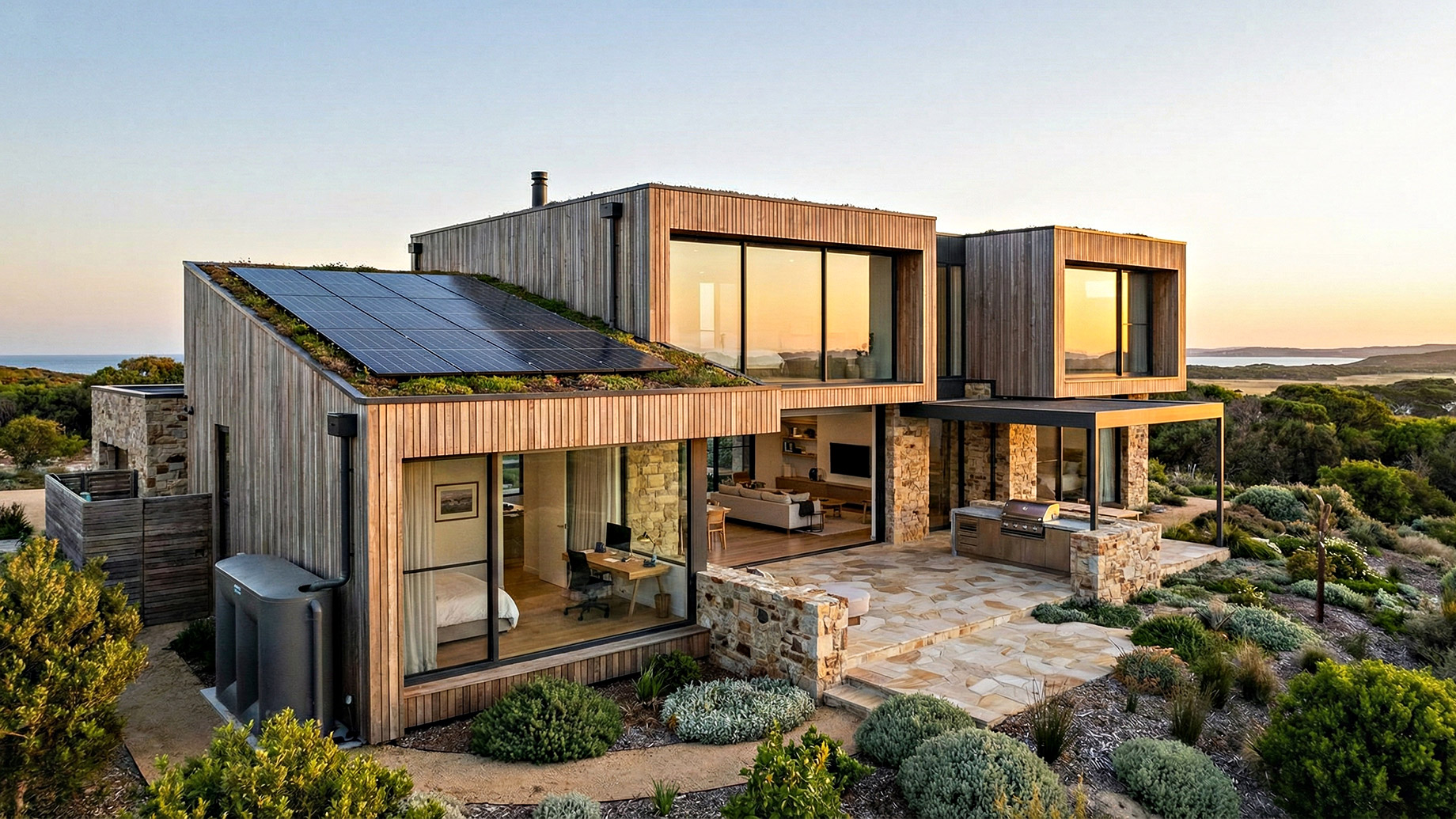
As we move deeper into 2026, the home construction industry continues a dramatic evolution. Builders, designers, and homeowners alike are responding to shifting lifestyles, climate pressures, supply chain changes, and advancing technologies. Whether you’re planning a new build, renovation, or simply curious about what’s shaping modern living spaces, here are the key trends poised to define home construction this year.
1. Sustainability and Energy Efficiency Become Standard
Sustainability is no longer a niche feature — it’s rapidly becoming a baseline expectation for new homes. Energy-efficient design, green building materials, and water-saving systems are being integrated into projects from the earliest planning stages. In places like India, for example, eco-friendly construction using fly ash bricks, rainwater harvesting systems, and solar panels is emerging as a major trend as homeowners and builders prioritize resource conservation and long-term savings.
Across global markets, high-performance homes emphasize airtight building envelopes, ventilation systems that conserve energy, and materials with lower carbon footprints. These features now drive both regulatory compliance and market appeal, as buyers increasingly link sustainability with long-term cost efficiency.
2. Modular and Prefabricated Construction Accelerates Growth
Modular and factory-built construction methods continue to expand rapidly, addressing chronic labour shortages, reducing timelines, and cutting waste. Prefabricated components — including cross-laminated timber panels and volumetric modules complete with wiring and plumbing — are assembled in controlled environments and delivered ready for installation. This approach can slash construction time by up to 60% compared to traditional onsite methods and significantly reduce material waste.
The modular trend also supports more predictable quality control and better cost management — a key advantage in a year where budget pressures and supply uncertainty are widespread.
3. Smart Homes Move From Luxury to Baseline Expectation
Once considered premium add-ons, smart technologies are now becoming integrated features of new homes. Builders are embedding systems like smart thermostats, energy-management platforms, voice-controlled interfaces, and unified device ecosystems directly into home infrastructure. Matter protocol compatibility — enabling different smart devices to communicate seamlessly — is becoming a selling point that future-proofs homes and enhances convenience.
In parallel, digital trends such as augmented reality (AR) and virtual reality (VR) are transforming how homes are marketed and designed, allowing buyers to experience a virtual walkthrough before construction begins. These immersive technologies help reduce costly revisions later in the build cycle.
4. Advanced Materials and Construction Robotics
Innovative materials such as sensor-embedded concrete, smart glass, and bio-based composites are helping homes adapt dynamically to environmental conditions and occupant needs. These “smart materials” are designed to improve performance, durability, and even self-repair capabilities — marking a significant shift from traditional building materials.
Robotics and autonomous construction equipment are also gaining traction, particularly to address labour shortages and improve safety. Systems ranging from robotic bricklayers to autonomous drones for site monitoring are helping construction companies maintain productivity and precision, while freeing human workers for higher-skill tasks.
5. Healthier, More Resilient Living Environments
2026 homebuyers are increasingly concerned with how a home feels — not just how it looks. Features that improve indoor air quality, sound insulation, and overall comfort are being specified more often. Better ventilation, low-VOC materials, and advanced filtration systems contribute to healthier living spaces that align with wellness trends.
Climate resilience is also on the rise. Builders are selecting materials and systems that can withstand extreme weather events — from fire-resistant cladding in wildfire-prone regions to flood-mitigating design features where needed. This emphasis on resilience reflects broader concerns about climate change impacts on safety and insurance costs.
6. Flexible and Multifunctional Spaces
With remote work, learning, and hybrid lifestyles becoming entrenched, homes must adapt to diverse functional needs. Open floor plans, multi-purpose rooms, and convertible spaces allow homeowners to repurpose areas as offices, guest suites, gyms, or study zones. This flexibility is particularly valuable in urban environments where space comes at a premium. Design trends also lean toward personalization and comfort — from reading nooks and wellness retreats to recreation zones like indoor sports areas and pickleball courts. As homes increasingly serve as centers for both productivity and leisure, digital entertainment options such as the Goa game find a place alongside physical recreation, further reinforcing the idea of homes as multifunctional sanctuaries.
7. Localized Design and Craftsmanship
Finally, there’s a growing appreciation for craftsmanship, local materials, and design that reflects cultural context. Whether through natural stone countertops with subtle elegance or artisan-crafted elements that add character, homeowners are valuing authenticity and personal expression in their spaces.
In summary, 2026 is shaping up to be a transformative year in home construction. Sustainability, digital integration, modular building, health-centric design, resilience, and flexible living are all converging to redefine what a modern home really means. Whether you’re building from scratch, renovating, or exploring future trends, these forces will shape the homes of tomorrow — today.
