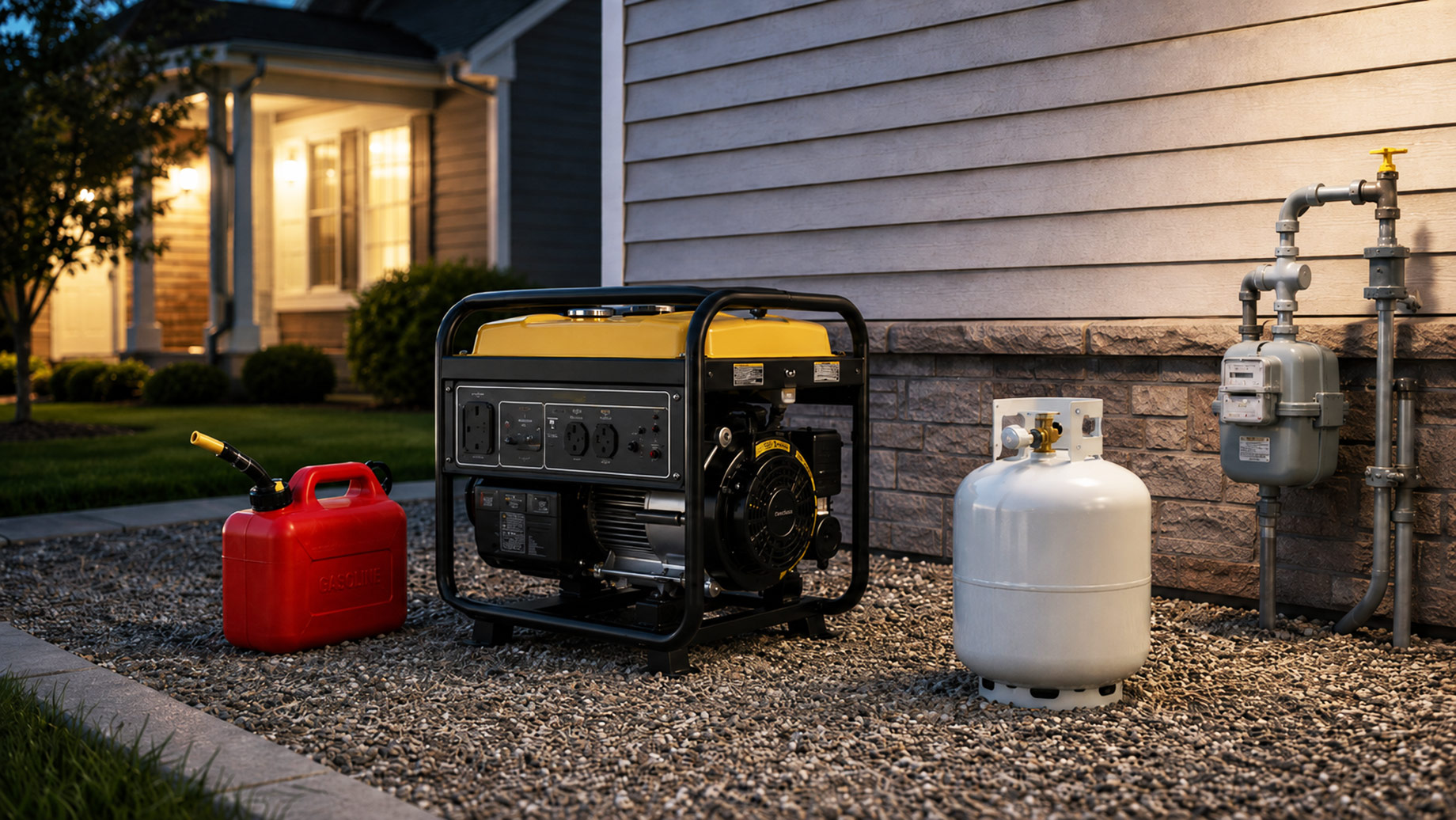
Backup generators may run on gasoline, LPG, natural gas, or more than one fuel. The best choice depends on availability, storage, output, runtime, climate, and maintenance.
Fuel flexibility is useful only when the complete supply system is safe and practical.
Compare Gasoline
Gasoline is widely available and provides strong output from portable equipment.
Disadvantages include aging during storage, flammability, spills, and possible shortages during a regional emergency.
Use approved containers and follow local storage limits. Rotate fuel and never refuel a hot engine.
Compare LPG
LPG stores in cylinders without the same aging problem as gasoline. It can burn cleanly and reduce some deposits.
Cylinder size, regulator capacity, hose condition, and cold-weather vaporization affect performance.
Store and operate cylinders according to safety requirements.
Compare Natural Gas
Natural gas can provide long runtime through a fixed pipeline without manual refilling.
It depends on available pressure and flow. Other appliances may compete for supply.
The pipeline may be interrupted during some emergencies, so it is not unlimited.
Review Multi-Fuel Options
Hybrid generator models may support gasoline, LPG, and natural gas depending on the model.
Confirm the changeover method and rated output on each fuel.
Do not assume the gasoline rating applies to gas operation.
Calculate Required Output
List essential loads, running watts, and motor starting demand.
Use the generator’s continuous rating for the intended fuel.
Sequence large motors where possible to reduce peak demand.
Estimate Consumption
Compare consumption at realistic load, not only maximum output.
Calculate fuel for short, one-day, and multi-day outages. Include a reserve within safe limits.
Use test-run data to improve estimates.
Consider Storage Space
Gasoline and LPG need approved storage away from ignition and living areas.
Natural gas avoids stored fuel but needs permanent piping and professional installation.
Small properties may have limited safe storage.
Consider Climate
Cold weather can reduce LPG vaporization. High altitude and high temperature can reduce engine output.
Protect equipment from weather without restricting cooling or exhaust.
Follow manufacturer derating and location instructions.
Compare Maintenance
Gasoline that ages can clog fuel systems. LPG and natural gas may reduce some deposits but still require oil, filters, plugs, and inspections.
Multi-fuel systems add valves, regulators, hoses, and connections that need checks.
Follow the exact model’s schedule.
Plan Fuel Changeover
Users should understand how to stop, isolate, and change fuel safely.
Do not modify jets, regulators, or valves outside approved instructions.
Label supplies and keep the procedure with the equipment records.
Review Noise and Runtime
Fuel type is only one factor in noise. Engine speed, load, inverter design, and enclosure matter.
Compare portable generator products using rated output, fuel options, noise data, phase, and regulation.
Long runtime may require planned oil checks and rest periods.
Use Safe Electrical Connection
An approved transfer system must isolate the utility supply. Never connect a generator through an ordinary wall outlet.
Use qualified installation for building and gas connections.
Operate engine-driven generators outdoors away from doors, windows, and vents.
Protect Against Carbon Monoxide
Every combustion fuel produces dangerous exhaust.
Install carbon monoxide alarms in appropriate locations. Never operate a generator in a garage, basement, or partly enclosed occupied area.
Shut down and investigate if an alarm sounds.
Test Every Intended Fuel
Run the generator on each approved fuel before an emergency. Test representative loads and motor starts.
Check leaks, stability, voltage, frequency, and changeover.
Record consumption and faults.
Create an Outage Plan
List allowed loads, operating schedule, fuel checks, refueling rules, shutdown, and emergency contacts.
Train more than one responsible person.
Keep manuals, approved supplies, and maintenance parts available.
Evaluate Fuel Resilience
Do not assume the normal fuel supply will remain available during the event that causes the outage. Gas stations may lose power, road access may close, and a natural-gas network may be interrupted in some emergencies. LPG storage may offer independence, but only when cylinders are safely stored and refilled before demand rises.
List realistic fuel sources, delivery times, storage limits, and seasonal risks for the site. A dual- or multi-fuel arrangement can improve resilience, but only if operators know how to change fuels correctly and every option is tested.
Compare Total Operating Cost
Purchase price is only one part of generator cost. Estimate fuel consumption at the loads the unit will actually carry, then include fuel storage, delivery, maintenance, accessories, and expected service life. A generator that is efficient at moderate load may cost less to operate than an oversized unit running lightly.
Compare cost per hour and, where practical, cost per useful kilowatt-hour. Also value the consequences of downtime. For a home refrigerator the loss may be inconvenient; for a pump, clinic, or business system it may be much larger.
Prepare Maintenance and Spares
Follow the manufacturer’s schedule for oil, filters, spark plugs, batteries, hoses, regulators, and valve checks. Fuel that remains in storage also needs attention. Gasoline can degrade, while cylinders, connectors, and regulators require inspection for condition and leakage.
Keep approved consumables and basic spares with the operating instructions, but do not improvise fuel fittings or electrical connections. Record each test run and service. A simple maintenance history helps the owner detect increasing fuel use, hard starting, unstable output, or other early signs of trouble.
Conclusion
Gasoline offers portability and strong output, LPG offers stable cylinder storage, and natural gas offers convenient fixed supply. Multi-fuel equipment can provide flexibility.
Choose by real load, safe storage, consumption, climate, and local supply. Test the complete system on every intended fuel so the backup plan works when power fails.
