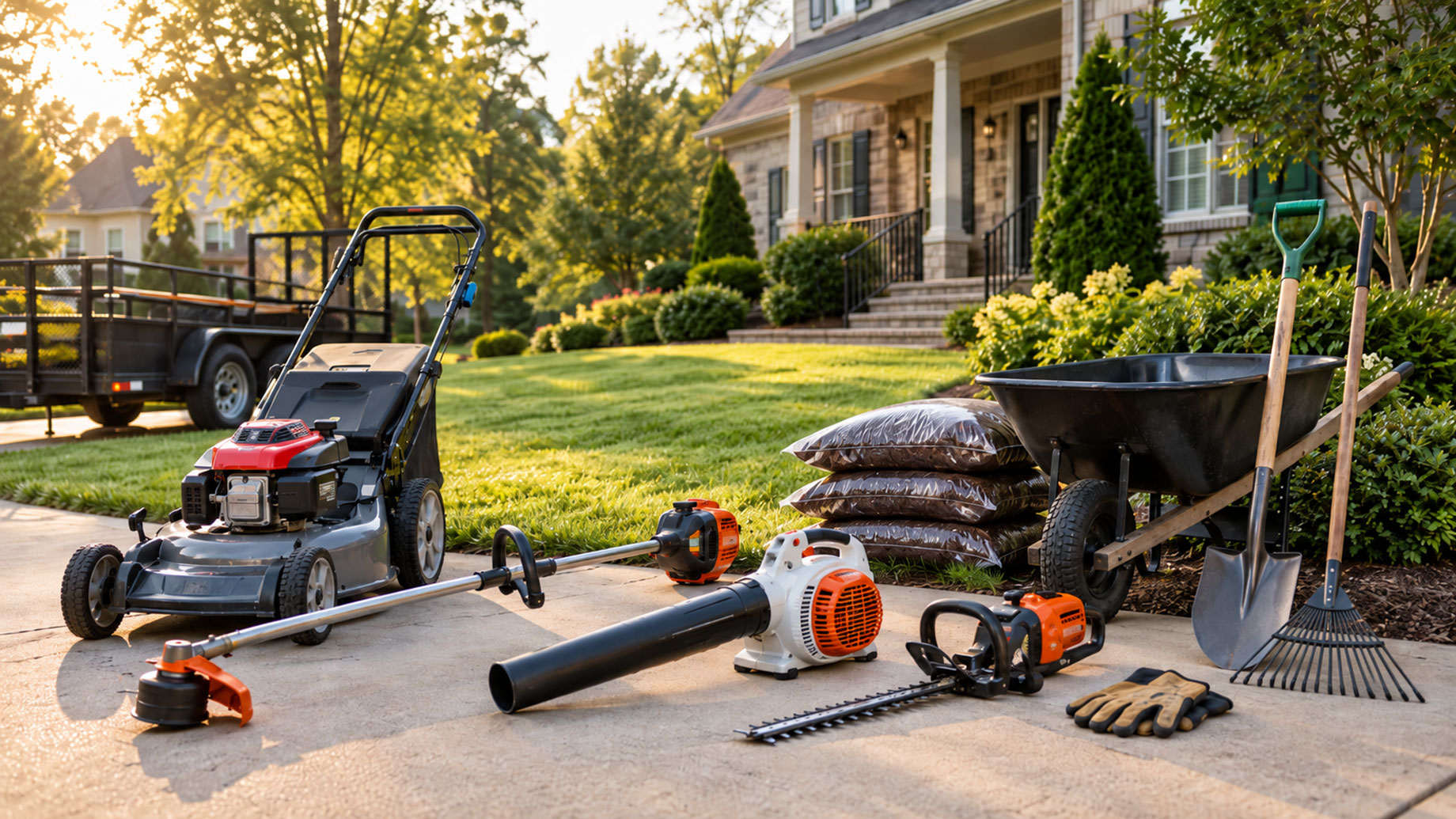
Landscaping in Raleigh, North Carolina, comes with unique opportunities and challenges. The region’s relatively mild winters, hot summers, periods of heavy rainfall, and long growing season mean that lawns, gardens, and outdoor spaces often require attention throughout much of the year. Whether you are a homeowner maintaining your own property or a contractor handling multiple landscaping projects, having the right equipment can make a noticeable difference in the quality and efficiency of the work.
The right tools help reduce physical effort, complete projects faster, and achieve more consistent results. However, landscaping equipment should be selected carefully. The ideal choice depends on the size of the property, the type of work being performed, how frequently the equipment will be used, and whether the project involves routine maintenance or more demanding construction and hardscape work.
Start With the Type of Landscaping Work
Before purchasing equipment, it is useful to define the types of projects you expect to handle most often. Lawn maintenance requires a different set of tools than installing a patio, building a retaining wall, or preparing a new planting area.
For routine residential maintenance, common equipment may include mowers, string trimmers, blowers, spreaders, and basic power tools. Contractors may also need compactors, cutting equipment, commercial-grade mowers, and other machines designed for frequent use.
For homeowners working on larger outdoor improvements, renting or purchasing selected pieces of professional landscaping equipment can make demanding projects easier to manage. Equipment designed for landscaping applications can help with soil preparation, lawn maintenance, material installation, compaction, trimming, and many other tasks.
Lawn Care Equipment for Raleigh Properties
Raleigh’s growing season can be long, which means lawn maintenance is one of the most common landscaping responsibilities for local property owners.
A reliable mower is usually the foundation of any lawn care setup. The best mower depends on the size and layout of the property. Smaller residential lawns may be manageable with a walk-behind mower, while larger properties may benefit from riding or robotic options.
String trimmers are also useful for areas that a mower cannot easily reach, including edges around fences, garden beds, trees, and hardscape features. Blowers make cleanup faster after mowing or trimming and are helpful for removing leaves, grass clippings, and debris from driveways and patios.
Battery-powered equipment has also become increasingly popular. Modern cordless landscaping tools can provide strong performance while reducing fuel storage, engine maintenance, and noise. For many homeowners, this makes them a practical option for regular residential use.
Equipment for Soil and Lawn Preparation
Healthy landscaping starts with proper soil preparation. Raleigh-area soils can vary significantly from one property to another, and some sites may require amendments or grading before grass, plants, or hardscape materials are installed.
Spreaders are useful for applying seed, fertilizer, lime, and other lawn care products evenly. Consistent distribution helps avoid areas of overapplication or underapplication and can make lawn maintenance more predictable.
For new lawns or renovation projects, additional equipment may be needed to loosen soil, prepare planting areas, or improve drainage. Contractors working on larger sites may also use specialized machinery to improve productivity and create a consistent surface before new landscaping is installed.
Before beginning any major project, homeowners should also consider drainage. Heavy rainfall can quickly expose problems such as compacted soil, improper grading, or areas where water collects near a home or outdoor living space.
Compaction Equipment for Hardscape Projects
Hardscape projects such as patios, walkways, driveways, and retaining walls require more than attractive materials. Proper site preparation is essential for long-term stability.
Compaction equipment is particularly important when preparing a base for pavers or other hardscape materials. A properly compacted foundation helps reduce settling, shifting, and uneven surfaces over time.
Plate compactors are commonly used for patios, walkways, and similar projects. They help compact gravel or other base materials before pavers are installed. Depending on the scale of the project, contractors may use different types of compactors suited to specific soil conditions or material depths.
Skipping this step can cause problems later. Even high-quality pavers may move if the base underneath them was not adequately prepared.
Cutting and Power Tools
Many landscaping projects involve cutting wood, stone, concrete, metal, or other materials. For contractors, reliable power tools are essential for maintaining productivity on the job site.
Homeowners may also benefit from owning a smaller collection of versatile tools for property maintenance and outdoor improvements. Saws, drills, grinders, and other power tools can be useful when building garden structures, repairing fences, installing landscape features, or working on outdoor living areas.
Durability becomes increasingly important when equipment is used frequently. Contractors should consider how easy it is to obtain replacement parts, batteries, blades, or other accessories locally. Equipment downtime can quickly become expensive when multiple projects depend on the same tools.
Robotic Mowers and Modern Landscaping Technology
Technology is also changing the way property owners maintain lawns.
Robotic mowers can reduce the amount of time spent on routine mowing by operating automatically within designated areas. For homeowners with suitable properties, these systems can provide consistent lawn maintenance while requiring less direct involvement.
They may also be useful for landscape professionals managing certain properties where automated mowing can complement traditional maintenance services.
When selecting a robotic mower, property size, slopes, landscaping layout, and navigation technology should all be considered. Modern systems vary considerably in features, cutting capacity, and installation requirements.
Choosing Equipment for Contractors
Professional landscapers typically have different equipment priorities than homeowners.
Contractors often use their machines daily, which means reliability, serviceability, and efficiency are especially important. Equipment must be able to withstand repeated use and transport between job sites.
Professionals should consider factors such as:
- expected daily workload;
- equipment durability;
- fuel or battery requirements;
- replacement parts availability;
- transportation and storage;
- maintenance needs;
- manufacturer support;
- compatibility with existing equipment.
It can also be more efficient to invest in fewer high-quality machines rather than purchasing multiple lower-cost options that require frequent replacement.
Choosing Equipment for Homeowners
Homeowners usually do not need the same commercial equipment used by contractors. The goal should be to choose tools that match the actual needs of the property.
Consider how often a piece of equipment will be used before purchasing it. A mower or trimmer may be needed every week during the growing season, while a compactor may only be required for one patio project.
For equipment needed occasionally, rental options may sometimes make more sense than ownership. Renting allows homeowners to use professional-grade machinery without paying the full purchase price or finding permanent storage space.
However, frequently used tools are often worth owning because they remain available whenever maintenance is required.
Local Availability Matters
One factor that is sometimes overlooked when choosing landscaping equipment is local availability.
Buying from a local supplier can make it easier to compare products, obtain accessories, find replacement parts, and receive help selecting equipment for a specific project. This can be especially useful for contractors who cannot afford long delays when a tool or machine needs attention.
For homeowners and landscaping professionals in Raleigh, Wake Forest, and surrounding Wake County communities, BOSS Supply provides access to landscaping equipment, tools, hardscape materials, lawn products, and other supplies used for outdoor projects.
Working with a supplier familiar with local landscaping needs can also help customers choose products suited to regional conditions rather than selecting equipment based solely on general online recommendations.
Consider the Entire Project, Not Just the Equipment
Equipment is only one part of a successful landscaping project.
Before starting work, consider the materials, drainage, soil conditions, installation process, maintenance requirements, and long-term goals for the property. Choosing the right machine will not compensate for improper preparation or unsuitable materials.
For example, a new patio requires appropriate excavation, base materials, compaction, grading, and installation. Lawn renovation may require soil preparation, seed selection, fertilizer, and ongoing irrigation. Drainage improvements may require gravel, pipe, fabric, and proper grading in addition to the tools used for installation.
Planning all of these components together can help reduce delays and unnecessary purchases.
Building a Better Outdoor Space in Raleigh
Raleigh homeowners continue to invest in outdoor spaces for recreation, entertainment, curb appeal, and property value. At the same time, professional landscapers are expected to complete increasingly complex projects efficiently and consistently.
The right landscaping equipment supports both goals.
Homeowners can save time on routine maintenance and confidently take on larger DIY improvements, while contractors can improve productivity across multiple job sites. From mowing and trimming to soil preparation, compaction, and hardscape installation, choosing equipment based on the specific requirements of each project can lead to better results.
For Raleigh-area properties, it also makes sense to consider local climate, soil conditions, rainfall, property size, and the availability of service and replacement parts. With proper planning and suitable equipment, landscaping projects can become easier to manage and outdoor spaces can remain attractive and functional throughout the year.
