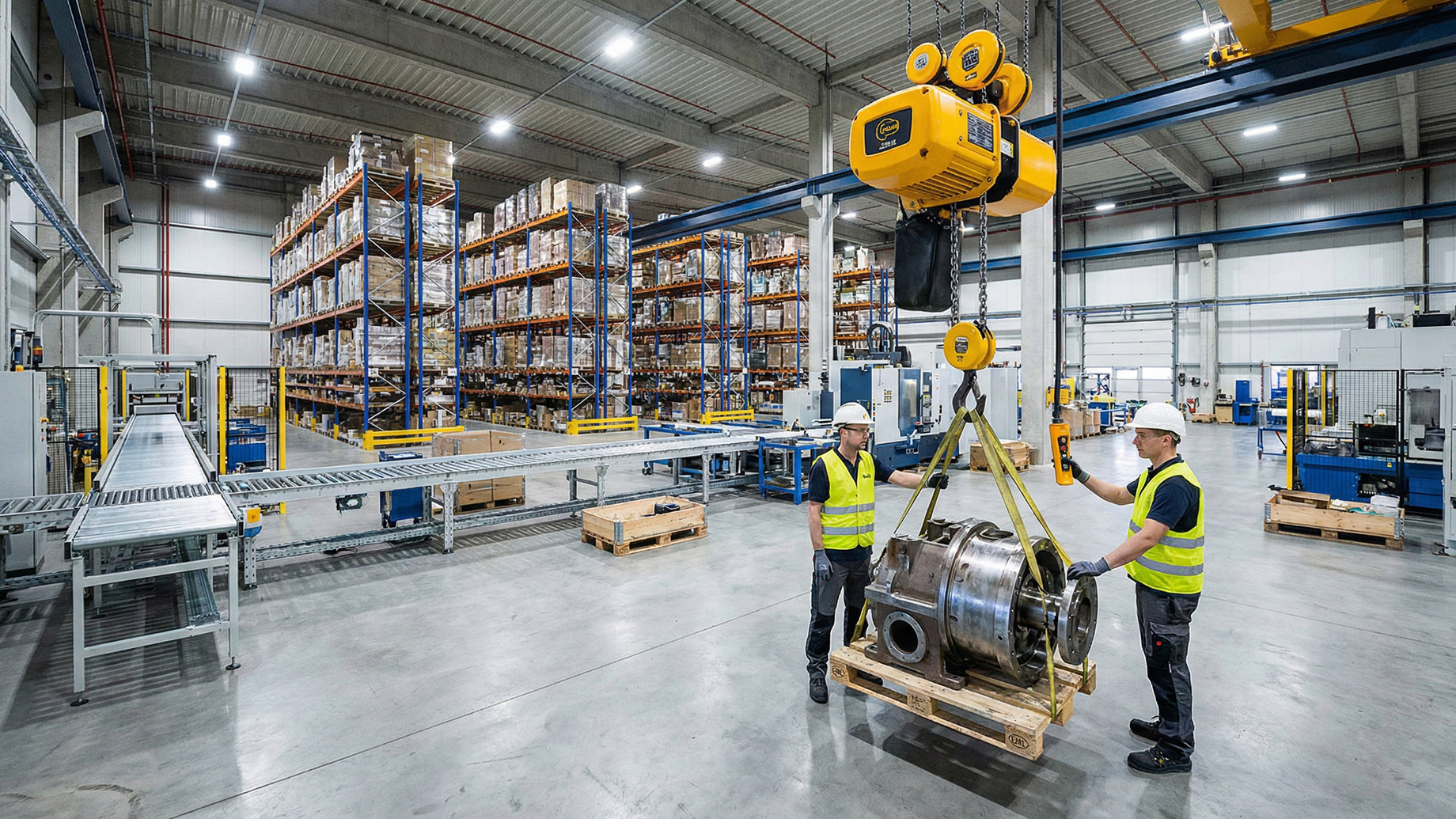
Heavy lifting tasks in factories, warehouses, and construction sites became simpler when electric chain hoists entered industrial operations. These powered systems work across multiple Australian industries, from precise assembly work to loading shipping containers.
We’re www.rud.com.au, and we’ve worked with electric hoists across Brisbane facilities and regional sites for years now. Once you see how these lifting systems perform in real work environments, you’ll know exactly which applications suit your site.
Stay with us through each section. We’ll show you how electric chain hoist equipment solves actual lifting challenges in different industries.
Electric Chain Hoist Applications Across Industries
Electric hoists serve different purposes depending on the industry, from precision assembly work to heavy construction lifts. The same hoist positioning engine components in a factory won’t necessarily work for lifting steel beams on a building site.
Now, let’s break down where these systems fit best.
Manufacturing and Assembly Lines
Assembly lines demand precision and speed. When production facilities switched to electric hoists for component positioning, worker strain dropped significantly.
After years of supplying hoists across Brisbane manufacturing facilities, we’ve seen the change firsthand. Repetitive lifting of engine blocks or machinery frames becomes faster when powered equipment takes over the heavy work.
What’s more, operators can focus on accurate placement instead of physical effort. A single worker lifts 500kg components multiple times per shift without wearing out. Production keeps flowing because the hoist handles the load while the operator guides it into position.
Warehousing and Logistics Operations
Distribution centres shift heavy stock constantly. Electric chain equipment tackles container loading and palletised goods that come through daily.
Overhead hoists keep floor space open while lifting stock beyond safe manual limits. At a Port of Brisbane warehouse, electric lifting gear moves 800kg pallets throughout each shift. The trolleys position loads across the bay without manual chain pulling, which cuts down injuries and speeds up truck loading times.
Construction and Maintenance Work
Building sites need reliable lifting power for steel beams, concrete forms, and materials going vertical. Plus, maintenance crews work in tight spaces where manual handling creates real risks.
Adjustable chains and trolleys solve that problem. On one Brisbane construction job, crews lifted 12-metre steel beams using electric hoists on temporary gantries. The controlled speed prevented dangerous load swings common with manual hoists during elevated work, keeping everyone safer on site.
Why Electric Hoists Work Better for Industrial Applications
The biggest advantage of electric hoists is that they eliminate physical strain while giving you precise control over every lift. Think about it this way – when workers pull a manual chain day in, day out, fatigue sets in fast.
Electric hoists remove that problem completely. Powered lifting provides consistent speed and control, which reduces the chance of load swings or sudden drops during operations. Workers operate electric systems with minimal effort, staying fresh throughout long shifts with multiple lifts.
What’s more, modern electric hoists have predictable component life. Research on the travelling mechanism wheels shows wear patterns can be predicted with just 2% average error, which means maintenance teams know when parts need attention before failures happen.
The chains handle the heavy work while operators focus on positioning and safety, improving both productivity and workplace conditions across industrial sites.
Can Electric Chain Hoists Prevent Manual Handling Injuries?
Yes, they can. Manual handling injuries cost Australian businesses millions each year, with back strains and shoulder damage leading the claims (this happens more often than you’d think). So what does this actually mean for you?
Electric hoists tackle the root causes of these injuries. Here’s how they reduce manual handling risks:
- Eliminates physical lifting strain: Electric hoists remove the need for workers to lift, lower, or pull heavy loads by hand. When the equipment does the heavy work, back injuries from manual lifting drop significantly.
- Reduces repetitive strain injuries: Constant manual chain pulling during shifts creates shoulder and arm damage over time. We’ve seen firsthand how switching to electric systems reduced injury claims at Brisbane industrial sites.
- Removes awkward body positions: Manual handling forces workers into twisted postures that cause musculoskeletal damage. Electric hoists let operators stand in safe positions while controlling the load, which enhances safety across industrial operations.
Bottom line: using lifting equipment cuts your injury risk and the downtime costs that come with workplace injuries.
How Electric Chain Systems Improve Workflow Speed
Electric hoists cut lift cycle times in half compared to manual pulling, keeping your operation moving without delays. Bottom line? The speed improvements come from how these systems change the actual work process.
First off, faster lift and lower cycles mean each operation takes less time. Manual chain pulling is slow and tiring, while electric systems move loads at consistent speeds throughout the shift. That consistency alone saves significant time.
Plus, operators focus on positioning instead of physically powering the mechanism. When workers aren’t exhausted from pulling chains, they guide loads more accurately and work more efficiently (and the time savings add up fast).
What’s more, consistent performance without fatigue keeps production lines and loading docks running at steady throughput. Electric chain systems don’t slow down as the day progresses, as manual operations do. So, it minimises downtime and helps facilities meet tighter deadlines without pushing workers harder.
Electric Hoists vs Manual Chain Hoists: Quick Comparison
Since you’ve seen what electric hoists can do, let’s compare them against manual chain hoists in real work situations. What’s interesting is that the differences go beyond just the power source.
| Feature | Electric Hoists | Manual Chain Hoists |
|---|---|---|
| Lifting Speed | Fast, consistent cycles | Slow, operator-dependent |
| Physical Effort | Minimal button control | Heavy chain pulling is required |
| Load Capacity | 250kg to 10+ tonnes | Typically under 3 tonnes |
| Best For | High-frequency lifting | Occasional light loads |
| Power Requirement | Electrical supply needed | No power needed |
Electric hoists cost more upfront, that’s true. But when you factor in the labour time saved and reduced injury risks over their service life, they become worth the investment for operations with regular lifting needs.
On the flip side, manual chain hoists work well for specific situations. If you’re doing infrequent lifts under 500kg or working where power supply access is limited, manual solutions might suit your workload better.
3 Things to Consider When Selecting an Electric Chain Hoist
Three factors determine the right choice: load capacity, lift height, and duty cycle. Match these to your actual workload demands.
Now here’s where it gets tricky. Getting these specs right from the start saves headaches down the track:
- Load capacity requirements: Your hoist’s rated capacity should exceed your heaviest regular lift by at least 25% safety margin. If you’re lifting 800kg loads regularly, a 1-tonne hoist fits the bill. But if loads occasionally hit 950kg, you need a 1.5-tonne model to prevent equipment overload and maintain safe operations. The extra capacity also accounts for load weight variations and attached rigging gear.
- Lift height and coverage: Standard electric hoists offer lift heights from 3 metres to 12 metres, with custom options available. The chains and adjustable trolleys need to reach all required positions in your workspace. Measure your highest lift point and add 500mm clearance before ordering. For warehouses with varying ceiling heights, adjustable chain lengths solve the coverage problem across different bays.
- Duty cycle ratings: This determines how many lifts per hour the hoist handles safely (something most people overlook until it’s too late). Light duty suits 2-5 lifts per hour, medium duty handles 10-15 lifts, and heavy duty manages 40+ lifts per hour. Operations running continuous production need higher duty ratings than occasional maintenance work, which affects both performance and component lifespan. Undersizing the duty cycle burns out motors faster.
Getting these three factors wrong leads to either underperforming equipment or overspending on capacity you don’t need.
Pick the Hoist That Matches Your Load
The right electric chain hoist handles your daily lifting tasks without strain on equipment or operators. The truth is, matching your hoist choice to real-world conditions works better than buying the biggest capacity on the market.
Before purchasing, measure your lift heights, calculate your heaviest loads with safety margins, and assess how many lifts you run per hour. Those three factors guide you to the right hoist capacity and duty cycle for your operation.
When you need quality lifting equipment fast, local suppliers with stock in Australia help minimise downtime. RUD Australia offers fast delivery on hoists, chains, and trolleys designed to Australian and international standards, so your operation stays running when equipment arrives on time.
