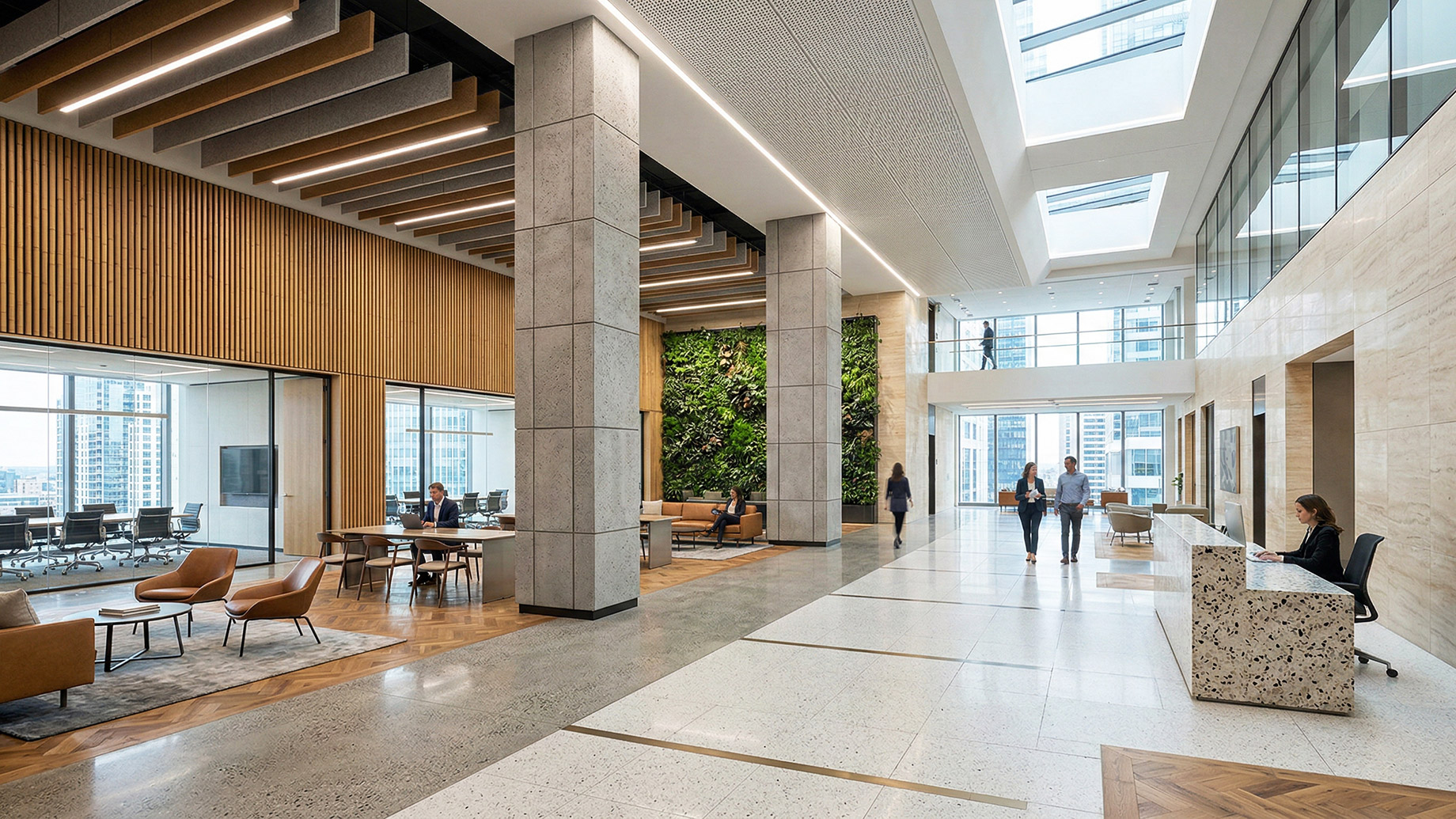
Choosing the right interior materials changes commercial environments from functional spaces into strategic assets that improve employee productivity, customer experience, and long-term operational value. Modern businesses recognize that material choices directly impact acoustics, durability, aesthetics, and sustainability performance across offices, retail locations, healthcare facilities, and hospitality venues.
1. Durable Materials for High-Traffic Commercial Environments
Commercial spaces demand materials engineered to withstand constant use while maintaining visual appeal. Flooring represents the foundation of durability planning, with options ranging from luxury vinyl tile and polished concrete to commercial-grade carpet systems designed for heavy foot traffic. According to industry data from 2024, businesses are prioritizing materials like bamboo, reclaimed wood, and recycled metal that combine environmental responsibility with exceptional longevity. Wall finishes must resist scuffs, impacts, and frequent cleaning while supporting brand identity through color and texture. Healthcare settings require antimicrobial surfaces that meet stringent sanitation standards, while retail environments benefit from materials that create distinctive atmospheres encouraging customer engagement. High-performance laminates, impact-resistant wall panels, and commercial-grade paint systems deliver durability without sacrificing design flexibility, making sure that spaces maintain a professional appearance despite intensive daily use.
2. Materials That Improve Acoustics, Lighting, and Comfort
Sound management profoundly affects workplace productivity, customer satisfaction, and overall comfort in commercial environments. Modern ceiling tiles engineered with advanced acoustic properties absorb ambient noise and prevent sound transmission between spaces, creating environments conducive to concentration and confidential communication. The U.S. ceiling tiles market reached $2.08 billion in 2023, driven largely by demand for acoustic performance in open-plan offices, educational institutions, and healthcare facilities where noise control directly impacts outcomes. Besides acoustics, material selection influences natural light diffusion throughout spaces. Reflective surfaces, strategic glass placement, and light-colored finishes maximize daylight penetration while reducing energy consumption. Thermal comfort benefits from insulation properties inherent in many acoustic materials, with ceiling systems contributing to temperature regulation and HVAC efficiency. These multifunctional materials address comfort holistically instead of solving isolated problems, creating environments where occupants perform optimally.
3. Sustainable and Future-Ready Material Choices
Environmental responsibility drives material innovation across commercial construction and renovation projects. Low-VOC finishes improve indoor air quality while meeting stringent building codes and health standards. Materials incorporating recycled content reduce environmental footprints without compromising performance or aesthetics. Businesses pursuing LEED certification or similar sustainability frameworks find that material documentation and third-party verification streamline compliance processes. Beyond regulatory requirements, sustainable material choices improve brand perception among environmentally conscious clients and employees. Long-lasting materials that resist degradation reduce replacement frequency and associated waste, delivering economic and environmental returns over building lifecycles. Energy-efficient materials contribute to operational cost savings through reduced heating, cooling, and lighting demands, making sustainability financially advantageous rather than just aspirational.
Successful commercial interior design balances immediate aesthetic impact with long-term performance, creating spaces that serve business objectives while adapting to evolving needs and standards.
