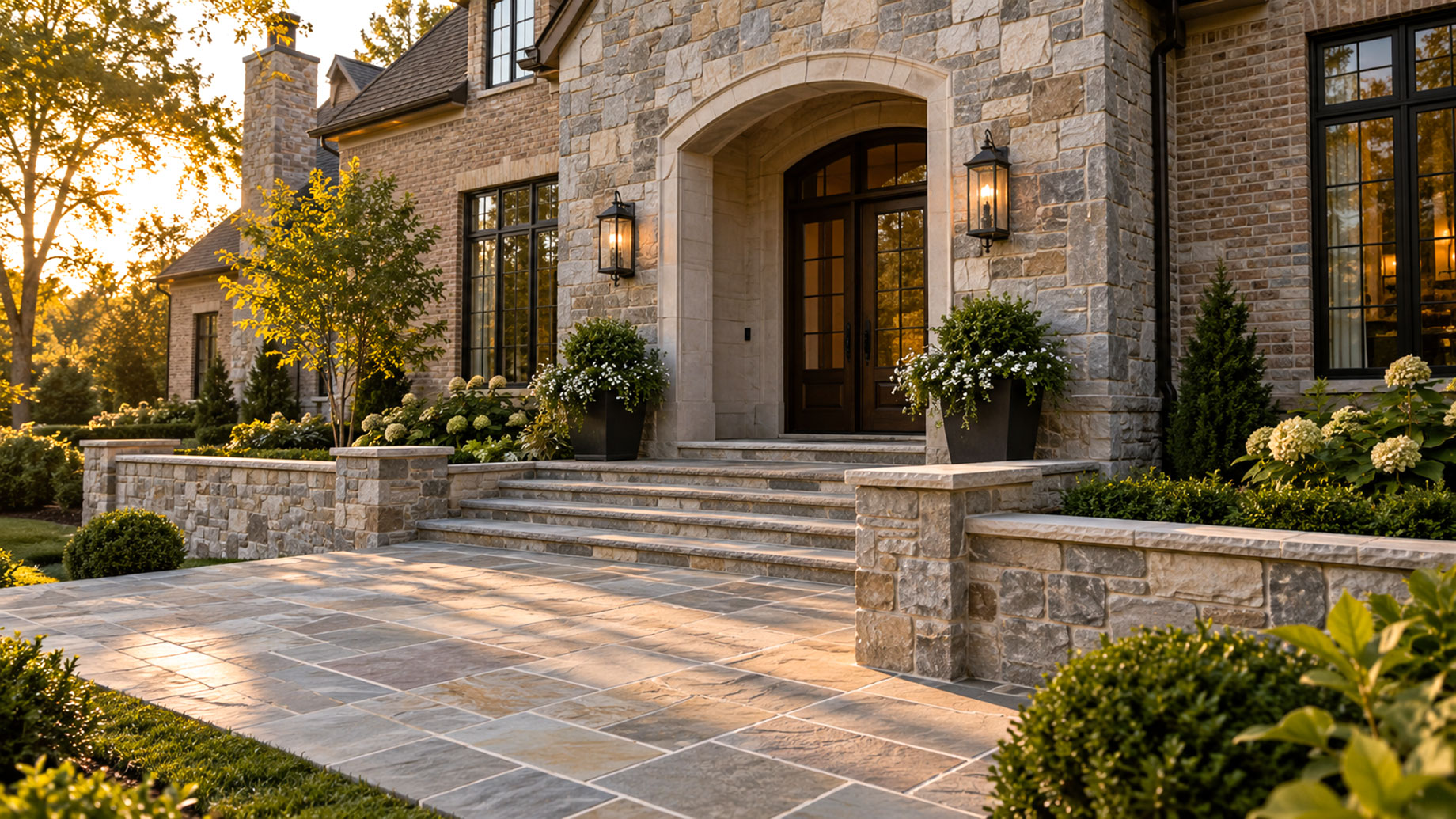
Luxury residential design is often defined by details that remain compelling long after temporary trends have disappeared. Natural stone, carefully laid brick, balanced proportions, and precise transitions between materials can give a property a sense of permanence that is difficult to achieve through decorative elements alone.
Architectural masonry is particularly effective because it can serve both structural and aesthetic purposes. From an impressive entrance to subtle landscape features, well-planned masonry can connect the residence, grounds, and surrounding architecture into a cohesive composition.
Establish a Strong Architectural Identity
The exterior materials of a home influence how the entire property is perceived. Limestone may create a sophisticated, understated appearance, while traditional brick can bring warmth and established character. Natural stone can add texture and individuality, particularly when its scale and color are coordinated with the façade.
Successful design does not require masonry on every surface. In many high-end properties, restraint produces a stronger result. Stone surrounding an entrance, masonry columns along a driveway, or a carefully detailed brick courtyard can become a focal point without overwhelming the architecture.
Consistency is equally important. Repeating selected materials in different areas of the property helps create visual continuity between the main residence and its landscape.
Preserve Original Masonry Whenever Possible
Older luxury residences often contain brick or stonework that would be difficult to reproduce authentically today. Removing these materials simply because they show signs of age can eliminate part of the property’s architectural identity.
Mortar deterioration, localized cracking, loose units, and weathered joints do not necessarily mean an entire masonry feature must be replaced. Depending on its condition, targeted restoration may preserve much of the original work.
This is where experienced evaluation becomes valuable. Specialists such as TOP Masonry & Tuckpointing can assess existing masonry and determine whether repointing, individual brick replacement, structural repair, or more extensive rebuilding is appropriate. Matching mortar characteristics, joint profiles, and existing materials is particularly important when working with established architecture.
Treat Outdoor Spaces as Part of the Residence
Luxury design increasingly extends beyond interior rooms. Terraces, courtyards, garden paths, outdoor kitchens, and pool surroundings can function as genuine living spaces when their materials receive the same attention as those used inside the home.
Masonry provides a natural way to define these areas. A stone terrace can establish an outdoor dining zone, while low walls can introduce seating or create transitions between different elevations. Steps and pathways can guide movement through the landscape while reinforcing the architectural language of the residence.
Rather than designing each element independently, consider how the materials will appear from multiple viewpoints. A terrace visible through large interior windows, for example, becomes part of the home’s visual composition even when it is not being used.
Make Craftsmanship Visible in the Details
Premium materials alone do not guarantee a sophisticated result. Installation quality often determines whether masonry appears exceptional or ordinary.
Joint consistency, alignment, cuts around corners, transitions between surfaces, drainage, and finishing details all influence the final appearance. These elements may seem subtle individually, yet together they establish the level of craftsmanship perceived throughout the property.
Drainage deserves particular attention. Even beautifully executed masonry can deteriorate prematurely when water repeatedly collects in the wrong areas. Proper slopes, flashing, drainage paths, and compatible materials help protect both appearance and performance.
Build for Architectural Longevity
A well-designed exterior should mature gracefully rather than require constant reinvention. That makes masonry particularly suitable for properties where long-term architectural value matters.
Natural materials develop character as they age, while quality restoration can extend the life of existing features without erasing their history. Periodic inspections and timely repairs can also prevent relatively small defects from developing into extensive restoration projects.
The most compelling residential exteriors rarely depend on a single statement feature. Their appeal comes from proportion, material quality, craftsmanship, and continuity between architecture and landscape. Used with intention, masonry can contribute to all four—creating an exterior that feels substantial, refined, and designed to endure.
