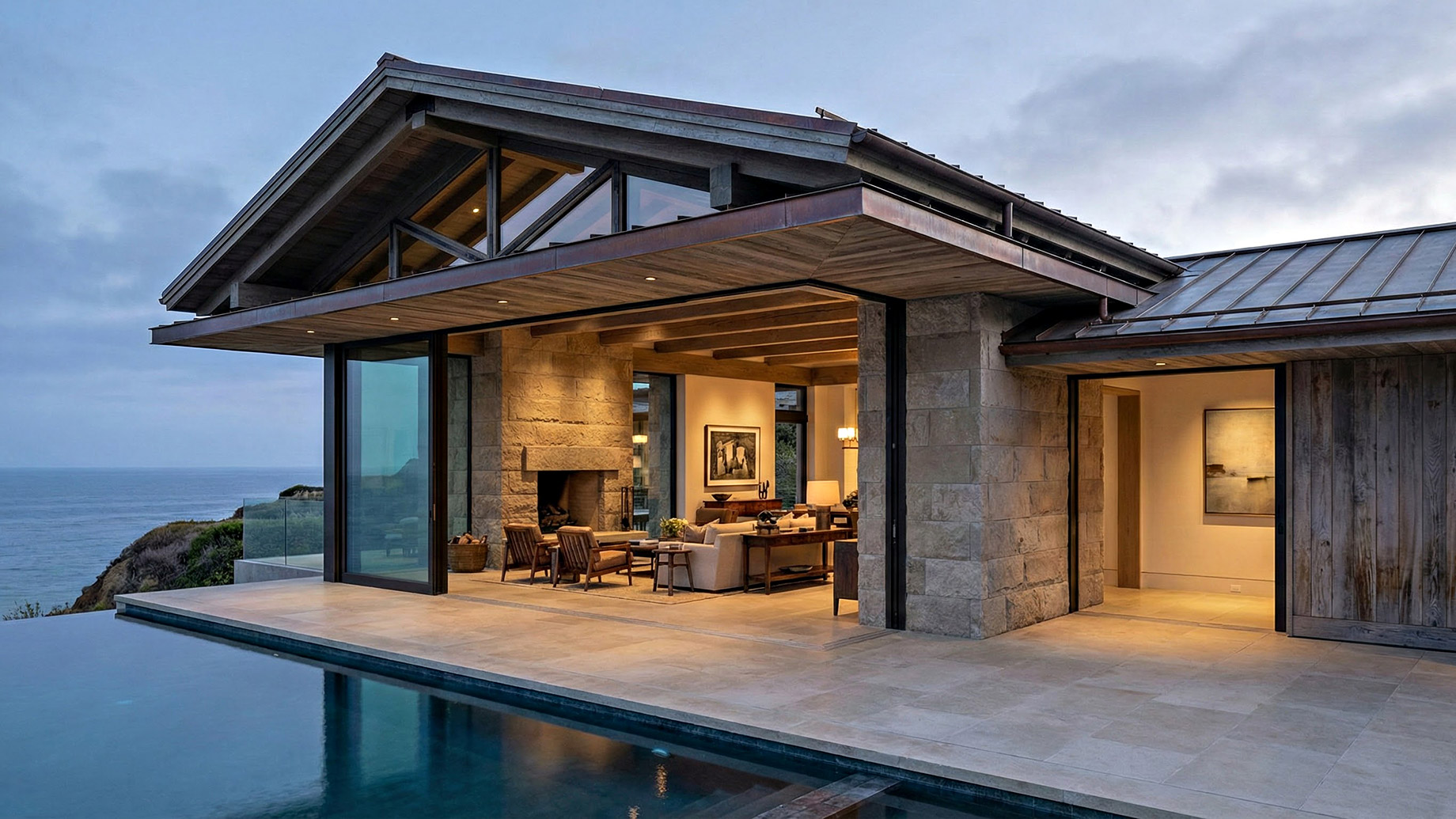
True luxury homes aren’t defined by price tags or square footage alone. They’re defined by intention. Every line, material choice, and spatial decision signals that the home was designed with restraint, confidence, and a long view toward legacy.
The world’s most celebrated residences share architectural traits that go beyond trend cycles and Instagram appeal. They feel collected, not assembled. Lived in, yet elevated. Below are the top architectural features that consistently separate world-class luxury homes from everything else.
Architecture With a Clear Point of View
Exceptional luxury homes commit to an architectural language and follow it through with discipline. Whether modernist, Mediterranean, Alpine contemporary, or neoclassical, the design never hedges its bet. You don’t see confused rooflines, mismatched proportions, or stylistic afterthoughts added to inflate resale value; instead, there’s coherence.
Massing is deliberate, sightlines are intentional, and even negative space is treated as a design element. This level of clarity requires confidence from both architect and owner, but the payoff is a home that is unmatched.
Materials That Age With Character, Not Wear
Luxury homes don’t chase finishes; they invest in materials with longevity and depth. Think honed limestone that softens with time, solid bronze hardware that develops patina, and hand-finished wood that shows grain rather than hiding it.
These materials don’t just look good on day one; they improve as the home ages. What matters is not rarity alone, but how materials are used. Stone wraps corners instead of stopping short, wood paneling aligns with architectural grids, and metals are repeated subtly across spaces to create continuity. World-class homes understand that restraint in materials palettes often reads more luxurious than excess.
Spatial Flow That Feels Effortless
The difference between a large house and a well-designed luxury house is how space moves. World-class residences guide you intuitively from public to private areas, from expansive gathering spaces to quieter retreats. Ceilings rise where drama is needed and lower where intimacy matters.
Transitions are softened with light, texture, and framing views rather than abrupt walls or hallways. Indoor and outdoor spaces connect naturally, often through disappearing glass walls or deep terraces that feel like a true extension of the interior. The result is a home that feels nervous without being overwhelming.
Rooflines and Structural Details Treated as Architecture
In luxury architecture, what sits above the eye line matters just as much as what’s below it. Complex rooflines, deep overhangs, custom trusses, and integrated drainage systems are not hidden problems to solve later; they’re core design features. These elements shape the silhouette of the home and influence how it weathers time and climate.
Preserving these details requires ongoing care as part of a broader maintenance ecosystem. In many estates, a trusted roof inspector becomes just one quiet player in the scenes, ensuring that craftsmanship meant to last generations continues to perform as designed. The goal is protection without compromising aesthetics.
Endnote
Architectural luxury at the highest level is not about excess. It’s about care. Care in design decisions, care in material selection, and care in how the home is maintained long after the architect leaves the site. These homes are designed to mature gracefully, rewarding owners who value stewardship as much as style.
