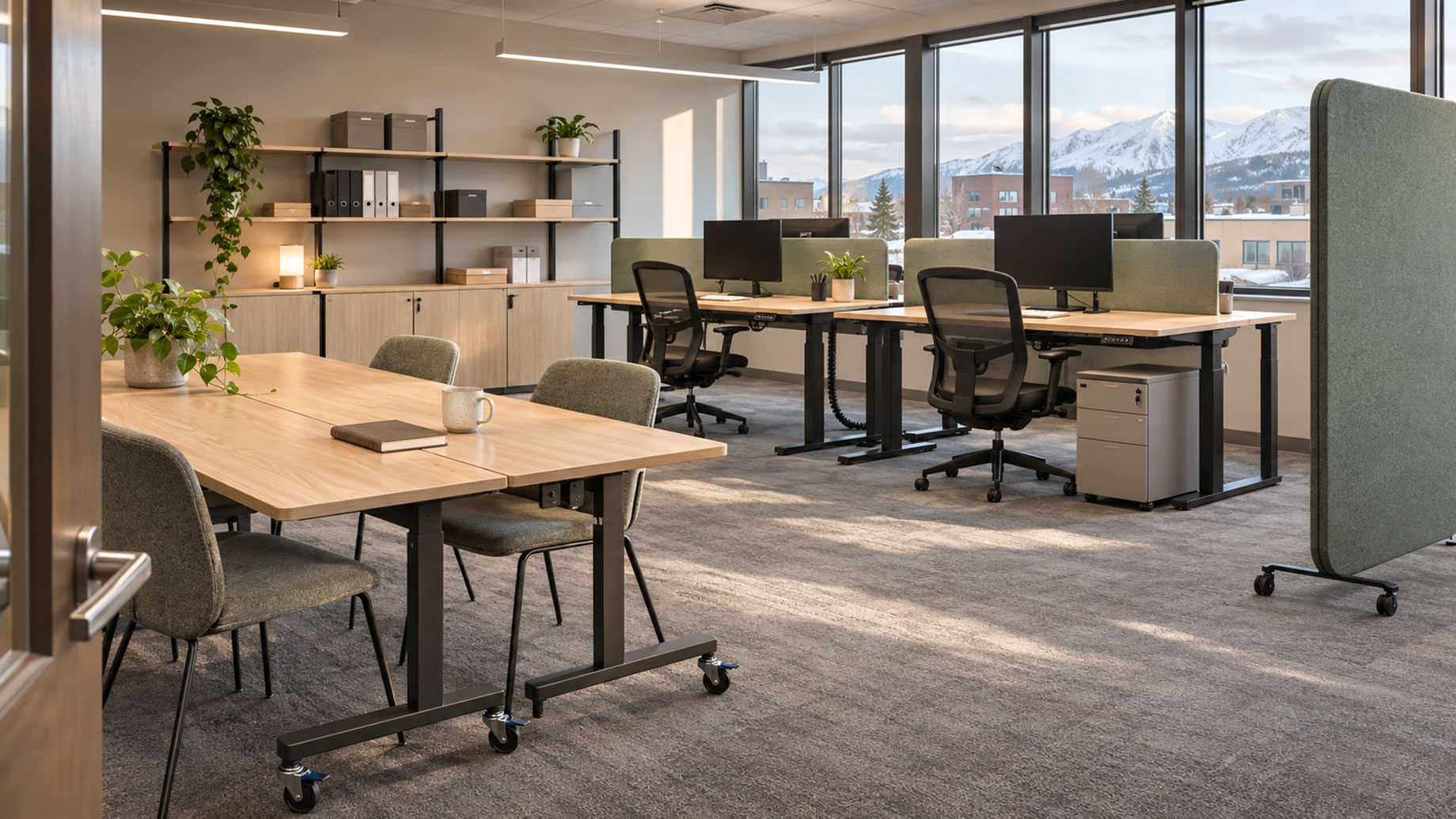
A business can change considerably between the day an office opens and the day its next big project arrives. A team expands, a meeting room becomes a shared workspace, and suddenly that perfect desk arrangement feels like a puzzle with missing pieces. For a manager researching executive office furniture Anchorage, the challenge often extends beyond selecting furniture that looks professional today. The real goal is creating an environment that can adapt when people, priorities, and daily routines change.
Flexible furniture helps make those adjustments manageable. With the right pieces and a little foresight, a workplace can support new demands without turning every organizational change into an expensive renovation.
When the Business Changes, the Room Notices
Growth usually sounds exciting in a planning meeting. In the office itself, it can mean another desk squeezed beside a doorway, a crowded conference table, or supplies taking over the nearest empty corner.
Even established companies face changes in how space gets used. A department may switch to hybrid schedules, or employees may need more room for confidential calls. Furniture chosen for a single arrangement can become a limitation surprisingly quickly.
A flexible workspace gives managers options. Desks can move, shared areas can change purpose, and a room can evolve while remaining comfortable and organized.
Plan the Floor Before Choosing the Furniture
An attractive furniture catalog makes it easy to fall in love with a particular desk. Before ordering, though, the floor plan deserves some attention. Think about how people enter, walk between workstations, use equipment, and gather for discussions.
Measure the space carefully and leave appropriate clearance around doors, accessible routes, and storage. Map electrical outlets and other connections, especially where computer equipment needs reliable access. A layout that works beautifully on paper still needs to function when everyone arrives on Monday morning.
It also helps to identify spaces with more than one possible future. A quiet corner today might become a small meeting area next year. Planning for that possibility makes later adjustments easier.
Modular Furniture Makes Rearranging Less Complicated
Modular furniture provides one of the most practical ways to prepare for change. Workstations built from compatible components can often be expanded, separated, or rearranged as staffing needs evolve.
Consider a growing team that needs two additional desks. A modular system may allow the manager to add matching surfaces and storage without replacing an entire row of furniture. Movable tables can also turn a training room into a collaborative project space.
Compatibility matters, however. Ask suppliers whether components will remain available, which configurations they support, and what tools or installers future changes may require. Flexibility works best when the pieces genuinely fit together.
Comfort Has to Travel With the Layout
Rearranging furniture can solve a space problem while creating a comfort problem if ergonomics disappear from the plan. Employees still need suitable chair adjustments, work surface heights, monitor positions, and room to move.
Adjustable desks and supportive seating can accommodate different users, particularly in offices where people share workstations. Lightweight furniture may help with repositioning, but stability and durability remain essential.
Lighting and noise also affect where furniture belongs. A desk placed directly in a busy walkway may look efficient on a diagram while making focused work difficult. Test layouts with the people who use them, and pay attention to small complaints before they become familiar daily frustrations.
Give Every Kind of Work Somewhere to Happen
A workplace rarely runs on one activity alone. Some tasks require uninterrupted concentration, others involve quick conversations, and a few need a larger table covered with plans, samples, or paperwork.
Furniture can help create distinct zones without building permanent walls. Small meeting tables support informal discussions, movable screens provide some visual separation, and comfortable seating makes short collaborative sessions easier to organize.
The trick is avoiding a room full of furniture that serves the same purpose. Mixing individual workstations with adaptable shared areas gives employees practical choices throughout the day. It also makes the office more responsive when one department’s needs change.
Storage Should Expand Without Taking Over
Storage has a habit of quietly becoming a problem quietly. A few extra files appear, equipment accumulates, and the cupboard that once looked spacious suddenly refuses to close properly.
Flexible storage systems allow managers to add shelves, reorganize compartments, or relocate cabinets as requirements shift. Mobile pedestals can move between workstations, while modular shelving can serve several departments over time.
Sensitive records and expensive equipment still need appropriate security, so mobility should never replace sensible access controls. Good storage planning also considers what employees actually use. Keeping everyday materials close at hand reduces unnecessary movement and helps shared spaces stay tidy.
Evaluate the Cost of Living With Each Piece
The cheapest furniture quotation can look appealing when budgets are tight. Yet a purchase decision should consider what happens after the first year of regular use.
Check materials, construction, warranties, cleaning requirements, and the availability of replacement components. A durable chair with adjustable parts may provide better long-term value than one that needs frequent replacement. Furniture that supports multiple layouts can also reduce spending when the office changes.
Include delivery, assembly, and potential reconfiguration costs in comparisons. An experienced supplier should explain these details clearly rather than leaving managers to discover additional expenses halfway through installation.
A Good Supplier Helps Solve Tomorrow’s Problems
Furniture selection becomes easier when a supplier understands how the business operates. Instead of starting with a product list, a useful conversation covers staffing plans, daily activities, available floor space, and budget limitations.
Experienced professionals can recommend compatible collections, explain material options, and identify where custom dimensions could improve the layout. Delivery and installation coordination matter too, particularly in busy workplaces that cannot suspend operations for several days.
Ask about support after installation. Clear warranty procedures, replacement parts, and guidance on adding matching pieces can make future changes significantly less disruptive.
Build a Workplace With Room to Evolve
A flexible office develops through deliberate choices rather than constant redesign. Start with the spaces employees use most, identify recurring frustrations, and invest in furniture that can meet several practical needs.
Review the arrangement when teams grow or work patterns change. A small adjustment made early may prevent a larger expense later, especially when existing furniture can be reused elsewhere.
The strongest workspace plans leave room for the unexpected. With thoughtful layouts, durable adaptable pieces, and reliable supplier support, a business can welcome new people and new ideas without having to start from scratch each time.
