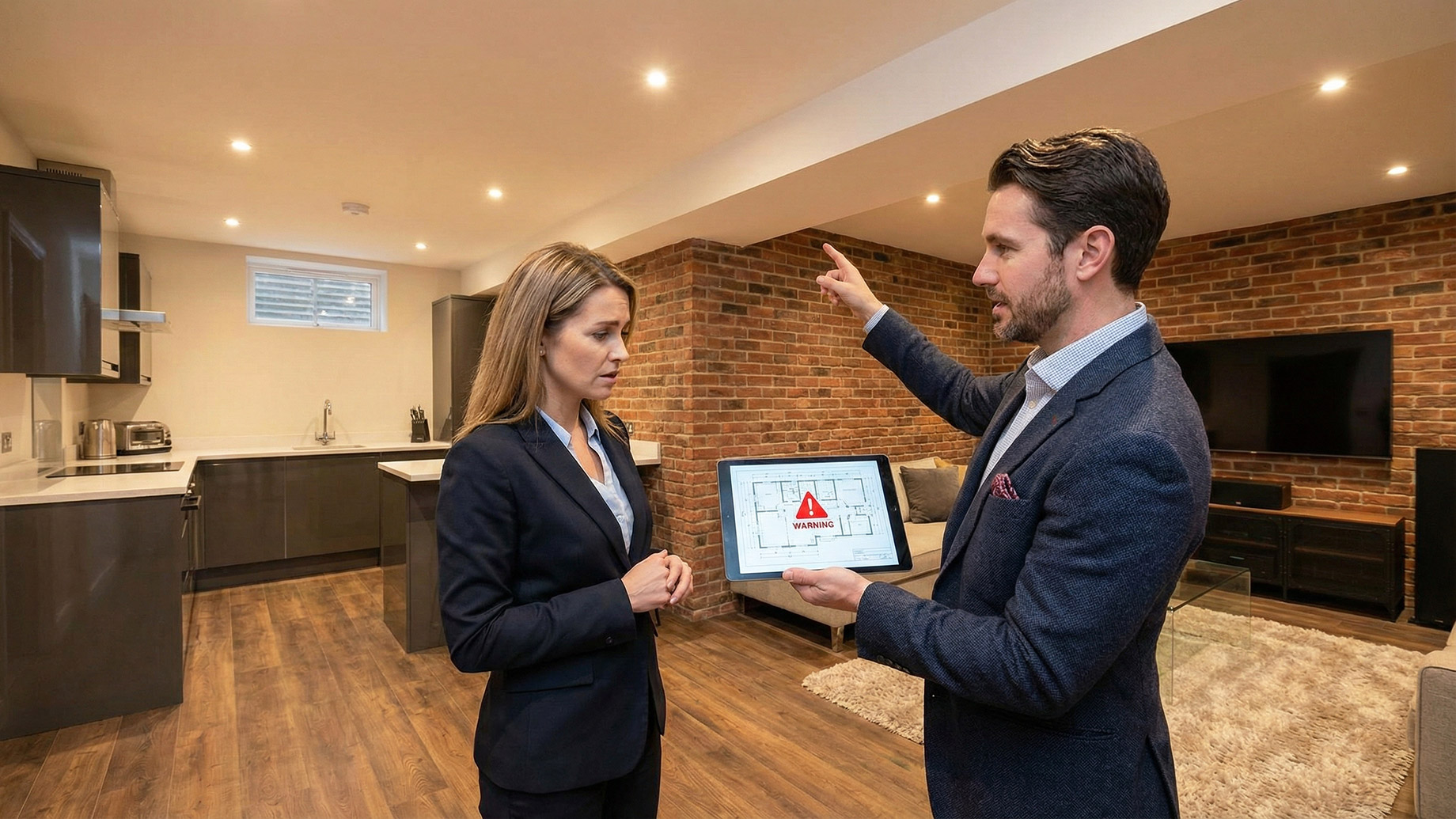
Converting a basement into a legal Accessory Dwelling Unit (ADU) is one of the smartest financial moves a DC homeowner can make, but it is also one of the most regulated. Many homeowners rush into basement apartments only to find their projects halted by the Department of Buildings (DOB) or rendered unrentable due to safety violations. This guide identifies five critical red flags-ranging from insufficient ceiling heights to improper ADUs and condo conversions planning-that can turn a high-ROI investment into a costly legal nightmare. By identifying these pitfalls early, you ensure your conversion is safe, legal, and profitable.
5 Red Flags to Watch for in Basement ADU Projects
Building a legal rental unit is vastly different from finishing a playroom. When you transition into the realm of ADUs and condo conversions, you are held to stringent life-safety codes. Here are the five most common warning signs that your project might be headed for trouble.
1. The 7-Foot Ceiling Trap
The most common deal-breaker for legal basement apartments in Washington, DC, is the ceiling height. The International Residential Code (IRC) generally requires a minimum of 7 feet for habitable spaces.
- The Red Flag: If your current basement measures 6’6” or 6’8”, a contractor who says “it’s close enough” is a major red flag.
- The Fix: You may need basement lowering or underpinning. While this adds to the initial investment, it is the only way to ensure the unit can be legally licensed for rent.
2. Inadequate Egress and Natural Light
For a space to be legally occupied as a bedroom, it must have a secondary means of escape.
- The Red Flag: Plans that rely solely on the main entrance for exit or utilize windows that are too small or too high off the ground.
- The Requirement: Egress windows must meet specific opening dimensions (usually 5.7 square feet) and have a sill height no higher than 44 inches from the floor. Without these, your “apartment” is legally just a storage room.
3. Ignoring Fire Separation and Soundproofing
When you create a two-family dwelling, you are effectively creating two separate fire zones.
- The Red Flag: A contractor who suggests using standard drywall on the ceiling without fire-rated assemblies.
- The Necessity: You must have proper fire-rated separation (often Type X drywall) between the ADU and the primary residence. Furthermore, skipping specialized soundproofing (like resilient channels or rockwool insulation) will lead to constant friction between you and your tenants.
4. Working Without (or on the Wrong) Permits
The DC Department of Buildings is increasingly strict regarding unpermitted basement apartments.
- The Red Flag: A contractor asking you to pull the permits yourself as a “homeowner,” or claiming “we don’t need permits for interior work.”
- The Risk: If you are caught building an ADU without the correct permits, the city can issue a “Stop Work Order,” fine you thousands of dollars, and require you to tear out finished work to inspect the plumbing and electrical behind the walls.
5. Overlooking Owner-Occupancy Rules
In many DC zones, the legality of your basement ADU is tied directly to you.
- The Red Flag: Investing in a property with the intent to rent out both the top and bottom units while living elsewhere.
- The Reality: DC law often requires the owner to occupy either the main house or the ADU. If you move out and rent both, you risk losing your rental license and facing significant legal penalties.
Essential Checklist for a Legal Conversion
Before you sign a contract, ensure your project addresses these core components:
- Zoning Verification: Confirm your lot allows for “by-right” ADU development.
- Utility Separation: Determine if you will share a HVAC system or install separate mini-split units for tenant comfort.
- Moisture Management: Ensure there is a pro-active drainage system or sump pump to prevent flooding.
- Rental Licensing: Budget for the Basic Business License (BBL) and Certificate of Occupancy (C of O) fees.
Frequently Asked Questions
Can I build a basement apartment if my ceiling is only 6 feet high?
Not legally. You will need to perform “slab lowering” or underpinning to reach the 7-foot minimum required by DC building codes for habitable spaces.
Do I need a separate entrance for my basement ADU?
It depends on your zoning. In many DC neighborhoods, you cannot add a new entrance to the front of the house, so side or rear entrances are the standard solution for basement apartments.
How long does the permitting process for ADUs and condo conversions take in DC?
Typically, you should plan for 4 to 12 weeks for the permit review process, depending on the complexity of the structural changes and the current backlog at the Department of Buildings.
Is a basement apartment the same as a condo conversion?
No. A basement ADU is an accessory unit owned by the same person who owns the main house. A condo conversion involves legally separating the units into two distinct pieces of real estate that can be sold independently.
If you’re ready to turn your underutilized space into a legal, income-generating asset, make sure you work with experts who specialize in ADUs and condo conversions. Avoiding these red flags today ensures a stress-free rental experience tomorrow.
