Introduction
Hot water is an essential part of everyday life. It is needed for showering, washing dishes, cleaning, and maintaining comfortable living conditions. When the hot water suddenly stops working, even simple household activities can become inconvenient. The problem may be caused by a faulty water heater, a plumbing connection, a damaged pipe, or an interruption in the water supply.
Although some hot water problems are related to the heating equipment itself, others originate within the plumbing system. Identifying the difference is important because replacing or adjusting the wrong component will not solve the underlying issue.
Understanding the common causes of hot water failure can help homeowners recognise warning signs, take sensible first steps, and arrange the right professional assistance.
Why Hot Water May Suddenly Stop Working
There are several reasons why a household may lose access to hot water. The exact cause depends on the type of heating system, the condition of the plumbing installation, and whether the problem affects one fixture or the entire property.
Some of the most common causes include:
- A faulty water heater or boiler.
- A malfunctioning thermostat.
- A failed heating element in an electric water heater.
- A problem with the hot water circulation system.
- A leaking or damaged hot water pipe.
- A blocked pipe or faulty valve.
- An interruption to the electricity or gas supply.
The first step is to understand the extent of the problem. If hot water is unavailable throughout the property, the central heating or water heating system may be involved. If only one tap or shower is affected, the issue could be limited to a local connection, mixer valve, or individual pipe.
Check Whether the Problem Affects the Entire Property
Before arranging repairs, check several hot water outlets. Turn on the kitchen tap, bathroom basin, and shower to see whether they all produce cold water.
If only one outlet is affected, the problem may involve a local valve, tap cartridge, or connection. If every outlet produces cold water, investigate the central water heating system and its supply.
It is also useful to check whether cold water is flowing normally. If both hot and cold water are unavailable, the issue may involve the main water supply or a plumbing failure rather than the heating equipment alone.
Avoid dismantling appliances or opening electrical panels. Modern boilers and water heaters can contain electrical, gas, and pressurised components that should only be handled by appropriately qualified professionals.
Common Water Heater Problems
A water heater is responsible for supplying hot water to the plumbing system. When it stops functioning correctly, the entire household may be affected.
Faulty Heating Elements
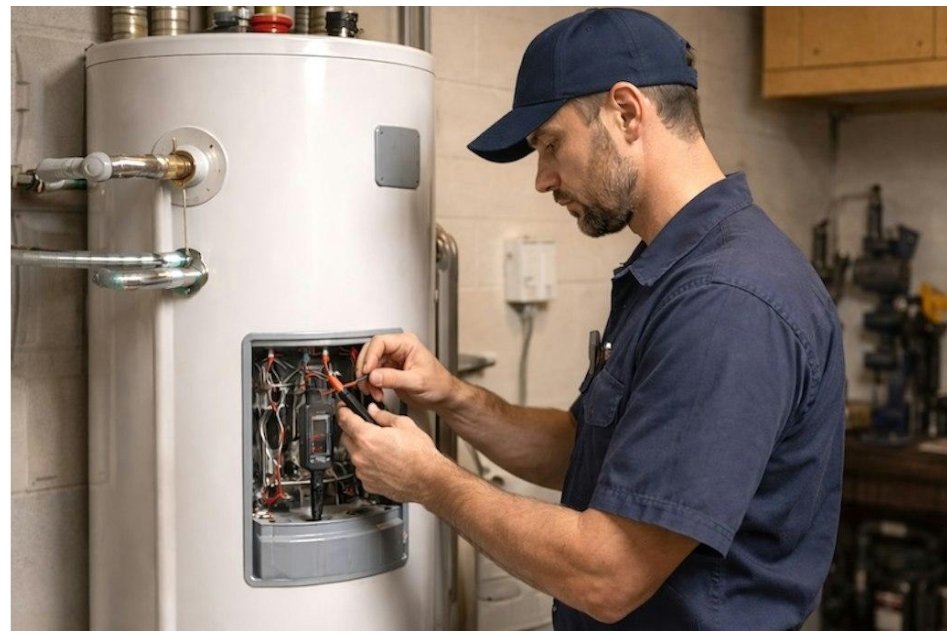
Electric water heaters use heating elements to warm the stored water. If an element fails, the appliance may produce insufficient hot water or none at all.
In some systems, one element may stop working while another continues operating. This can result in water that becomes warm but never reaches the expected temperature.
Thermostat Malfunctions
A thermostat regulates the water temperature. If it develops a fault or is incorrectly set, the heater may not operate as expected.
However, temperature problems should not automatically be attributed to the thermostat. A professional inspection may be needed to identify the actual cause.
Boiler or Heating System Faults
Some homes use boilers or combined heating systems to provide hot water. Problems with the ignition, controls, sensors, or internal components can interrupt hot water production.
If a boiler displays an error code, record the message and consult the manufacturer’s instructions. Do not remove protective covers or attempt internal repairs unless you are qualified to do so.
When a Plumbing Problem Is Responsible
Not every hot water interruption begins inside the water heater. The pipes carrying heated water can also develop problems.
A leaking hot water line may reduce pressure, waste water, and prevent hot water from reaching the intended outlets. Damaged insulation can also allow heat to escape, making water noticeably cooler before it reaches the tap.
Other possible plumbing issues include:
- Corroded hot water pipes.
- Loose or damaged pipe connections.
- Faulty isolation valves.
- Blockages caused by deposits.
- Leaking joints behind walls or beneath floors.
If a hot water pipe is damaged, the problem should be assessed quickly. Water escaping from concealed pipework can affect plaster, flooring, ceilings, and nearby electrical installations.
Warning Signs of a Hidden Hot Water Pipe Leak
Some pipe leaks are easy to identify because water is visible around a connection. Others remain concealed and produce indirect warning signs.
Look for unexplained damp patches, peeling paint, unusual sounds inside walls, or flooring that becomes swollen. A sudden increase in water consumption may also indicate that water is escaping somewhere within the plumbing system.
Pay attention to changes in hot water pressure. If pressure drops unexpectedly or water temperature fluctuates repeatedly, the system may require professional investigation.
Do not assume that every temperature fluctuation indicates a broken pipe. The water heater, mixing valve, and circulation system may also be responsible. An accurate diagnosis is necessary before deciding what needs to be repaired.
What to Do When There Is No Hot Water
A few basic checks can help narrow down the possible cause without putting anyone at risk.
Check the Energy Supply
If the water heater uses electricity, check whether the property has power and whether the appliance displays an error message. For gas-powered equipment, look for warning indicators and follow the manufacturer’s safety instructions.
Never attempt to repair gas connections, electrical components, or internal boiler parts yourself.
Inspect Accessible Valves
If it is safe, check whether visible isolation valves appear to have been closed accidentally. Do not force a stiff or damaged valve, as doing so may cause further problems.
Look for Visible Leaks
Inspect accessible areas around the water heater, exposed pipes, and connections. If water is leaking, isolate the supply if it is safe to do so and arrange professional assistance.
If water reaches electrical outlets, appliances, or wiring, keep away from the affected area and contact a qualified electrician or emergency service.
Arrange a Professional Inspection
When basic checks do not reveal the cause, a qualified plumber or heating specialist can inspect the system. If a pipe has burst or water is escaping, contacting a Wasserrohrbruch Notdienst can help arrange urgent assistance and prevent further damage.
Why Professional Diagnosis Saves Time and Money
Replacing a water heater without checking the plumbing system may not resolve the problem. Similarly, repairing a pipe will not restore hot water if the actual fault is inside the heating appliance.
A professional assessment considers the entire installation. Depending on the symptoms, the inspection may include checking water pressure, testing valves, examining visible pipework, and assessing the operation of the heating equipment.
If a hidden leak is suspected, specialised detection methods may help locate the damaged section without unnecessary removal of walls or flooring.
A clear diagnosis also helps determine whether a component can be repaired or needs replacement. This reduces the risk of spending money on work that does not address the original problem.
Preventing Future Hot Water Interruptions
Regular maintenance can help keep water heating and plumbing systems operating reliably.
Consider the following precautions:
- Arrange periodic servicing of boilers and water heaters.
- Check accessible pipes and connections for signs of leakage.
- Replace worn seals and deteriorated fittings.
- Keep exposed hot water pipes properly insulated.
- Pay attention to unusual noises and temperature changes.
- Investigate unexplained increases in water consumption.
- Avoid ignoring recurring pressure problems.
Water heaters should be maintained according to their manufacturer’s recommendations. Systems that contain stored hot water may also require specific checks to maintain safe and efficient operation.
Conclusion
A sudden loss of hot water can have several possible causes, ranging from a faulty thermostat to damaged pipework. Checking whether the problem affects the entire property, observing visible warning signs, and avoiding unsafe repairs can help homeowners respond sensibly.
The most important step is identifying the actual source of the problem. A qualified professional can determine whether the heating equipment, valves, or plumbing installation requires attention and recommend an appropriate solution.
If the issue involves a damaged or leaking water pipe, arranging assistance through Warmwasser geht nicht can help you find the relevant plumbing support. Prompt diagnosis and regular maintenance can restore household comfort while reducing the risk of more serious plumbing damage.