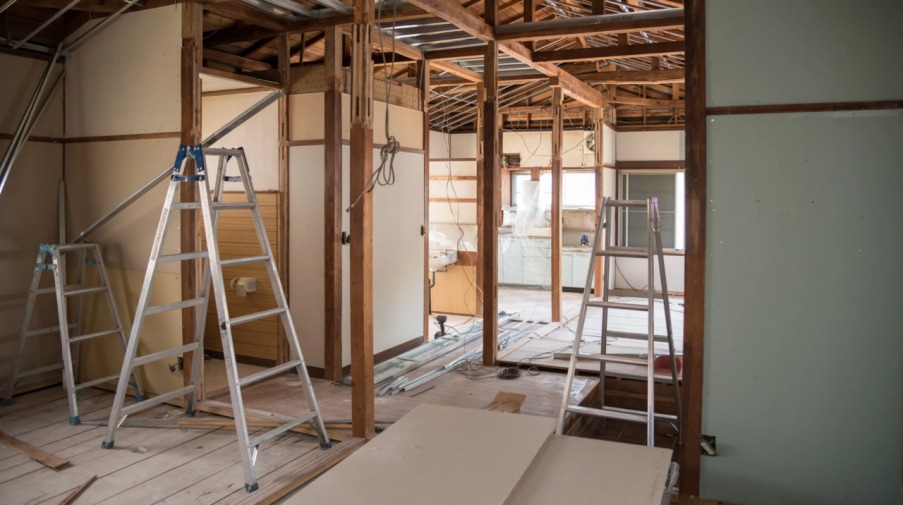
Few houses announce the moment they need serious work. The decision usually builds from a collection of smaller irritations that finally add up, and a home renovation by Castlehaven Construction often begins only after a homeowner recognizes the pattern. Knowing which signals matter helps separate a property that has genuinely reached that threshold from one where targeted repairs will hold for a few more years. The distinction carries real financial weight, since a decade of patches frequently costs more than one properly scoped project.
The Layout No Longer Matches How the Household Lives
Households change faster than floor plans do. A formal dining room used twice a year while three people work from the kitchen table is a layout problem, not a furniture problem. Closed-off kitchens, bedrooms converted into overflow storage, and a single bathroom serving four people all point toward reconfiguration rather than redecoration. When entire rooms get routinely avoided, the plan has stopped serving the household living inside it.
Repairs Are Arriving More Frequently
One failed water heater is maintenance. A pattern of plumbing calls, recurring roof leaks, and electrical issues appearing in different rooms suggests systems reaching the end of their service life together, which is common in houses built within the same few years. Totaling three years of repair spending brings the trend into focus. When those totals begin to approach a meaningful share of a planned renovation, continuing to repair piecemeal stops making financial sense.
Major Systems Are Past Their Expected Lifespan
Age alone justifies planning. Galvanized supply lines, cast iron drains, aluminum branch wiring, and panels without modern breaker protection all carry real risk regardless of whether they have failed yet. Furnaces and air conditioners typically run fifteen to twenty years, and original windows leak conditioned air continuously. A Castlehaven Construction kitchen remodeling project timed alongside that system work concentrates disruption into one period and takes advantage of trades already mobilized, which usually prices better than sequencing the same scope across several separate years.
Structural and Moisture Warning Signs
Some signals deserve immediate professional assessment. Doors that stick seasonally, floors that slope noticeably, stair-step cracking in masonry, and persistent musty odors in a crawlspace or basement all point toward conditions that worsen with time. Water intrusion in particular rarely resolves itself and quietly damages framing, insulation, and finishes. An inspection establishing what is stable and what is progressing should precede any cosmetic planning, since finishing over an active problem only hides it for a season.
Finishes Have Aged Enough to Affect Value
Dated surfaces influence appraisals and buyer perception well before they stop working. Original bathrooms, worn flooring throughout, and a kitchen with failing cabinet boxes reduce what a property commands in any market. Concentrating that work into one coordinated effort, rather than replacing pieces one at a time, tends to deliver a more cohesive result and a stronger return when the finishes finally reach the point of dragging value down.
A Timeline Long Enough to Benefit
Timeline shapes the entire calculation. A family expecting to remain seven or ten years can justify structural changes, additions, and full system replacement that would be difficult to recover on a sale within two years. If a move is likely soon, targeted updates to the highest-visibility spaces make more sense. Being honest about how long the household intends to stay prevents both overbuilding for a short horizon and underinvesting in a long one.
Conclusion
Readiness shows up as a pattern rather than a single event. Mismatched layouts, accelerating repair costs, systems past their expected lifespan, moisture concerns, and dated finishes each carry weight, and several appearing together make a strong case for one coordinated project. Documenting what has been spent, having conditions properly assessed, and matching the scope to how long the household plans to stay turns a vague sense of dissatisfaction into a decision that can be defended. The house signals when the time has come, provided the right things are being tracked.