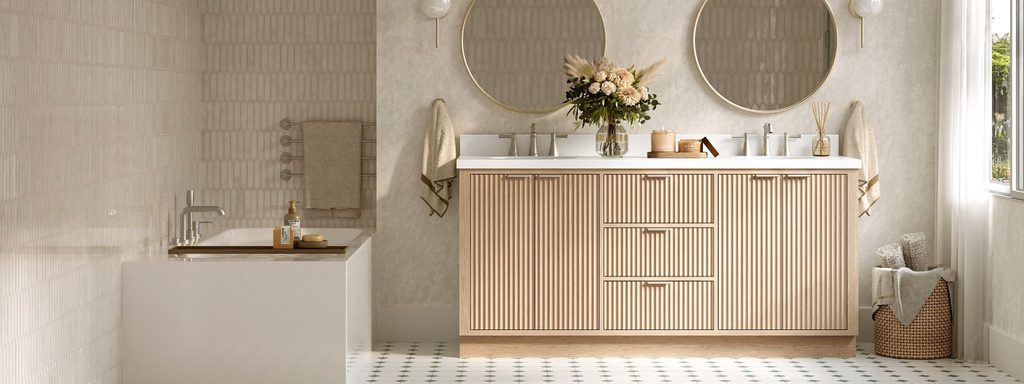
Modern wet rooms are moving beyond plain white surfaces and predictable fixture combinations. Designers are using layered material palettes to create bathrooms with more warmth, depth, and architectural character while maintaining a clean and contemporary appearance.
Wood stains, cool stone, porcelain tiles, and metal finishes can work together when each material has a clear role. Careful coordination prevents the bathroom from feeling too cold, too dark, or visually disconnected.
Balancing Warm Wood With Cool Architectural Materials
Natural oak and brown oak can introduce warmth into wet rooms dominated by concrete, marble, and porcelain. Their organic grain softens harder surfaces and gives bathroom cabinetry a furniture-like quality without taking away from the modern character of the space.
Oak creates a lighter and more relaxed appearance, making it useful for bathrooms that need warmth without feeling heavy. Brown oak offers deeper tones and stronger contrast, working particularly well against pale marble, concrete-look porcelain, or light-colored walls.
Metal finishes should complement the selected timber rather than compete with it. Brushed brass can enhance warmer wood tones, while black, brushed nickel, or chrome can create sharper contrast. Keeping one finish dominant helps maintain a controlled and intentional palette.
Protecting Wood Finishes in Humid Bathroom Environments
Wood can bring significant visual character to a bathroom, but moisture exposure requires careful specification. Vanity cabinetry should use protective finishing systems designed to reduce moisture penetration and help maintain the surface appearance through regular bathroom use.
Multi-coat protective finishes can provide an additional barrier between the wood and humid conditions. Proper sealing around vulnerable areas, combined with suitable construction methods, can help reduce finish degradation caused by repeated exposure to moisture and changing humidity levels.
Ventilation also plays an important role in protecting bathroom materials. Effective exhaust systems, adequate airflow, and prompt removal of standing water can support the long-term performance of cabinetry and other finishes. Designers should consider these factors alongside the visible wood stain.
Moving Beyond Standard White With Color
White remains popular because it creates a bright and clean appearance. Modern architectural bathrooms, however, are increasingly incorporating deeper shades that introduce personality while maintaining a sophisticated visual balance.
Sage green can create a calm, natural atmosphere that works especially well with oak, stone, and warm metal finishes. Midnight blue offers greater visual depth and can create an elegant backdrop for lighter marble, brushed metal, and warm lighting.
Matte black provides another strong option for designers seeking contrast. Used on cabinetry, frames, fixtures, or hardware, it can create a defined architectural statement against porcelain, pale stone, or lighter wood. Softer materials and sufficient lighting can keep darker palettes from feeling overwhelming.
Coordinating Color, Texture, and Metal Finishes
A successful material palette depends on more than matching colors. Texture also influences how materials interact. Grainy oak, polished marble, honed stone, matte porcelain, and brushed metal each reflect light differently, creating layers that add sophistication to a modern bathroom.
Architects can use these differences to establish visual hierarchy. A textured wood vanity can provide warmth, while a smooth stone countertop creates a clean transition above it. Metal hardware can then introduce a controlled accent without becoming another dominant element.
Lighting should be considered alongside the material palette. Warm illumination can emphasize brown oak and brass, while cooler lighting may enhance concrete, gray porcelain, and polished metal. Testing finishes under the bathroom’s actual lighting conditions can help prevent unexpected color shifts.
Creating Cohesion Through Material Selection
The strongest wet-room palettes usually begin with a clear hierarchy. Designers can select one primary material, a supporting surface, and one or two accent finishes. This creates enough contrast for visual interest without making the bathroom feel overly complicated.
Cabinetry can act as the bridge between different materials. A warm oak vanity can connect stone flooring with brass hardware, while a dark brown oak base can provide contrast against pale marble and neutral porcelain. Repeating subtle tones elsewhere helps strengthen the connection.
Proportion also matters when combining materials. A dramatic stone slab may need quieter cabinetry, while a richly stained vanity can benefit from simpler walls and flooring. Giving each material enough visual space allows its texture and color to remain noticeable without competing with surrounding elements.
How ARIEL Bath Supports Precise Material Specification
ARIEL Bath offers a varied vanity finish collection that can help architects coordinate cabinetry with carefully planned bathroom material palettes. Different wood tones and painted finishes provide flexibility when working with marble, porcelain, concrete-inspired surfaces, and selected metal accents.
The vanity can serve as a central reference point for the room’s color and texture direction. Natural oak can reinforce a softer organic palette, while brown oak can provide deeper contrast against light stone. Darker finishes such as midnight blue or matte black can establish a stronger architectural statement.
These options make architectural bathroom vanity finishes an important part of the specification process rather than simply a final decorative decision. By coordinating vanity color with countertops, wall materials, flooring, mirrors, and hardware, architects can create a unified wet-room design with a clear material identity.
Final Thoughts
Modern wet rooms benefit from palettes that balance warmth, contrast, and durability. Natural oak and brown oak can soften concrete, marble, and porcelain, while sage green, midnight blue, and matte black offer sophisticated alternatives to standard white.
Protective finishes and proper ventilation help support wood cabinetry in humid environments, while coordinated metals and lighting complete the visual scheme. With careful specification, the vanity can become the central element connecting the bathroom’s materials into one cohesive architectural composition.