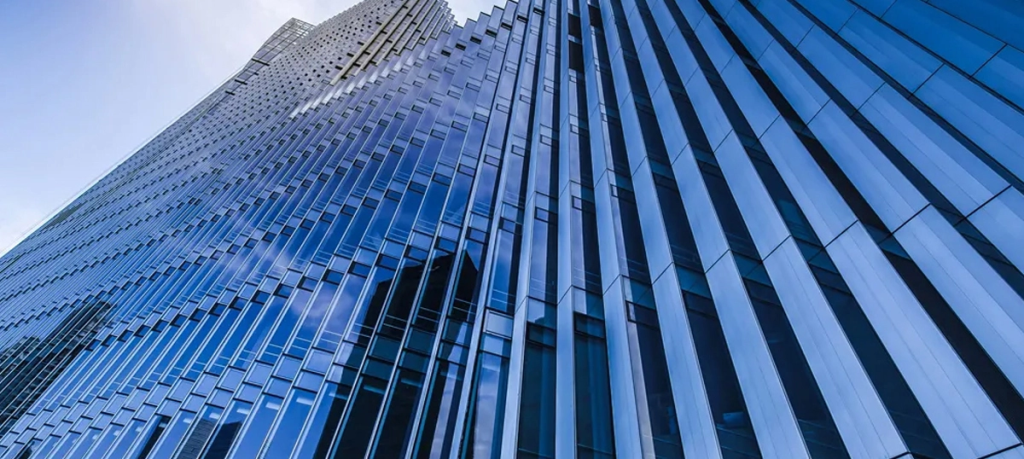
The most striking luxury residences built in the last decade share a common architectural ambition: the elimination of interior columns. Walk into a cliffside villa overlooking the Mediterranean, a cantilevered glass pavilion in the Hollywood Hills, or a beachfront estate along the Gold Coast, and the first thing that registers is not a single piece of furniture or art. It is the sheer openness of the space itself — a living area that stretches thirty, forty, even fifty feet without a single vertical support interrupting the view.
This effect is not achieved through creative interior design. It is made possible by structural engineering decisions made long before the first wall is painted or the first fixture is installed. At the core of these column-free luxury residences is a material that has shaped commercial and industrial architecture for over a century but is now being reinterpreted for the world of high-end residential design: structural steel.
The convergence of long-span steel framing and floor-to-ceiling glass curtain wall systems has become one of the most significant developments in contemporary luxury architecture. Together, they allow designers to dissolve the boundary between interior living space and the surrounding landscape — creating residences that feel less like enclosed shelters and more like elevated platforms open to the sky, the ocean, or the city skyline beyond.
Why Steel Frames Are Replacing Concrete in High-End Residential Design
For decades, reinforced concrete dominated residential construction at every price point. It is strong, relatively inexpensive, and well understood by builders worldwide. But concrete has a fundamental limitation when it comes to luxury architecture: it requires columns. The farther a concrete beam needs to span, the deeper and heavier it becomes, and beyond a certain distance — typically around twenty to twenty-five feet for conventional residential construction — intermediate columns become structurally unavoidable.
Steel changes that equation entirely. A steel I-beam or welded plate girder can span forty feet or more while maintaining a profile shallow enough to be concealed within a standard floor depth. Steel’s modulus of elasticity is roughly three times that of aluminum and far exceeds that of reinforced concrete on a strength-to-weight basis, meaning steel members can carry the same loads with significantly less material. In practice, this translates directly into the architectural freedom that luxury buyers increasingly demand: living rooms without columns, kitchens that open seamlessly into dining areas, and master suites where the only thing between the occupant and the horizon is a single pane of glass.
The shift toward steel framing in high-end residential projects has accelerated as fabrication technology has advanced. Computer numerical control (CNC) cutting, robotic welding, and Building Information Modeling (BIM) now allow steel components to be manufactured to millimeter tolerances offsite and assembled rapidly on location. This precision is particularly valuable for luxury homes, where construction tolerances directly affect the fit of glass curtain wall systems, stone cladding, and bespoke interior finishes.
The Structural Logic Behind Column-Free Living Spaces
Achieving a truly column-free open-plan interior requires more than simply substituting steel beams for concrete ones. The entire structural system must be rethought from the foundation up, with loads channeled to the perimeter of the building rather than distributed across a grid of internal supports.
In a typical long-span luxury residence, the primary structural strategy involves deep steel portal frames or moment-resisting frames positioned at the building’s edges. These frames are designed to resist both gravity loads and lateral forces — wind and seismic — without relying on interior bracing or shear walls. The result is an interior volume that is entirely free of structural intrusions, allowing architects and interior designers to arrange spaces according to function and aesthetics rather than around the constraints of load-bearing walls.
For spans exceeding forty feet, engineers may turn to steel trusses — either exposed as a design feature or concealed within the roof structure. Vierendeel trusses, which use rigid connections instead of diagonal bracing, are particularly popular in luxury residential applications because they allow large openings within the truss depth itself. A Vierendeel truss running along the ceiling of a great room, for example, can accommodate clerestory windows or integrated lighting systems while simultaneously spanning the full width of the house.
Cantilevered sections — where a portion of the floor plate extends beyond its supporting columns — are another hallmark of steel-framed luxury design. Cantilevers of fifteen to twenty feet are routinely achieved with steel, creating dramatic overhangs that shelter outdoor terraces or infinity pools below. These projections would be impractical or impossibly expensive in concrete but are well within the capacity of properly engineered steel members.
Glass Curtain Walls: Turning Structure into Spectacle
A column-free interior achieves its full visual potential only when the perimeter walls match the openness of the plan. This is where glass curtain wall systems become essential. Unlike traditional windows, which are punched into load-bearing walls and limited in size by the structural demands of the surrounding masonry or framing, curtain walls are non-structural cladding systems hung from the building’s steel frame. They carry no load other than their own weight and the lateral forces of wind, and they can span from floor slab to floor slab — or, in single-story luxury pavilions, from foundation to roofline — without interruption.
Modern steel-framed curtain wall technology has advanced remarkably. Single-member steel mullions can now span up to forty feet without splicing, and because steel’s stiffness is roughly three times greater than that of aluminum, the mullion profiles can be nearly fifty percent shallower than their aluminum equivalents. The practical effect is transformative: thinner framing means more glass, and more glass means an unbroken visual connection between interior living space and the exterior environment.
For luxury residences in coastal, mountainous, or otherwise dramatic settings, this visual continuity is not merely an aesthetic preference — it is the entire point of the architecture. A hillside villa in Ibiza with a forty-foot wall of glass overlooking the sea delivers a fundamentally different living experience than one with conventional windows. The glass curtain wall turns the landscape itself into the primary design element of the interior, and the steel frame behind it is what makes that transformation structurally possible.
High-performance insulating glass units (IGUs) have kept pace with the structural ambition. Triple-glazed units with low-emissivity coatings, argon gas fills, and warm-edge spacers now deliver thermal performance that rivals insulated solid walls, allowing architects to specify full-height glazing even in climates with extreme temperature differentials. Electrochromic (smart) glass that tints on demand adds another layer of control, reducing solar heat gain without compromising the view.
Where Engineering Meets Customization
Every luxury residence is, by definition, a one-off project. No two sites are identical, no two clients share the same vision, and no two structural solutions are interchangeable. This reality places a premium on the ability to deliver highly customized structural systems that are engineered to the specific demands of each project — from soil conditions and seismic zones to architectural geometry and client preferences.
Leading steel structure manufacturers have responded to this demand by developing integrated design-to-fabrication workflows that treat each project as a unique engineering challenge. Firms specializing in custom metal buildings have expanded their capabilities well beyond standard warehouse and industrial construction into the realm of architecturally demanding residential projects. These manufacturers leverage BIM-driven design, CNC fabrication, and modular pre-assembly to deliver steel frameworks that meet the exacting tolerances required by glass curtain wall installations — where even minor deviations can compromise weatherproofing, thermal performance, and visual alignment.
The advantages of working with a manufacturer that controls the entire chain — from structural engineering and detailing through to fabrication and delivery — are particularly evident in international luxury projects, where coordination across multiple time zones, regulatory environments, and construction cultures adds layers of complexity. A single-source provider can ensure that every steel member arrives on site ready to assemble, with connections pre-drilled, welds pre-inspected, and finishes pre-applied, minimizing the margin for error during the critical assembly phase.
Sustainability and the Steel-Glass Luxury Home
The environmental credentials of steel framing are increasingly relevant to luxury buyers, many of whom are pursuing LEED, BREEAM, or Passive House certification for their residences. Steel is one of the most recycled materials on earth — over ninety percent of structural steel is recycled at end of life — and modern electric arc furnace (EAF) production can manufacture new steel from scrap with a fraction of the carbon emissions associated with traditional blast furnace methods.
Prefabricated steel framing also reduces construction waste dramatically. Because components are cut and welded in a factory environment, material utilization rates exceed ninety-five percent, and virtually all offcuts are returned to the recycling stream. On-site construction timelines are compressed as well, reducing the environmental footprint of construction activity itself — a meaningful consideration for projects in ecologically sensitive coastal or alpine locations.
When combined with high-performance glass curtain walls, steel-framed residences can achieve remarkable energy efficiency. The thermal mass of concrete is replaced by advanced insulation systems within the steel envelope, and the precisely engineered glass panels minimize air infiltration while maximizing controlled daylighting. The result is a home that looks and feels open to the elements but performs, thermally, like a tightly sealed modern building.
The Future of Column-Free Luxury Living
The trajectory of luxury residential architecture points clearly toward ever-greater openness, transparency, and integration with the natural environment. As structural steel technology continues to advance — with higher-strength alloys, more sophisticated connection systems, and increasingly automated fabrication processes — the practical limits of column-free design will continue to expand. Spans that are considered ambitious today will become routine within a decade.
At the same time, glass technology is evolving to meet the demands of these larger openings. Vacuum-insulated glazing, dynamic electrochromic panels, and structurally bonded glass systems are all pushing the boundaries of what a building envelope can do. The steel frame provides the skeleton; the glass provides the skin. Together, they are redefining what a luxury residence can be — not a fortress walled off from the world, but a precisely engineered platform designed to immerse its occupants in the landscape that surrounds it.
For architects, developers, and discerning homeowners, the message is clear: the structural decisions made at the earliest stages of design are what ultimately determine the spatial quality, visual drama, and long-term value of a luxury home. And increasingly, those decisions begin with steel.