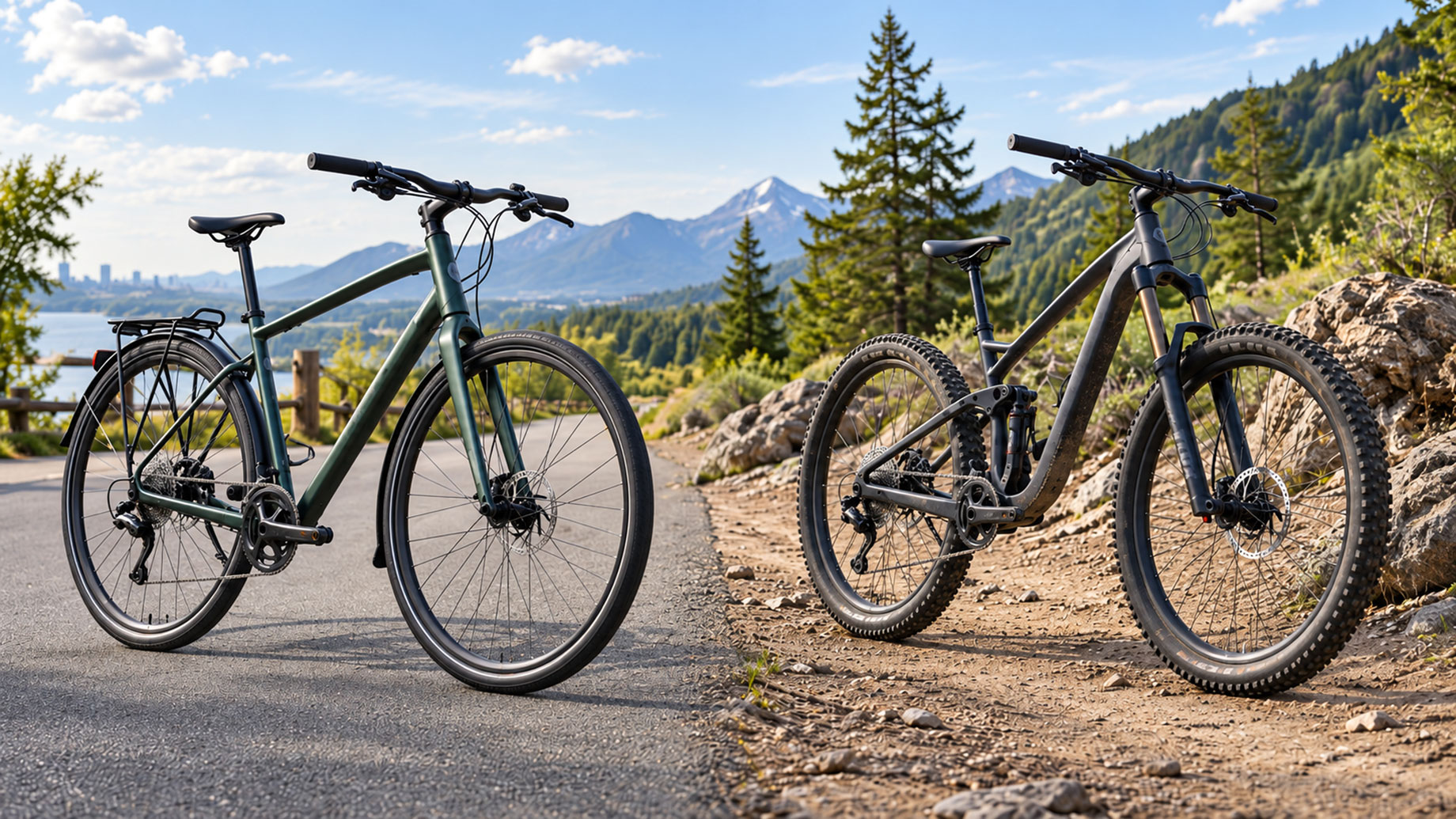
A hybrid bike is usually better for commuting and everyday pavement, while a mountain bike is the stronger choice for rough trails, loose surfaces, and steeper terrain. The right option depends on where you ride most often, not which bike looks more capable.
Riders comparing current sizes and riding styles can explore glerc bikes near the beginning of their search. Before choosing, consider your normal route, distance, hills, storage needs, and the amount of maintenance you are prepared to handle.
Hybrid vs. Mountain Bike at a Glance
Hybrid bikes combine features associated with road, comfort, and mountain bikes. Most use flat handlebars, moderately wide tires, and an efficient riding position suited to streets and bike paths.
Mountain bikes are designed for off-road control. Wider treaded tires add traction, while lower gearing helps riders climb. Many models also include front suspension to manage roots, rocks, and rough ground.
| Feature | Hybrid Bike | Mountain Bike |
|---|---|---|
| Best Terrain | Pavement, bike paths, and firm gravel | Dirt, rocks, roots, and uneven trails |
| Riding Position | Upright to moderately forward | Stable and off-road focused |
| Tires | Moderate width with light tread | Wide with deeper tread |
| Suspension | Often rigid | Commonly front suspension |
| Gearing | Suited to city riding and moderate hills | Lower gears for steeper climbs |
| Bike Weight | Usually lighter | Usually heavier |
| Main Strength | Efficiency and versatility | Traction and rough-terrain control |
These are general differences. Some hybrids have wide tires, while some entry-level mountain bikes use rigid forks. Always check the actual components and intended use of a specific model.
Which is Better for Commuting?
A hybrid bike is the better commuter for most riders. Its smoother tires require less effort on pavement, and its lighter build can make starts, hills, and carrying the bike easier.
The riding position also works well in traffic. Flat or slightly swept-back handlebars provide familiar steering, while a moderately upright posture helps the rider watch cars, pedestrians, and intersections.
Many hybrid frames include mounting points for fenders and a rear rack. These features make it easier to carry work supplies, groceries, or a change of clothes without wearing a heavy backpack.
A mountain bike can still handle a commute, especially when the route includes broken pavement, dirt shortcuts, or rough shoulders. On smooth streets, however, deep tire tread and basic suspension may add weight and rolling resistance without providing much benefit.
Which is Better for Trails?
Mountain bikes have the clear advantage on real trails. Their wider tires provide extra grip on loose dirt, while the frame and riding position offer greater control over uneven ground.
Front suspension can reduce some of the impact from rocks, roots, and ruts. Lower gears also help riders maintain a manageable pedaling effort on steep climbs.
A hybrid can handle packed gravel, maintained park paths, and dry rail trails when its tires provide enough width and traction. It is not intended for large drops, rocky singletrack, or aggressive downhill riding.
Before riding off-road, make sure the bike matches the trail difficulty. A bicycle with a mountain-style appearance is not automatically built for jumps or technical terrain.
Which is Better for Everyday Riding?
Hybrid bikes are often more practical when one bicycle must cover several needs. The same bike can handle a weekday commute, a fitness ride, a grocery trip, and a relaxed weekend route.
A mountain bike makes more sense when off-road riding is the main priority and pavement is only part of the trip. It also suits riders who prefer wide tires and a more planted feel, even if that means accepting extra weight.
Distance matters as well. Hybrid bikes generally feel more efficient during longer paved rides. Mountain bikes offer greater comfort and control when those miles include rough ground, but they may feel slower on smooth roads.
Neither option is automatically more comfortable. Frame size, saddle position, handlebar reach, tire pressure, and riding posture have a greater effect than the category name alone.
Compare the Features That Matter
Begin with fit. Check the manufacturer’s recommended rider height, then confirm standover clearance, saddle adjustment, and handlebar reach. The rider should be able to operate both brakes without stretching.
Next, consider the gears. Flat routes may need only a simple drivetrain, while steep streets and trails benefit from an easier low gear. Useful gear range matters more than the total number of speeds.
Tires should match the surface ridden most often. Light tread rolls efficiently on pavement, while deeper tread improves grip on dirt. Wider tires can add comfort, but oversized off-road tires may make daily street riding feel sluggish.
Suspension should also have a clear purpose. A rigid fork is lighter and simpler for pavement and smooth paths. Front suspension becomes worthwhile when rough terrain is a regular part of the ride.
Finally, consider the complete setup. Commuters may need lights, a lock, fenders, and cargo storage. Trail riders should prioritize dependable brakes, suitable tires, a helmet, and repair supplies.
Make the Final Choice
Choose a hybrid bike if most rides happen on streets, bike lanes, paved paths, or firm gravel. It is usually the better option for commuting, errands, casual fitness, and families who want one versatile bicycle.
Choose a mountain bike if you regularly ride dirt trails, loose surfaces, roots, rocks, or steep off-road climbs. Its added traction and control are worth the extra weight when the terrain requires them.
If your week includes both, let the more demanding surface decide. A hybrid can manage light gravel, but it cannot replace a trail-ready bike on technical ground. A mountain bike can travel on pavement, although it may require more effort.
Conclusion
For commuting and mixed everyday use, a hybrid bike is usually the smarter choice. For rough trails and off-road exploration, a mountain bike provides the control and traction you need. Start with your real route, confirm the fit, and pay for features that support the riding you actually plan to do.
