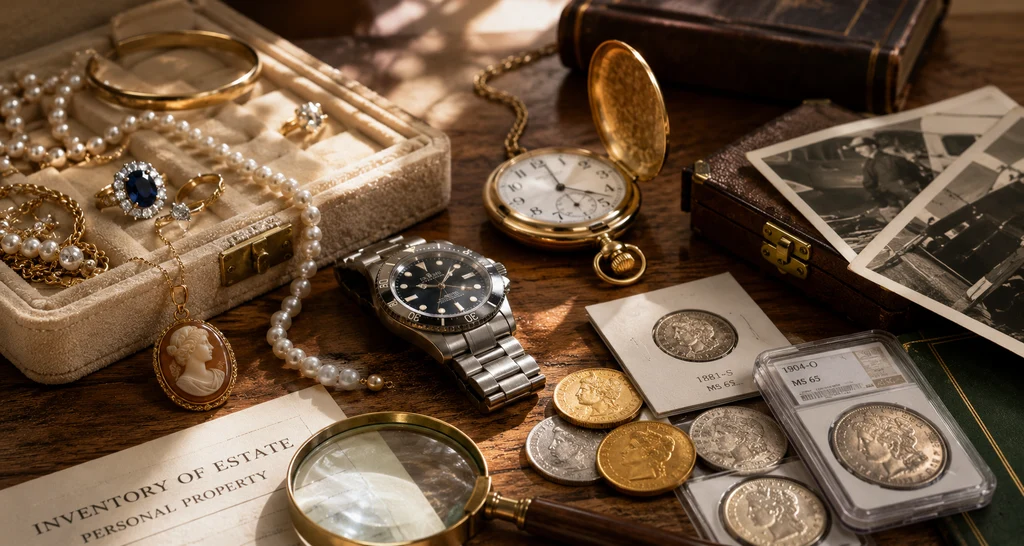
Inheriting gold jewelry and collectible coins can bring both emotional significance and practical responsibilities. Family rings, necklaces, commemorative coins, and older currency may carry memories that cannot be measured in money alone. When a household is preparing for a move, downsizing, or an estate clearout, organizing these belongings carefully can help prevent accidental losses and rushed decisions.
The best approach is to create a clear inventory, preserve any available history, protect delicate items, and understand that precious metal content does not always reflect an item’s full collectible value. A methodical process gives families more time to decide what to keep, share, evaluate, or sell.
Start by Gathering and Sorting Everything
Before packing, collect inherited jewelry and coins from drawers, safes, boxes, display cabinets, and other storage areas. Keep the initial sorting process simple. The goal is to establish what exists before deciding what anything is worth.
Separate items into broad categories, such as gold jewelry, silver jewelry, collectible coins, sets or collections, and unidentified objects. Keep matching pieces together when possible, including earrings, original coin holders, presentation boxes, and accompanying paperwork.
Avoid mixing loose coins with jewelry or placing valuable objects into unmarked containers. If ownership or family arrangements are unclear, keep the relevant items together and document their current location until the appropriate people can clarify the situation.
Create a Detailed Photo Inventory
A photo inventory is one of the most useful tools for managing inherited valuables. It creates a visual record that can be reviewed during packing, transportation, and later evaluation.
Photograph each item individually against a plain background with adequate lighting. For jewelry, capture the overall design, any visible hallmarks, clasps, gemstones, and distinctive features. For coins, photograph both the front and reverse sides without removing protective holders unnecessarily.
Assign every item a unique identification number, such as J-001 for jewelry or C-001 for coins. Use the same number in your written inventory and on the corresponding storage container.
Record practical details, including the item’s description, approximate dimensions, visible markings, condition, and current storage location. You can also note whether the item has a matching box, certificate, receipt, or family document.
Do not assume that a photograph proves authenticity or establishes market value. Its purpose is to document what you have and help you track each object throughout the moving process.
Preserve Provenance and Family History
Provenance refers to the available history of an item’s ownership and origin. For inherited jewelry and coins, this information may help explain where an object came from, when it entered the family, or whether it was previously documented or evaluated.
Look for purchase receipts, old photographs, insurance schedules, certificates, coin collection notes, and correspondence. Keep these materials associated with the relevant items, either in clearly labeled folders or through digital records linked to the inventory numbers.
Family recollections can also be useful. Someone may remember that a necklace belonged to a grandparent or that a coin collection was assembled over several decades. Record such information as family history rather than presenting an unverified account as established fact.
Never invent missing dates, previous owners, mint origins, or authenticity claims. If information is uncertain, label it accordingly. Preserving what is known—and distinguishing it from what is merely suspected—creates a more reliable record for future decisions.
Avoid Cleaning Coins and Altering Their Condition
Cleaning collectible coins is a common mistake during household clearouts. A coin may look brighter after polishing, but cleaning can leave scratches, remove surface characteristics, or otherwise damage the original finish. Such changes may reduce collector interest and potentially affect value.
Avoid household cleaners, polishing cloths, abrasive materials, and improvised treatments. Do not rub a coin to remove tarnish or fingerprints. Handle coins as little as possible, preferably by their edges, with clean, dry hands or suitable gloves when appropriate.
Keep coins in their existing protective holders unless a qualified professional advises otherwise. If a coin is loose, place it in an appropriate nonreactive holder rather than allowing it to move freely among other objects.
Jewelry requires a different approach. Some pieces may tolerate routine care, while antique settings, pearls, delicate gemstones, and certain finishes can be damaged by unsuitable cleaning methods. When an item’s materials or condition are uncertain, leave it untouched until you can obtain suitable guidance.
Understand Collectible Value Versus Metal Value
Gold jewelry and collectible coins can have more than one source of value. Understanding the distinction helps prevent important items from being treated as ordinary scrap.
For gold jewelry, metal value generally depends on the item’s gold content, weight, and the applicable market price. Gold purity is often indicated by a hallmark, such as 375, 585, or 750, although markings should not be treated as conclusive proof of composition. Gemstones, craftsmanship, age, design, and buyer demand may also influence what a particular piece is worth.
Coins require additional care. Their value may depend on denomination, date, mint mark, rarity, condition, authenticity, historical significance, and collector demand. A coin containing a modest amount of precious metal may have collectible value beyond its metal content, while another coin may be valued primarily for its material.
Consequently, weighing a coin or checking its metal composition cannot establish its complete market value. Likewise, an old appearance does not automatically make a coin rare or valuable.
Obtain an Evaluation Before Deciding What to Keep or Sell
Once the inventory is organized, consider obtaining an evaluation for items whose value or significance is uncertain. A knowledgeable professional can help distinguish potential collectible interest from ordinary metal value and explain which characteristics may affect an item’s assessment.
For an initial point of reference, you can contact US Gold and Coin to discuss an evaluation before deciding what to keep or sell. Prepare your photographs, descriptions, existing documentation, and questions in advance. Ask what the evaluation covers, whether any fees apply, and whether the assessment is intended for a potential purchase, insurance documentation, or another purpose.
An evaluation is not necessarily the same as an independent appraisal. If you need documentation for insurance, estate administration, or another formal purpose, clarify the intended use and seek a suitably qualified professional where appropriate.
Avoid making an immediate decision simply because an offer is available. You can take time to review the information, seek another independent opinion, and consider an item’s personal importance before choosing a course of action.
Store and Transport Items Securely
Proper storage protects both the objects and the records associated with them. Keep jewelry in separate compartments or soft pouches to reduce scratching and tangling. Store delicate pieces away from moisture, excessive heat, and direct sunlight where these conditions could cause damage.
Coins should remain in suitable holders and be protected from unnecessary handling, abrasion, and damp conditions. Avoid storing loose coins together in a single container where they can strike one another.
For a household move, use secure, clearly organized containers and maintain a separate inventory of their contents. Do not write conspicuous descriptions of valuable items on exterior boxes. Keep valuables under appropriate personal control rather than placing them casually among general moving supplies.
Store photographs, inventory records, receipts, and certificates securely, with a backup of important digital files. If the collection is substantial, consider appropriate insurance and secure storage arrangements based on its assessed value and your circumstances.
Compare Evaluations Without Rushing
Receiving one evaluation does not mean you must sell. When appropriate, obtain more than one opinion and compare the basis of each assessment. Ask whether the figure reflects precious metal content, potential collectible value, an estimated retail value, or an actual purchase offer.
These figures may serve different purposes and should not automatically be treated as equivalent. Ask about fees, deductions, payment terms, and any conditions attached to an offer. Make sure you understand what is being purchased and whether the transaction covers individual pieces or the entire collection.
Allow time for family discussions, particularly when objects have sentimental significance or multiple people may have an interest in them. Keep a written record of any decisions and the items involved.
Make the Final Decisions Carefully
Organizing inherited gold jewelry and collectible coins before a move or estate clearout is ultimately about preserving options. A photo inventory, accurate records, careful handling, secure storage, and thoughtful evaluations make it easier to understand the collection without rushing into irreversible choices.
Some pieces may be worth keeping for their family history, while others may be suitable for sharing, donating, insuring, or selling. The right decision will depend on the item’s characteristics, the family’s priorities, and the information available.
By taking a structured approach, households can protect inherited belongings, reduce confusion during a move, and make informed decisions at a manageable pace.