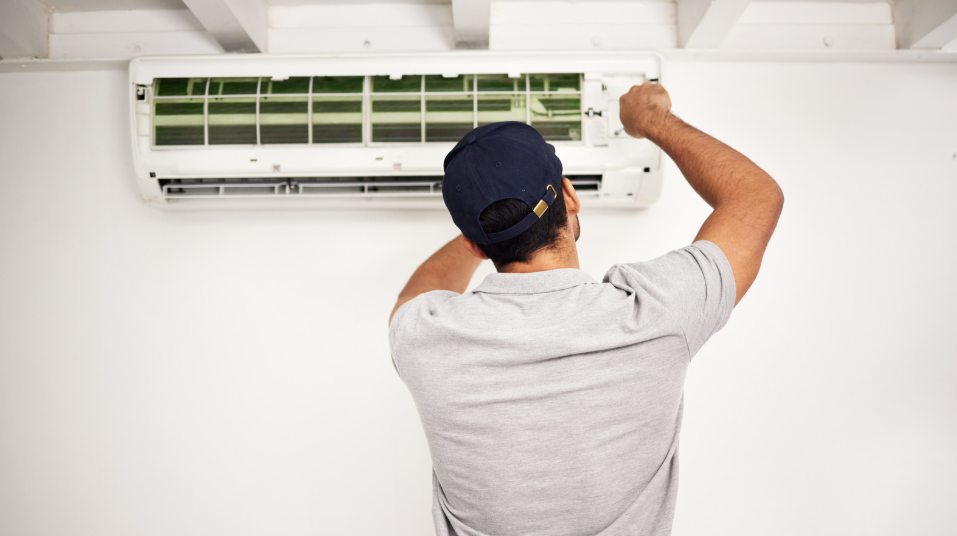
A ductless system earns its reputation on quiet operation and precise room by room control, and the filters inside each indoor head are what keep it there. Many owners assume that the absence of ducts means the absence of upkeep, yet those thin mesh screens sit directly in the path of every cubic foot the unit handles. Anyone weighing ductless AC services by Total Comfort Cooling & Heating soon learns the same lesson: a clean filter is the difference between a unit that performs as designed and one that quietly declines over a single season.
Why Ductless Filters Behave Differently
A central system draws air through one thick filter at the return. A ductless head does the opposite, pulling air through fine washable screens mounted just behind the front panel of each unit. The surface area is small, the media is thin, and the screen sits inches from the evaporator coil it protects. That closeness means contamination reaches the coil quickly once the screen loads, which is why cleaning intervals here are measured in weeks rather than months.
What Collects Inside an Indoor Head
Homes in this region contribute humidity, salt air, fine sand, and heavy pollen for much of the year. Pet dander and cooking oils add a sticky film that traps particles instead of letting them fall away. The result is a screen that looks lightly dusted from the front while the reverse side carries a dense mat. A technician who opens a neglected head often finds buildup on the blower wheel and coil fins as well, which no amount of surface cleaning will reach.
The Effect on Output and Energy Use
Restricted airflow across the evaporator lowers the volume of air the unit can condition, so a room takes longer to reach its setpoint. Longer run times raise electricity use while delivering less comfort. Reduced flow also drops coil temperature toward freezing, and ice on the evaporator halts heat transfer completely. An owner usually notices weaker air from the vent first, then a gradual rise in the monthly bill with no other obvious cause.
Protecting the Compressor and Extending Equipment Life
Every restriction upstream pushes strain downstream. Low airflow returns refrigerant to the compressor at the wrong temperature and pressure, and sustained operation under those conditions shortens compressor life considerably. Total Comfort Cooling & Heating treats correct airflow across the coil as a baseline requirement, because it sits at the center of how long a ductless system lasts and how efficiently it runs.
Indoor Air Quality Throughout the Home
A loaded filter no longer captures what it was installed to capture, and particles that slip past settle on the wet coil instead. Damp organic material on a cooling surface encourages microbial growth, which is the usual source of the musty smell that appears when a ductless unit starts up. Clean screens and periodically cleaned coils keep that odor from forming and hold particulate levels down in the rooms these systems serve most.
Professional Cleaning Schedules
Rinsing the visible screens addresses only part of the system. Full service includes removing the front panel, cleaning the blower wheel, treating the evaporator coil, flushing the condensate line, and verifying refrigerant charge across every indoor head. Most homes benefit from professional attention twice a year, with more frequent visits where pets, coastal exposure, or heavy occupancy speed up buildup. Documented findings make gradual changes between visits visible rather than surprising.
Conclusion
Filters are the smallest components in a ductless system and the ones with the largest influence on how it performs. Loaded screens cut airflow, raise energy use, freeze coils, strain compressors, and let contamination reach surfaces that are hard to clean once affected. Regular attention reverses all of it at a fraction of the cost of repair. A homeowner who keeps a consistent professional service schedule holds operating costs steady and reaches the full service life the equipment was engineered to deliver.