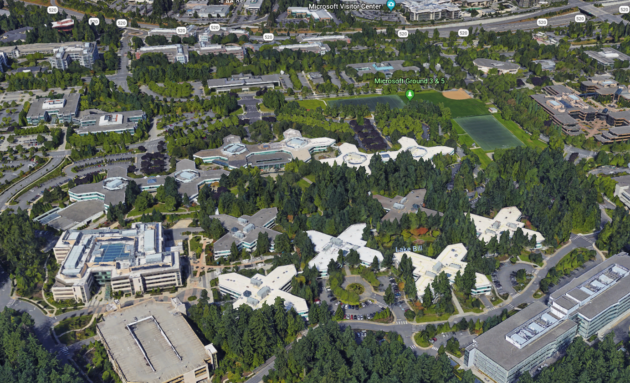
Microsoft compensation cycles move Redmond’s housing market on a clock most cities don’t have to worry about. There’s a lot more information floating around in local listings than you’d see in a typical relocation market. Microsoft’s Eastside footprint isn’t shrinking despite remote work reshaping so much of the tech sector, as Redmond Town Center and Millennium Corporate Park combine to absorb close to 880,000 square feet of reoccupied office space. Those buyers who keep an eye on the footprint for clues about demand are on the right track.
Why RSU Income Complicates Early Offers
For new hires, restricted stock units aren’t counted toward mortgage qualification, so lenders size loans based on salary and bonus alone. It’s common for relocating buyers to budget a refinance when their two years of vesting have built up a track record a lender can use.
In Washington, there’s no personal income tax, so take-home pay goes farther than the base number alone would suggest, and that gap often shows up in what transferring employees are willing to offer on a home near Education Hill or downtown.
What the Eastside Supply Problem Looks Like
Office vacancy across the Eastside sat near 21.8 percent at the end of last year, even as Microsoft kept renewing space, a split that confuses buyers used to reading office numbers and housing numbers as the same signal. Land on the Eastside cannot expand the way a Phoenix suburb can, bounded by Lake Washington on one side and protected hillside on the other, so new housing supply stays limited even when hiring accelerates.
That scarcity is a bigger driver of Redmond pricing than any single Microsoft earnings report, and buyers who treat the two as interchangeable usually misjudge how much room they have to negotiate.
Where Transferring Buyers Should Look First
A transferring employee mapping out the Eastside before the first flight out typically wants to settle a short set of questions early:
- Which commute route actually applies, since a Redmond campus badge does not guarantee a Redmond commute once building assignments shift.
- Whether Lake Washington School District boundaries, not just the city line, define the neighborhood worth paying a premium for.
- How the 2 Line light rail extension changes which Eastside suburbs now compete directly with Redmond for buyers.
- What a relocation package actually covers, since Microsoft’s point-based benefit through its internal mobility platform works differently than a traditional lump sum.
The average buyer lands at Seattle-Tacoma International Airport for a single home-finding trip doesn’t have three days to test every commute. Corporate chauffeur services like Seattle Black Limo move employees between Sea-Tac, temporary housing near South Lake Union, and showings scattered from Kirkland to Sammamish all in one day.
How Education Hill Became a Premium Address
Education Hill carries a measurable price premium tied almost entirely to school assignment, not to square footage or lot size, the kind of premium a relocating family often underestimates until they run the math on a decade of tuition savings.
Buyers comparing Redmond against Bellevue frequently find Bellevue carries the higher ceiling price, while Redmond offers a shorter commute to the main Microsoft campus and a downtown core still being rebuilt around new retail and housing. Neither city is simply cheaper or better, the comparison depends entirely on where the job badge actually swipes each morning.
Redmond Rewards Buyers Tracking the Right Signal
Touring Redmond, Kirkland, and Bellevue back to back in a single day is realistic with a driver who already knows which bridge crossings back up during the afternoon badge-swipe rush. Seattle Black Limo has carried corporate clients through that exact Eastside loop for over a decade, long enough to know that a 9 a.m. showing on Education Hill and a 2 p.m. showing in downtown Kirkland can both happen without missing either one.
Buyers who understand the vesting schedule, the school boundary lines, and the real limits on Eastside land tend to make offers that hold up, long after the moving boxes are gone. Readers can follow ongoing relocation and market coverage across the Eastside as the picture keeps shifting.