By Will Grauberger, Founder and CEO of N1 Services
I have spent 15 years in the HVAC industry, and that experience spans field installation, service diagnostics, distributor-side technical training and multi-state commercial service management. Before founding my own company, I served as Director of Technical Service and Training at CFM Distributors, where I oversaw about $60 million in annual equipment post-sales support and trained contractors across Iowa, Nebraska, Kansas and Missouri.
That mix of experience shapes how I look at a failing air conditioner. A technician in the field sees one system at a time. A distributor sees patterns across thousands of installations, including which parts fail early, which installation mistakes cause repeat calls, and which repairs make sense on older equipment. Both views matter when a homeowner in Lee’s Summit is standing in a hot house trying to decide what to do next.
Why We Built a Multi-Trade Team
Our company, N1 Services, is a home services contractor based in Raytown, Missouri, serving Lee’s Summit, Blue Springs, Independence, Grain Valley, Pleasant Hill and nearby communities in the Kansas City Metro East area. We handle HVAC, electrical and plumbing work with one team operating out of one facility. Our staff includes a licensed master electrician, an HVAC service technician, an HVAC installer, a customer service manager and an operations manager, and plumbing is expanding into a full division in fall 2026.
The multi-trade approach reflects a simple fact. Many home problems cross trade lines. A furnace issue may involve a gas line, an outdoor AC unit may need a new electrical disconnect, and a high-efficiency system may require changes to drainage. When one team handles all of it, the homeowner does not have to coordinate three separate contractors.
Credentials Behind the Work
I hold a Master Mechanical License in Missouri and an EPA Universal Refrigerant Certification, and I am certified as an EPA proctor through ESCO, along with OSHA and first aid certifications. Johnson Controls named me its 2020 Service Manager of the Year, and I received Distinguished Service Awards in 2018 and 2019, the RTSM Excellence in Training and Service recognition in 2018, and a Distinguished Training Services Award in 2015. Over my career I have delivered thousands of hours of contractor training.
How AC Failures Usually Happen
Kansas City summers are hot and humid, and air conditioners here run long cycles for months at a time. Many AC failures trace back to a handful of causes. Capacitors weaken with heat and age and eventually fail, stopping the compressor or fan motor. Refrigerant leaks reduce cooling capacity and force the system to run longer. Dirty condenser coils and clogged filters restrict airflow, raising pressures and temperatures inside the system. Clogged condensate drains can shut a system down through a safety switch or cause water damage.
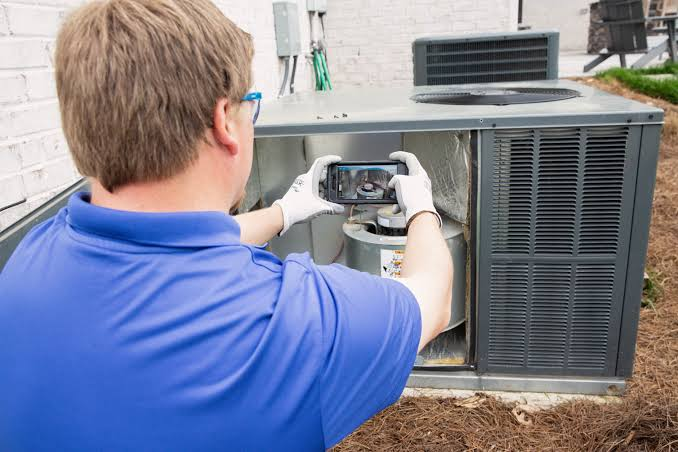
A proper diagnosis starts with measurements. Refrigerant pressures, temperature split across the indoor coil, electrical readings on motors and capacitors, and airflow checks tell a technician what is actually wrong. Replacing parts without that data tends to fix a symptom while the cause remains.
Warning Signs Worth a Call
Some symptoms point to a developing problem before the system stops completely. Air from the vents that feels only slightly cool, a system that turns on and off every few minutes, ice forming on the refrigerant lines or indoor coil, water pooling near the indoor unit and new buzzing or grinding sounds from the outdoor unit all deserve attention. Rising electric bills during a normal summer can also indicate that a system is working harder than it should. Catching those signs early often keeps a small repair from turning into a compressor replacement.
Heat pumps add another consideration in Missouri. A heat pump handles both cooling and heating, so a problem that appears in summer may also affect winter comfort, and repair decisions should account for the system’s role year-round.
Repair or Replace
A common question is whether to repair an older system or replace it. Several factors guide that answer. The age of the equipment matters, since many central air systems reach the end of their practical life somewhere in their second decade. The type of refrigerant matters too. Production of R-22, the refrigerant used in many older systems, ended in the United States in 2020, which makes recharging those systems increasingly expensive.
Federal rules have also shifted what new equipment looks like. Minimum efficiency standards for residential air conditioners changed in 2023 under the SEER2 rating system, and under the federal transition away from high global warming potential refrigerants, new residential systems are moving to refrigerants such as R-454B and R-32. Those changes can affect both the cost of replacement and the compatibility of new outdoor units with older indoor coils.
For homeowners looking for AC repair in Lee’s Summit, the practical question is whether a repair buys years of reliable service or only a short delay before a larger failure. A system with a single failed capacitor and otherwise sound components is a very different case from one with a leaking evaporator coil and a compressor running hot.
When replacement is the right answer, sizing matters as much as brand or efficiency rating. Our new installations include permit-pulling and load calculations, because a system sized only by square footage can end up too large for the house. An oversized air conditioner cools the air quickly, shuts off before it removes enough moisture and leaves rooms feeling clammy, which is a common complaint in humid Missouri summers. A load calculation accounts for insulation, windows, orientation and ductwork, and it gives the homeowner a system matched to the way the house actually gains and loses heat.
Flat-Rate Pricing and Emergency Calls
We use flat-rate pricing on all services. Our diagnostic fee is $99 on weekdays and $199 for emergency calls, and we do not add surge pricing beyond that emergency fee. Customers receive an all-in quote before work begins, and financing is available for larger installations and replacements. Real staff answer our phones during business hours, and emergency dispatch is available 24 hours a day.
When the price is known before the work starts, the conversation can focus on the right repair instead of the size of the invoice.
Maintenance That Prevents Emergencies
Many summer emergency calls can be prevented or delayed with routine maintenance. Seasonal tune-ups that include coil cleaning, filter changes, electrical checks and drain line cleaning catch weak capacitors and developing leaks before they fail on the hottest day of the year. Our maintenance memberships cover HVAC tune-ups along with plumbing and electrical safety checks, and members receive priority scheduling and reduced diagnostic fees.
An overview of the full range of heating and cooling work we handle, from mini-splits and geothermal systems to commercial rooftop units, is available at n1serves.com/lees-summit-hvac-services. Whatever the equipment, the principle stays the same: measure first, explain clearly and recommend the repair or replacement that makes sense for that home.
Our goal is to give homeowners straight answers from people who understand their systems. Our tagline is “One Team. One Call. Done Right.” Every service call is a chance to live up to it.