Many dog owners wonder whether it is safe or appropriate to let their dogs live outside. The answer depends on several factors, including breed, health, climate, and local laws. This guide covers everything you need to know before making that decision.
Yes, dogs can live outside, but not all of them should. Whether it is safe and appropriate depends on the individual dog’s breed, age, health, and local climate, as well as the quality of shelter and care provided. For suitable dogs with the right setup, outdoor living can work well. For others, it carries serious health and welfare risks.
Is It Legal to Keep Dogs Outside in the U.S.?
State and Local Laws
There is no single federal law governing how dogs must be housed outdoors, but most states have animal welfare statutes that establish minimum care standards. These laws typically require that outdoor dogs have access to adequate shelter, clean water, food, and protection from extreme weather. City and county ordinances may impose stricter requirements than state law, so checking both levels is advisable. For a state-by-state overview, you can search the ASPCA’s animal cruelty laws database.
Tethering and Anti-Cruelty Laws
Tethering refers to chaining or tying a dog outdoors for extended periods. More than 30 U.S. states have enacted laws that restrict or prohibit continuous tethering. Common provisions include:
- Minimum chain or lead length requirements
- Bans on tethering during extreme weather conditions
- Time limits on how long a dog may be tied outside unsupervised
A comprehensive state-by-state guide is available through the Humane Society of the United States.
Factors That Determine If a Dog Can Live Outside
Breed and Coat Type
Breed is one of the most important factors to consider. Dogs with thick double coats bred for cold or demanding outdoor conditions are far better suited to outdoor living than short-coated or flat-faced breeds. The table below offers a general reference:
| Breed Type | Examples | Outdoor Suitability |
| Double-coated, cold-weather breeds | Siberian Husky, Alaskan Malamute, Great Pyrenees | High |
| Large working and guard breeds | German Shepherd, Rottweiler, Belgian Malinois | Moderate, with proper shelter |
| Short-coated breeds | Doberman, Boxer, Vizsla | Low |
| Brachycephalic breeds | Bulldog, Pug, French Bulldog | Very low, not recommended |
| Toy and small breeds | Chihuahua, Maltese, Yorkshire Terrier | Very low |
Age and Health
Puppies and senior dogs struggle to regulate body temperature effectively, making outdoor living particularly risky for both groups. Dogs managing chronic conditions such as arthritis, heart disease, or respiratory issues are also poor candidates for full-time outdoor life, as cold and damp conditions tend to aggravate these problems significantly.
Climate and Local Weather
Regional climate matters just as much as breed. A dog that thrives outdoors in the mild Pacific Northwest may struggle with the intense humidity of the Gulf Coast or the harsh winters of the Upper Midwest. When evaluating outdoor housing, always account for seasonal extremes in your area rather than average temperatures alone.
Risks of Keeping Dogs Outside
Extreme Heat and Heatstroke
Dogs regulate body heat almost entirely through panting, which makes them far less efficient at cooling down than humans. Without reliable shade and fresh water, outdoor dogs face a serious risk of heatstroke, a condition that can become life-threatening within hours. This risk is especially high in humid regions, where panting provides less relief. The American Veterinary Medical Association (AVMA) provides detailed guidance on recognizing and preventing heat-related illness in dogs.
Cold Weather and Hypothermia
Even cold-weather breeds have their limits. Wind chill and moisture can lead to hypothermia and frostbite faster than many owners expect, particularly once temperatures drop below freezing. Small breeds, short-coated dogs, and senior dogs have lower cold tolerance and should be among the first brought inside as temperatures fall.
The table below provides a quick outdoor temperature safety reference:
| Temperature | Risk Level | Recommended Action |
| Above 85°F | High heat risk | Provide shade and cool water; limit outdoor time |
| 70°F to 85°F | Moderate | Monitor for panting; ensure consistent hydration |
| 45°F to 70°F | Generally safe | Comfortable for most healthy adult dogs |
| 32°F to 45°F | Cold risk | Move small, short-coated, and senior dogs indoors |
| Below 32°F | High cold risk | All dogs need insulated shelter or indoor access |
Predators and Wildlife
Outdoor dogs face wildlife threats that vary by region, including coyotes, raccoons, and snakes. Coyote sightings have become increasingly common across suburban and even urban areas of the U.S. A securely fenced yard paired with a sturdy outdoor kennel significantly reduces this exposure.
Loneliness and Behavioral Issues
Dogs are deeply social animals. Prolonged isolation outdoors, away from their human family, frequently leads to anxiety, excessive barking, destructive chewing, and aggression. Research on canine behavior consistently shows that dogs spending most of their time alone are significantly more prone to developing these problems.
What Outdoor Dogs Need
Proper Shelter
A weather-resistant shelter is the foundation of any safe outdoor setup. At minimum, it should:
- Be raised off the ground to prevent moisture from seeping in
- Be insulated well enough to retain body heat in cold weather
- Be positioned to block prevailing winds and direct afternoon sun
- Have a door flap or entry baffle to reduce drafts
Selecting a kennel built from the right materials makes a significant difference over time. These outdoor dog houses feature anti-corrosion fir wood panels that resist moisture and rot, metal-reinforced chew-proof frames, and waterproof roofing designed to shed rain effectively. Options are available in sizes ranging from small to XL, covering everything from toy breeds to large dogs, each backed by a 2-year warranty.
Choosing the Right Size Dog House
Size matters more than many owners realize. A dog house with too much interior space fails to retain body heat efficiently, leaving dogs cold on chilly nights. One that is too small restricts movement and limits ventilation. The right fit allows your dog to stand up, turn around, and lie down comfortably without much room to spare.
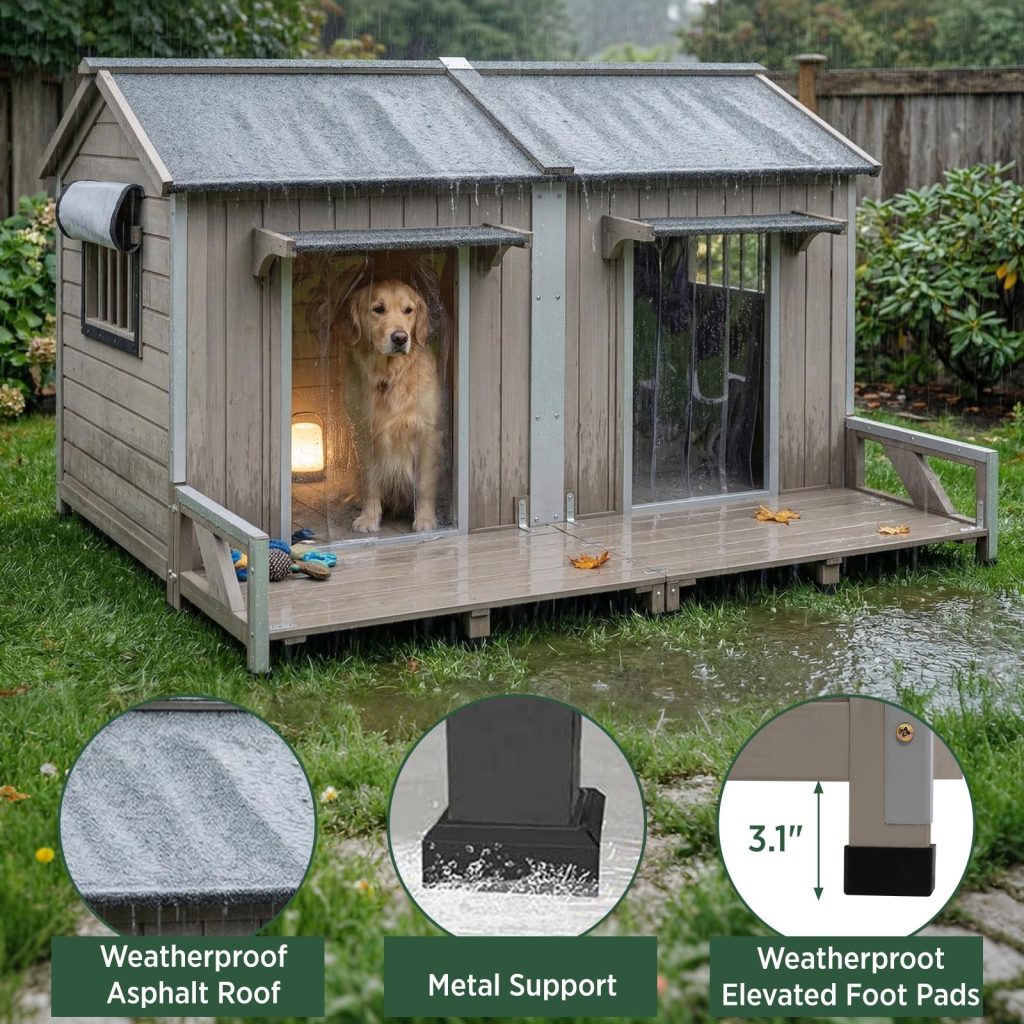
For households with two dogs or a larger breed, this insulated dog house for 2 large dogs directly addresses several of the outdoor living concerns covered in this article. At 59.4″L × 47.6″W × 37.4″H, it comfortably accommodates one large dog such as a Golden Retriever or German Shepherd, or two medium-sized dogs.
Built for year-round outdoor use, it includes:
- A waterproof asphalt roof that keeps rain out and prevents moisture buildup
- Oxford fabric breathable windows that promote airflow during warmer months
- A PVC curtain door that blocks cold drafts in winter
- A chew-proof metal frame that protects the structure from damage
- An elevated base that reduces ground moisture contact
- A removable floor panel for easy routine cleaning
Assembly takes 25 to 45 minutes with a standard screwdriver, and free shipping is available across the U.S. with delivery in 2 to 5 business days.
Food and Fresh Water
Outdoor dogs burn more calories than indoor dogs, especially in colder months, as their bodies work harder to maintain core temperature. Adjusting portion sizes seasonally is a sensible practice. Fresh, unfrozen water must be available at all times. In colder climates, a heated water bowl prevents freezing and reduces the risk of dehydration during winter.
Exercise and Social Interaction
Access to a yard does not replace the need for structured exercise and meaningful time with people. Outdoor dogs still need daily walks, play sessions, and regular family interaction. Without it, even a well-equipped outdoor space is unlikely to keep a dog mentally healthy or behaviorally stable.
Indoor vs. Outdoor Dog Kennel
Quality of Life Comparison
Most veterinarians and animal behaviorists consider indoor living the healthier long-term arrangement for domestic dogs. That said, a well-planned outdoor setup with consistent, attentive care can support a genuinely happy and healthy dog. The comparison below highlights the key differences:
| Factor | Indoor Dog | Outdoor Dog |
| Temperature comfort | Climate-controlled environment | Exposed to weather extremes |
| Social interaction | Daily family contact | Risk of isolation and loneliness |
| Safety | Protected from predators | Exposed to wildlife and environmental hazards |
| Behavioral health | Generally more stable | Higher risk of anxiety and behavioral issues |
| Exercise needs | Requires scheduled outdoor walks | More space but still needs structured activity |
| Shelter needs | House provides natural insulation | Requires dedicated weatherproof housing |
The Indoor-Outdoor Routine
For many owners, a balanced routine offers the best outcome. Allowing your dog to spend active daytime hours outside while sleeping indoors at night protects against overnight temperature drops and predator activity, while still providing the fresh air and physical freedom dogs thrive on.
FAQs
Is it cruel to keep a dog outside?
Not necessarily, but it depends entirely on the level of care provided. Outdoor living becomes a welfare concern when any of the following are absent:
- Adequate shelter from rain, wind, and temperature extremes
- Consistent access to food and fresh water
- Regular human interaction and companionship
- A living environment suited to the dog’s breed and physical needs
Responsible outdoor housing means meeting all of these needs reliably. This is also the standard most U.S. states enforce through their anti-cruelty and minimum care statutes.
Can dogs sleep outside in winter?
It depends on the breed, coat type, and quality of shelter available. Cold-weather breeds such as Siberian Huskies or Great Pyrenees can handle winter nights with a properly insulated, draft-free shelter raised off the ground to minimize cold and moisture from below.
Small breeds, short-coated dogs, puppies, and senior dogs should sleep indoors once temperatures drop below 45°F, as they lose body heat much faster and face a higher risk of hypothermia.
What temperature is too cold for a dog to be outside?
There is no single threshold that applies to all dogs. For small breeds, short-coated dogs, puppies, and senior dogs, temperatures below 45°F present a meaningful cold risk. Below 32°F, even larger or cold-adapted breeds require well-insulated shelter to avoid hypothermia and frostbite.
Wind chill and dampness can make conditions feel significantly colder than the air temperature alone suggests, so both factors should always be considered together.
How long can a dog stay outside?
It varies by breed, age, health, and weather conditions. In comfortable temperatures between 45°F and 75°F, most healthy adult dogs can spend extended time outdoors without concern. In extreme heat above 85°F or cold below 32°F, outdoor time should be kept short and supervised regardless of breed.
Beyond weather, social needs also set a practical limit. Dogs should not be left alone outside long enough for isolation to become a problem. Even outdoor dogs benefit from regular contact with their family throughout the day.
Do outdoor dogs need vaccinations?
Yes. All dogs require the following core vaccinations regardless of where they live:
- Rabies
- Distemper
- Parvovirus
- Adenovirus (infectious canine hepatitis)
For dogs that spend significant time outdoors, additional lifestyle vaccines are often recommended based on regional risks. Leptospirosis, which spreads through contact with contaminated water or soil, is a common concern across much of the U.S. In tick-heavy regions, a Lyme disease vaccine may also be advised.
Consistent parasite prevention for fleas, ticks, and heartworm is equally important for dogs with regular outdoor exposure. A veterinarian can help determine the right protocol based on your dog’s lifestyle and location.